You Paid Thousands of USD for a Smart TV. So Why Is It Still Collecting Your Data?
LG smart TVs can recognize what you watch, discover devices on your home network and feed viewing data into an advertising ecosystem. A major YouTube investigation has raised even broader surveillance concerns—some disputed by LG—but the underlying reality is clear: even after paying thousands for a television, your viewing habits can still have commercial value.
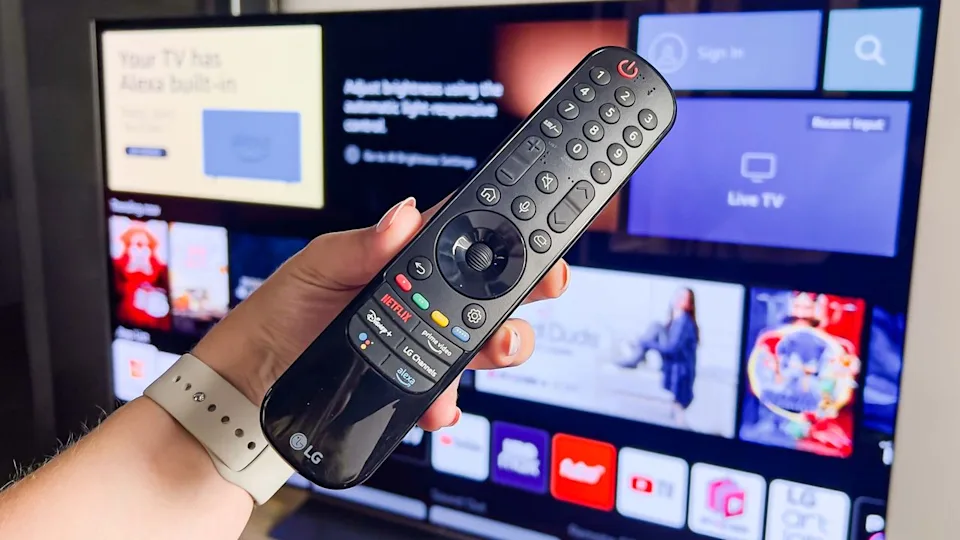
An investigation into LG smart TVs has reignited an uncomfortable question about the devices sitting in millions of living rooms. Modern televisions can recognize what you watch, discover other devices around your home and feed viewing information into sophisticated advertising systems. Some of the most alarming allegations remain disputed. But the underlying data business is not.
For decades, buying a television was a relatively simple transaction.
You paid the manufacturer. The manufacturer gave you a screen. The relationship largely ended there.
The smart-TV era has changed that arrangement.
Today's television is effectively a networked computer permanently positioned in one of the most private rooms in the house. It runs an operating system, connects to the internet, communicates with phones and other devices, runs applications, displays advertisements and, on some models, contains microphones capable of responding to voice commands.
More importantly, it can potentially understand something extraordinarily valuable about its owner:
what they are watching.
In September 2026, technology YouTube channel Gamers Nexus published an extensive investigation titled 216,000,000 Spy TVs | The LG Smart TV Problem. Working with Level1Techs and independent security researchers, the team examined LG televisions, captured network traffic, inspected software behavior and tested what the TVs could determine about their surroundings.
Some of the investigation's claims are fiercely disputed by LG.
Others are essentially acknowledged by the company.
And one of the most important facts requires no hacking or reverse engineering to establish at all.
LG operates an advertising business built partly around information generated by televisions.
The company openly markets technology that allows advertisers to understand and target audiences according to what they watch.
That makes the real story considerably more interesting than the simple claim that your television is "spying on you."
The question is what happens when the most important screen in your home also becomes part of the advertising industry's data infrastructure.
Your TV can recognize what you're watching
The technology at the centre of the privacy debate is called Automatic Content Recognition, or ACR.
Think of ACR as something similar to Shazam for television.
Instead of merely knowing that HDMI 1 is active, the television can generate a digital fingerprint from content and compare it with reference databases to identify what is being watched.
LG says its implementation uses audio fingerprinting rather than continuously recording video or taking screenshots of everything appearing on the display.
The distinction matters.
ACR does not need to keep a copy of the movie, football match or television program appearing on your screen. A relatively small fingerprint can be sufficient to recognize the content.
And ACR isn't necessarily restricted to content originating inside the television's operating system.
LG says that when its ACR system is enabled, it can operate across live television, LG Channels and supported content arriving through HDMI-connected devices.
That last point is particularly important.
Connecting a PlayStation, cable box, computer or separate streaming device does not necessarily mean the television becomes a passive monitor incapable of understanding what appears on the screen.
Independent testing has also detected ACR-related network traffic from LG televisions during different types of viewing.
The fundamental capability is not seriously disputed:
a modern smart television can potentially identify what you are watching.
And that information can be enormously valuable.
Why advertisers care about what you watch
Imagine knowing that one household frequently watches Premier League football.
Another watches children's programming.
Another spends hours gaming.
Another subscribes to premium streaming services but rarely watches conventional television.
Another has already seen a particular car advertisement six times.
Those households represent very different audiences.
LG's advertising operation makes the commercial significance clear.
LG Ad Solutions describes its ACR technology as providing information about viewing behaviour across traditional television and streaming environments.
Its advertising products allow marketers to build or reach audiences based on television shows, networks, genres, applications and viewing behaviour.
The system can also support advertising measurement—helping marketers determine whether households have already been exposed to particular campaigns and whether additional advertising should be directed toward them.
This isn't something hackers discovered buried inside LG's firmware.
It is an advertising product.
LG began rolling out its proprietary ACR technology globally in 2022, announcing that connected-TV data from LG televisions would become available through LG Ads Solutions.
That provides essential context for the current controversy.
LG is no longer simply a company that manufactures televisions.
It also participates in an advertising ecosystem whose value increases when televisions can understand their audiences.
Does LG actually sell your viewing data?
This requires careful wording.
Saying "LG sells everything you watch to advertisers" would be misleading.
But saying viewing information has no commercial advertising use would also be wrong.
LG acknowledges that, depending on the user's settings, agreements and jurisdiction, ACR-related viewing information can be shared with LG Ad Solutions, its advertising affiliate.
The information can support audience segmentation and viewing analysis and, where the appropriate permissions have been given, interest-based and cross-device advertising.
LG makes another important acknowledgement.
In some jurisdictions, these practices may legally constitute a "sale" or "sharing" of personal information under applicable privacy laws.
That does not necessarily mean an advertiser receives a spreadsheet containing your name and everything you watched.
Modern advertising systems commonly operate through identifiers, audience categories and targeting systems rather than directly handing advertisers personally identifiable customer records.
But the economic reality remains:
information generated by what people watch can become commercially valuable within LG's advertising ecosystem.
And that raises an obvious question.
Why is a television you already paid for still participating in a business designed to monetize your attention and behaviour?
But LG says you have to agree to it
Consent is crucial to understanding the story.
LG says ACR is disabled by default and requires users to accept its Viewing Information Agreement.
Personalized interest-based advertising involves additional permissions, while cross-device advertising also depends on the relevant advertising consent.
LG says users can withdraw those permissions and stop ACR collection.
That significantly changes the accusation.
This is not necessarily a system secretly collecting every LG owner's viewing history regardless of their choices.
The harder question is whether consumers meaningfully understand what they are agreeing to.
Anyone who has configured a modern television knows the experience.
The screen presents terms of service, privacy notices, viewing-information agreements, advertising agreements, voice agreements and other options.
Most people want to start watching television.
Few are likely to investigate precisely what Automatic Content Recognition means or how viewing information can participate in an advertising ecosystem.
Consent can therefore be legally explicit while remaining poorly understood.
A person might reasonably interpret "personalized viewing experience" as better program recommendations.
They may not realize that enabling certain features can allow their television to recognize supported content playing through an HDMI-connected device.
That gap matters.
Your television can also see other devices in your home
One of the stranger findings from the Gamers Nexus investigation had little to do with what appeared on the screen.
It concerned everything else connected to the home network.
Researchers reported that LG televisions running webOS could discover other connected devices—including smartphones, smartwatches and other networked hardware.
The issue was subsequently highlighted in reporting syndicated by Yahoo Tech.
The finding matters because a smart television does not exist in isolation.
Once connected to the same router as laptops, phones, gaming consoles, speakers, watches and smart-home devices, the TV becomes another computer inside the household network.
LG does not deny that its televisions perform network discovery.
The company says the capability serves legitimate functions: identifying compatible devices so users can cast content, share media, control equipment and use smart-home features.
That explanation is technically reasonable.
Device discovery is common across modern connected products.
Apple devices discover one another. Smart speakers search for compatible equipment. Casting protocols depend on devices being able to find one another across a network.
But the researchers raised a different question:
How much of your home network does a television actually need to examine to provide those conveniences?
The investigation reportedly observed TVs identifying devices that had never deliberately been paired with the television.
That means a smart TV can potentially gain a picture of the technological environment around it.
A home containing multiple phones, smartwatches, gaming consoles and other connected products creates a very different network environment from one containing little more than a router and television.
However, an important distinction is necessary.
There is insufficient evidence to conclude that LG simply takes the complete list of devices discovered on a customer's LAN and hands that information to advertisers.
LG specifically says information collected through local-device discovery is not used for advertising segmentation, household profiling or cross-device advertising.
That should therefore be separated from ACR, where the relationship with advertising is much clearer.
Wi-Fi can reveal something else: where the television is
There is another dimension to the network story.
A Wi-Fi device doesn't necessarily see only the network to which it is connected.
It can detect surrounding wireless access points, signal strengths and other characteristics of the local wireless environment.
Those signals can potentially help estimate location.
LG acknowledges that in markets where the relevant services are available and enabled, nearby Wi-Fi access-point information and signal strength can be processed to estimate a television's approximate location.
That information can be useful for advertising because geography is one of the most basic characteristics advertisers use to select audiences.
LG Ad Solutions offers geographic targeting.
This does not mean every LG television is secretly transmitting precise GPS coordinates.
A television generally doesn't need GPS to estimate where it is.
The more accurate point is that information about surrounding wireless networks can help infer approximate location when the relevant features and permissions are active.
Once again, an ordinary technical feature can become economically valuable information.
Then there is the microphone
This is where the investigation becomes substantially more controversial.
Some LG televisions support far-field voice control.
Instead of pressing a microphone button on the remote, users can enable a system allowing them to say a wake phrase such as "Hi LG."
For that feature to work, the television must continuously process enough incoming audio to determine whether the wake phrase has been spoken.
LG acknowledges that.
The dispute concerns what happens around that process.
Gamers Nexus and its collaborators reported finding plaintext speech transcripts during their investigation and demonstrated behaviour that they argued raised serious questions about whether audio could be captured beyond what consumers reasonably expected.
That quickly produced a much more dramatic interpretation online:
"LG televisions secretly record everything you say."
The available evidence does not justify presenting that statement as established fact.
LG strongly denies it.
According to the company, speech-to-text processing begins only after someone presses the voice button or an enabled television recognizes the wake phrase.
When far-field voice control is enabled, the TV can listen locally for that wake phrase, including while apparently switched off in standby.
But LG says that before activation the processing occurs locally.
If no wake phrase is recognized, LG says the audio is discarded rather than converted into text and transmitted to the company.
LG also says nearby conversation can sometimes appear in speech-recognition results once an actual voice session has been activated.
Most importantly for the advertising question, LG says voice and ambient-audio data are not provided to LG Ad Solutions for advertising purposes.
There is currently no strong independent evidence showing that LG sells recordings of private household conversations to advertisers.
That claim should therefore not be made as fact.
The microphone controversy remains disputed.
The ACR advertising system does not.
Network discovery and advertising are not the same thing
This distinction is important because several different technologies are easily collapsed into one frightening description:
"Your TV scans your house, listens to you and sells everything to advertisers."
The evidence is considerably more nuanced.
LG televisions can perform network discovery.
LG says that is for connectivity features and that LAN discovery information isn't used for advertising profiles.
Some models contain microphones and can support hands-free voice activation.
LG says ambient conversations are not supplied to its advertising business.
LG televisions can also use ACR to identify viewing content.
And LG explicitly acknowledges that ACR-derived viewing information can participate in its advertising ecosystem when the relevant permissions are enabled.
These systems should not be treated as interchangeable.
There is a difference between something the television is technically capable of observing and something LG actually monetizes.
The strongest evidence of commercialization concerns viewing behaviour.
And that alone is significant.
How owners can limit the tracking
The Yahoo-syndicated reporting also highlighted something frequently missing from the more sensational discussion:
LG owners can reduce much of this collection.
Users can review their television's privacy agreements and disable Live Plus, which is associated with LG's Automatic Content Recognition functionality.
They can decline or withdraw viewing-information permissions and personalized-advertising options.
Users who don't need hands-free voice commands can disable those features as well.
There is also a more technical option.
A television can be placed on an isolated or guest Wi-Fi network.
That can restrict its ability to communicate with devices on the primary household network, although it can also interfere with conveniences such as casting and local smart-home integration.
The most extreme option is simpler:
Don't connect the television itself to the internet.
Instead, use an external streaming device and treat the television primarily as a display.
That doesn't eliminate the privacy problem—it largely transfers it to the streaming device and its provider—but it gives the television itself considerably less network access.
There is an irony here.
One of the most effective ways to make a modern smart television more private is essentially to make it less smart.
Why TVs became advertising platforms
The larger story extends far beyond LG.
Television manufacturers historically made most of their money when somebody bought a television.
Smart TVs have created opportunities to continue generating revenue throughout the life of the device.
Manufacturers can display advertising inside the operating system.
Streaming services can pay for placement.
TV companies can operate free advertising-supported channels.
Viewing information can improve advertising measurement.
ACR can help determine which households have already seen particular advertisements.
The television has consequently become both a product and a platform.
That changes the incentives of the company designing it.
The manufacturer no longer necessarily wants merely to sell the best possible screen.
It may also want to control the operating system running on that screen, the advertising inventory displayed through it and the data infrastructure describing how the screen is being used.
LG's advertising business provides a particularly clear illustration of that transformation.
Its technology can help marketers understand television audiences in ways that would have been extraordinarily difficult during the traditional broadcasting era.
That is commercially powerful.
It also deserves scrutiny.
You can spend thousands and still enter the advertising economy
This leads to perhaps the most uncomfortable part of the story.
Consumers have become accustomed to a familiar bargain on the internet:
If the service is free, your attention and data may help pay for it.
Google search is free.
Facebook is free.
YouTube can be used for free.
Advertising finances much of the experience.
The bargain becomes more difficult to explain when the device costs several thousand dollars.
LG's premium OLED televisions are not free hardware subsidized entirely by advertising.
Consumers have already paid substantial amounts of money for them.
Yet the television can still participate in an ecosystem that generates continuing advertising value after the initial purchase—provided the owner enables the relevant services.
The customer can therefore occupy three positions simultaneously.
They are the customer who bought the hardware.
They are the viewer receiving advertising.
And their viewing behaviour can become part of the data making advertising more valuable.
None of those arrangements is automatically unethical.
But consumers should understand that the relationship with the manufacturer may not end at the checkout.
This isn't just an LG problem
Focusing entirely on LG would miss the larger transformation.
Automatic Content Recognition and sophisticated advertising systems exist across the smart-TV industry.
Samsung and other connected-TV platforms operate their own forms of viewing recognition, advertising or measurement infrastructure.
The reason is simple.
Television has historically been extremely valuable to advertisers but surprisingly difficult to measure precisely.
Traditional audience measurement frequently depended on statistical samples.
Connected televisions potentially provide much richer information.
A television can help determine what content appeared on the screen, when it appeared and potentially how long it remained there.
That information can then be associated with advertising identifiers and audience categories.
From the advertising industry's perspective, this is enormously valuable.
From the consumer's perspective, it raises a different question:
When did the television stop being just a television?
What the investigation proves—and what it doesn't
The Gamers Nexus investigation is most useful when its strongest findings are separated from its most controversial conclusions.
Several things are well established.
LG televisions support Automatic Content Recognition.
ACR can identify supported viewing content, including content coming through some external sources.
LG operates an advertising business built partly around television viewing information.
LG Ad Solutions markets audience targeting and measurement based on viewing behaviour.
LG televisions perform local-network device discovery.
Some LG televisions contain microphones and can monitor locally for a wake phrase when hands-free voice functionality is enabled.
And LG itself acknowledges that, depending on the jurisdiction and permissions involved, ACR information can be handled in ways that legally qualify as the sale or sharing of personal information.
But other claims have not been established.
There is no convincing evidence that LG indiscriminately sells recordings of private conversations to advertisers.
There is insufficient evidence that the complete inventory of devices discovered on someone's home network is being supplied to advertisers.
And there is no basis for saying every LG television continuously records its owners regardless of their privacy settings.
Those distinctions don't weaken the story.
They reveal the more important one.
The real privacy problem is less dramatic—and harder to dismiss
The most significant thing about modern smart-TV tracking may not be something hackers discovered buried deep inside proprietary firmware.
It may be something openly described in privacy agreements almost nobody reads.
Consumers increasingly surround themselves with products that have two economic lives.
There is the obvious life of the product:
the television you purchased.
Then there is its continuing life as a platform capable of generating advertising opportunities, behavioural information and commercial relationships.
The debate should therefore move beyond the simplistic question:
"Is my TV spying on me?"
A better question is:
What should a television manufacturer be allowed to know about the people who bought its product?
There is nothing inherently sinister about a television discovering a PlayStation so it can automatically switch into gaming mode.
There is nothing inherently sinister about voice recognition when somebody deliberately asks their television a question.
And personalized advertising isn't automatically an abuse when someone knowingly chooses to receive it.
The problem emerges when the technical sophistication of the monitoring becomes much greater than the consumer's understanding of it.
A person may understand that clicking Accept enables personalized recommendations.
They may not realize that ACR can potentially identify supported content arriving through HDMI.
They may understand that their television connects to Wi-Fi.
They may not expect it to discover numerous other devices across their home network.
They may understand that saying "Hi LG" requires a microphone.
They may not have considered that an enabled television must process enough ambient sound locally to recognize those words even while the screen appears off.
And they may understand that advertisements appear on their television without realizing that the television manufacturer itself operates a sophisticated advertising business built around understanding viewing audiences.
That gap—between what the technology can do and what ordinary consumers think they purchased—is the real issue.
You bought the television. But the transaction didn't end there.
One phrase highlighted during the controversy captures the transformation particularly well:
"We own the glass."
The physical television belongs to the customer.
But control over the operating system, advertising infrastructure, content recognition and audience measurement increasingly belongs to the platform operating behind it.
That is why this story matters beyond LG.
Smart televisions are becoming another front in a much larger struggle over who controls the data generated by everyday life.
LG's defence is that consumers remain in control because its most sensitive data-driven features are optional.
That defence matters.
But consent only works properly when people understand what they are consenting to.
The strongest conclusion from the investigation is therefore not that hundreds of millions of LG televisions are secretly recording everything happening inside people's homes.
The evidence does not establish that.
The stronger conclusion is less sensational and considerably harder to dismiss.
A modern television can recognize what you watch. It can discover devices around it. Certain network information can help establish approximate location. Viewing information has commercial value. And LG operates an advertising business capable of turning television audiences into advertising products when users enable the relevant services.
You paid for the television.
You own the screen.
But the information generated while you watch it can still be valuable to someone else.
And that may be the most important thing consumers should understand before pressing Accept.