China’s $1trn surplus has an African line, and zero tariffs have not narrowed it
Customs data show China’s trade surplus with Africa reached $101.4bn in the first ten months of 2026, almost equal to last year’s record, despite Beijing’s zero-tariff offer to 53 African states. Most African exports to China were already duty-free, and Chinese exports to the continent are growing faster than African sales.
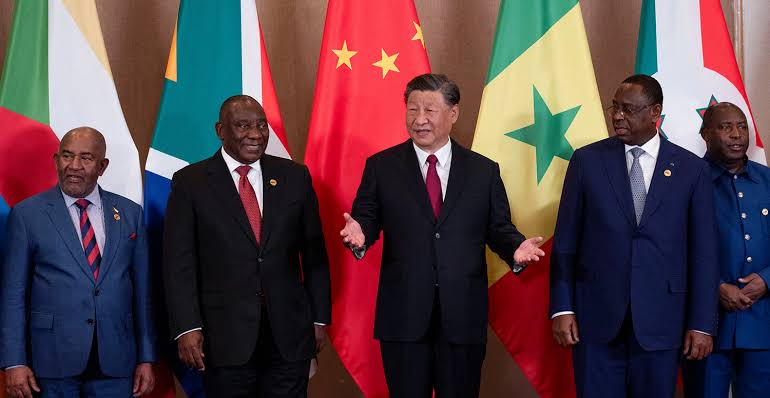
China’s customs administration announced on Tuesday that the country’s trade surplus had passed $1trn in the first ten months of 2026, a month earlier than last year. Most coverage focused on the artificial-intelligence boom behind a 35.2% rise in October exports and on the friction the figure may cause with the European Union. The same release has a line for Africa that received less notice.
Between January and October, China exported $224.1bn of goods to Africa and imported $122.7bn, according to the General Administration of Customs (GACC). That leaves China with a surplus of $101.4bn on its African trade. For the whole of 2025, the surplus was $102.0bn, itself a record. With two months to go, this year’s figure is $0.6bn short of last year’s total. In October alone it was $7.6bn.
All of this happened in the first six months of what Beijing presents as its most generous trade offer to the continent: zero tariffs on every tariff line for all 53 African countries with which it has diplomatic relations, in force since 1 May. The data do not show the policy failing on its own terms. They show that it was never built to change the overall balance, and that the gap is widening anyway.
What the zero-tariff policy covers
China removed tariffs for the 33 African least developed countries from 1 December 2024. Under Announcement No. 5 [2026] of the State Council’s Customs Tariff Commission, the other 20 African countries with which China has relations, including South Africa, Kenya, Egypt, Nigeria and Ghana, have received zero tariffs since 1 May 2026, as a preferential rate that runs until 30 April 2028. During that period, Beijing says, it will try to agree “economic partnership for shared development” agreements that would make the arrangement permanent. Eswatini, which recognises Taiwan, is excluded. Tariff-quota goods are zero-rated only within quota.
The arrangement is unilateral and non-reciprocal. African governments did not have to cut their own tariffs on Chinese goods in return. Chinese officials call it the first such full-coverage offer by a major economy.
Exports to Africa grew faster than imports from it
African sales to China are growing quickly. GACC’s cumulative figures show imports from Africa up 20.3% year on year in January–October. Liu Yuxi, China’s ambassador for Forum on China-Africa Cooperation (FOCAC) affairs, told the China-Africa Think Tanks Forum in Yiwu, Zhejiang, that imports rose 21.6% between May and September, compared with the same months of 2025. Xinhua put the January–September rise at 18.5%. Taken together, those figures suggest some acceleration after May.
Chinese exports to Africa grew faster still, by 24.0% over the same ten months. The growth rates GACC publishes imply a surplus of roughly $79bn in January–October 2025. If so, the gap has widened by about $23bn, or close to 29%, in a year. Africa now accounts for about 9.7% of China’s global surplus, up from 8.6% in 2025, even though it buys less than 6% of China’s exports.
The most telling ratio is the simplest. For every dollar of goods China sold to Africa this year, Africa sold back about 55 cents. That is the same as in 2025.
A second measure points the same way. China’s total imports rose 29.0% in January–October, with imports from South Korea alone up 79.1% amid the AI hardware cycle. Because African sales grew more slowly than China’s imports as a whole, Africa’s share of China’s import bill appears to have fallen, from about 4.8% to about 4.5% on GACC’s figures, in the year Beijing removed every remaining tariff.
Why the tariff cut barely touches the surplus
The reason is in China’s own tariff schedule. Thierry Pairault, an emeritus research director at France’s CNRS, reviewed the schedule for the China-Global South Project this year. He found that the products making up the bulk of African sales, including iron ore, copper ore and refined copper, non-monetary gold, cobalt and crude oil, already entered China at a zero most-favoured-nation rate. On his calculation from 2024 UN Comtrade data, about 94.5% of Africa’s exports to China were already duty-free. The policy’s real effect, he concluded, is on a narrow band of farm goods: oilseeds, tobacco, coffee, cocoa, and coal from Zimbabwe and Mozambique.
Those are the products where the policy is visible. A Chinese importer told Xinhua that tariffs on South African citrus fell from 10–12% to zero in May, and that the company’s South African citrus imports have risen 50% since then. Kenyan avocado and Ghanaian cocoa-mass exporters were at this month’s China International Import Expo trying to win larger orders. These gains are real for the firms involved. Measured against a $101bn imbalance, they are small.
The large swings in African sales come from minerals and their prices. When the South China Morning Post reported in July that imports from Africa had jumped in May and June, it noted that China’s demand for critical minerals was a significant driver. South Africa, whose exports to China are dominated by platinum-group metals, manganese and chrome, illustrates this. China has imported $31.1bn of South African goods this year, already more than in all of 2025, and runs a $7.2bn deficit with South Africa. Because those goods were already duty-free, commodity prices and Chinese industrial demand are the more likely explanation, not tariff lines.
Who bears the burden
Treating the continent as one trading partner hides the most important point. Pairault found that six countries, South Africa, the Democratic Republic of Congo, Angola, Guinea, Zambia and the Republic of Congo, supply about three-quarters of Africa’s exports to China. Chinese goods reach nearly every African market. It follows that most of the deficit falls on economies that buy Chinese manufactured goods but have few minerals to sell back. China’s October release does not break the figures down by African country beyond South Africa, so the precise distribution this year cannot yet be shown.
A deficit is not harmful in itself. Imports of solar equipment, vehicles and machinery can raise productivity, and the release does not give the composition of China’s exports to Africa. But it still has to be financed, and it puts Chinese products in direct competition with the manufacturers that African industrial policies are trying to build. A 24% rise in Chinese exports in one year is a large shock for any domestic producer to absorb, whatever its cause. Last year SCMP tied a 25% jump in Chinese exports to Africa to the bite of US tariffs. Reuters noted this week that the swelling surplus could deepen friction with the EU, where agreed limits on Chinese hybrid-vehicle exports have yet to take effect. If Chinese firms keep redirecting goods away from markets that resist them, open markets such as Africa’s are a plausible destination. That is a scenario, and this release does not show it.
The counter-case
Beijing presents zero tariffs as an interim step toward permanent shared-development agreements. Liu told the Yiwu forum that the measures would also give fresh impetus to Africa’s industrialisation. Some evidence supports that view. A report by the Beijing-based consultancy Development Reimagined, cited by SCMP on 7 November, counted more than $16bn of Chinese-backed mineral processing and manufacturing projects in Africa. Brookings’ Yun Sun argued in January that the policy’s real potential lies in attracting investors who want a low-tariff route into China, not in raw-material sales. Ghana’s plan to process half its cocoa at home is the kind of case where duty-free access to China could reward local value addition.
That argument is about the future. Today’s data describe the present: six months into the zero-tariff era, the balance is moving the other way, and the tariff instrument has almost no bearing on the goods that dominate the flows.
What happens next
Three dates matter. Xi Jinping and Donald Trump are expected to meet at the APEC summit in Shenzhen next week, and the state of the US–China truce, which Beijing said on Monday had been extended by two months, will shape how hard Chinese exporters push into other markets. The full-year 2026 figure, due in January, will almost certainly set a new record for the China–Africa surplus, since October’s gap alone was more than ten times the $0.6bn needed to pass 2025. And the preferential rate for the 20 newly covered countries expires on 30 April 2028. Its renewal depends on the shared-development agreements Beijing wants to sign.
Those negotiations give African governments their real leverage. Zero tariffs are a concession China has already made, and it cannot easily withdraw them without diplomatic cost. African negotiators can therefore treat the agreements as a place to ask for what tariffs cannot deliver: faster sanitary and phytosanitary approvals for processed goods, purchase commitments that go beyond minerals, and investment tied to local processing. If they treat them as a formality, the next two years are likely to look much like the last six months.