Fact check: Is Someone Secretly Richer Than Elon Musk? The World's Hidden Fortunes and the Politics of Wealth
Elon Musk dominates global billionaire rankings, but the world's greatest concentrations of wealth are not always attached to individual names. Royal dynasties, family empires and sovereign investment funds complicate the picture, raising a more important question: how much wealth can the world's richest people actually claim as their own?
The richest man in the world, or simply the most visible?
Elon Musk's wealth is difficult to comprehend. His fortune is tied to companies operating across electric vehicles, artificial intelligence, space exploration and telecommunications. His ownership stakes have made him the most prominent figure in the modern billionaire economy.
Yet there is a question that regularly resurfaces whenever billionaire rankings are published: are the people at the top of those lists actually the richest people in the world?
The question is more complicated than it appears.
Musk's fortune is estimated using identifiable ownership stakes, company valuations, publicly available financial information and assessments of private assets. His wealth can be tracked because much of it is connected to businesses whose financial positions attract extensive scrutiny.
But not every concentration of wealth operates this way.
Some fortunes are distributed across generations of family members. Others are connected to royal institutions, private holding companies and business networks. In some countries, the distinction between the personal wealth of rulers and the assets they administer on behalf of the state is particularly difficult to establish.
The result is a global wealth landscape that cannot be understood through billionaire rankings alone.
What the billionaire rankings actually measure
According to Forbes' real-time billionaire ranking on November 12, 2026, Musk's estimated fortune stood at approximately $890.7 billion, placing him comfortably ahead of the next individual on the list.
Jeff Bezos was estimated at $384.1 billion, followed by Google's Larry Page at $242.9 billion.
These figures are estimates, not bank balances. Much of the wealth attributed to billionaires exists as ownership stakes in businesses. Its value can change dramatically with share prices, private-company valuations and market conditions.
Forbes and Bloomberg attempt to estimate these fortunes using financial records, company disclosures and other available information.
However, their methodologies have limitations.
Family wealth is particularly difficult to measure because assets may be divided among relatives, held through private companies or passed between generations. Royal wealth introduces another complication: determining where private ownership ends and public authority begins.
A billionaire ranking is therefore not a complete inventory of all economic power.
It is an estimate of identifiable private wealth.
The Walton family: a fortune larger than most billionaires can imagine
The most revealing comparison may not involve a mysterious individual at all.
It involves the Walton family, whose fortune originated with Walmart, the American retail empire founded by Sam Walton.
Bloomberg's 2025 ranking of the world's richest families estimated the Walton family's wealth at approximately $513.4 billion. The figure was based largely on the family's substantial ownership of Walmart.
That is an extraordinary concentration of private wealth, accumulated and preserved across generations.
The comparison also reveals an important distinction. Musk's estimated individual fortune of approximately $890.7 billion is larger than the Walton family's combined estimated wealth.
But the Walton example demonstrates why looking exclusively at individuals misses an important part of the global economic picture.
The world's wealthiest families can control enormous business empires without a single member appearing near the top of individual billionaire rankings.
The Gulf monarchies: where wealth and political authority intersect
The most interesting cases emerge in the Gulf.
The ruling families of Abu Dhabi, Saudi Arabia and Qatar are associated with enormous economic resources generated through oil, gas, investments and international business interests.
Bloomberg's 2025 richest-family ranking estimated the wealth of Abu Dhabi's Al Nahyan family at $335.9 billion, the House of Saud at $213.6 billion and Qatar's Al Thani family at $199.5 billion.
These are substantial fortunes, but they remain below Musk's estimated individual wealth.
The figures also require careful interpretation.
Unlike the founders of technology companies, Gulf rulers operate within political systems where royal institutions, state-owned enterprises and private business interests can be closely connected.
The Al Nahyan family, for example, is associated with Abu Dhabi's political leadership and an extensive network of investments.
Abu Dhabi's sovereign investment institutions have holdings across global financial markets, technology companies, infrastructure and real estate.
But those investments cannot simply be added to the personal net worth of the ruling family.
A sovereign wealth fund is a government-owned investment institution. Its assets are not automatically the private property of the people who govern the country.
The distinction is essential, even when political influence over those assets is substantial.
The $1.4 trillion Saudi royal family question
Few wealth claims attract as much attention as estimates suggesting that the House of Saud could be worth more than $1 trillion.
Such figures circulate widely in online discussions, often presented as established facts.
The problem is that there is no sufficiently reliable public accounting establishing a $1.4 trillion personal fortune for the Saudi royal family.
The House of Saud is an enormous extended dynasty. Its members have accumulated wealth through private businesses, property, investments and historical access to economic opportunities.
Bloomberg's estimated $213.6 billion figure captures a portion of identifiable family wealth, but the publication has acknowledged that the total could be higher because assets held across thousands of family members are difficult to assess.
That does not justify treating the country's oil reserves, government assets or sovereign investment portfolio as the family's personal fortune.
Saudi Arabia's Public Investment Fund, for example, is a state investment institution. Its portfolio reflects the country's economic strategy and public investment priorities, not simply the personal bank account of the ruling family.
The difference between wealth and control becomes especially important in monarchies.
A ruler may exercise considerable influence over the allocation of national resources without personally owning those resources.
That is a form of power that conventional net-worth rankings are not designed to measure.
The invisible architecture of private wealth
There are also fortunes outside royal institutions that are difficult to value.
Private companies do not face the same disclosure requirements as publicly listed corporations. Ownership can be distributed through holding companies, trusts and investment vehicles.
Property portfolios may span several countries. Family offices can manage investments across multiple generations. Some assets are held through structures that make the ultimate beneficial owner difficult to identify.
This does not mean every wealthy person is concealing a fortune larger than the public estimates.
It means that the available information is incomplete.
Bloomberg has previously excluded families whose wealth is too diffuse or opaque to value reliably. This is an important admission: even sophisticated financial journalism cannot produce a definitive ranking when ownership cannot be established.
The challenge is particularly pronounced for historical fortunes, royal dynasties and families whose assets have been distributed across generations.
The Rothschilds and Rockefellers, for instance, frequently appear in discussions of hidden wealth. But popular claims about their combined fortunes often confuse historical influence, institutional wealth and the personal assets of living family members.
A family's historical prominence is not evidence that it possesses a secret trillion-dollar fortune.
The $16 trillion question: who owns the world's sovereign wealth?
Perhaps the most important category of wealth that billionaire rankings fail to capture is sovereign capital.
According to the International Monetary Fund, sovereign wealth funds are government-owned investment institutions established to manage public assets for financial and economic purposes.
In July 2026, the IMF reported that sovereign wealth funds collectively managed more than $16 trillion in assets.
These institutions invest internationally in companies, infrastructure, property, financial markets and strategic industries.
Their influence is substantial.
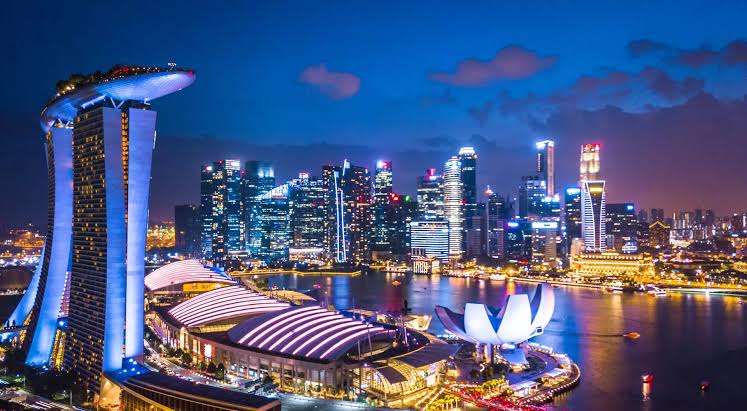
Funds from the Gulf have become important investors in global technology, sports, infrastructure and financial markets. Singapore's investment institutions have similarly established a major international presence.
These funds can influence where capital flows, which companies receive investment and which industries expand.
Yet their assets belong to governments or public institutions, not automatically to the individuals who lead those countries.
This distinction is often overlooked when discussions of hidden royal wealth begin.
A country's sovereign fund may be larger than the fortune of the world's richest individual, but that does not make its ruler a personal trillionaire.
Wealth is not the same as power
The debate about whether someone is secretly richer than Musk reveals a deeper issue in the way modern economies understand wealth.
Musk's financial power comes from ownership. His wealth is tied to companies whose value can rise or fall with investor confidence and business performance.
Royal families and political elites may exercise a different form of economic influence.
Their power can arise from control over institutions, access to national resources, political authority and relationships with international capital.
A ruler who influences the deployment of hundreds of billions of dollars in public investments may have enormous economic power without personally owning those assets.
Likewise, a sovereign wealth fund can become a major shareholder in international companies without its money belonging to a single individual.
These distinctions matter because economic influence is not always reflected in personal net-worth rankings.
So, is there someone secretly richer than Elon Musk?
The honest answer is that there is no credible public evidence establishing that a hidden individual possesses a personal fortune larger than Musk's estimated $890.7 billion.
There are families with extraordinary combined wealth. There are royal institutions associated with vast economic resources. And there are sovereign funds managing trillions of dollars in public capital.
But these are different categories of wealth.
The Walton family's fortune, for example, is substantial but smaller than Musk's individual estimate. The Al Nahyan, Al Saud and Al Thani family estimates are smaller still. Government investment portfolios cannot simply be attributed to their political leaders.
It remains possible that some private fortunes are substantially underestimated. The problem is that an unverified fortune cannot responsibly be presented as fact.
The more consequential question is not whether a mysterious billionaire is hiding somewhere above Musk on the rankings.
It is how much economic power exists outside the conventional definition of personal wealth.
In a world where governments, royal dynasties, family empires and private investors increasingly compete for influence over global capital, the person with the largest net worth is not necessarily the person with the greatest economic power.
Musk may be the world's richest identifiable individual.
But the architecture of global wealth is considerably larger than any billionaire ranking can show.