Why Defeating Al-Shabaab Has Become So Difficult — and May Be Impossible by Military Force Alone
After nearly two decades of African Union deployments, Somali offensives, U.S. airstrikes and billions in foreign aid, Al-Shabaab remains resilient. It still takes territory, collects taxes and launches major attacks. The problem is bigger than terrorism: Somalia is confronting an entrenched insurgency that exploits the state’s political, security and governance weaknesses.
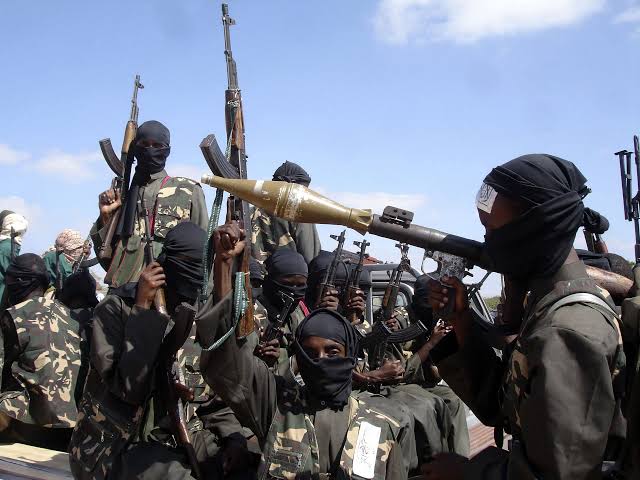
For almost two decades, the military objective in Somalia has appeared straightforward: weaken Al-Shabaab, recover the territory it controls, build capable Somali security forces and gradually transfer responsibility from foreign troops to the Somali government.
Al-Shabaab should, on paper, have been the weaker side. It has faced Somali forces, successive African Union missions, American air power, elite U.S.-trained Somali units and extensive international financial and intelligence support. Its senior leaders have been targeted repeatedly. Its fighters have been killed in large numbers. Towns have been captured from it, and governments have repeatedly announced new offensives intended to break its territorial control.
Yet Al-Shabaab is still here.
More troublingly, the group has repeatedly demonstrated an ability to absorb military losses, withdraw, reorganize and return when government pressure weakens. Somalia's major offensive beginning in 2022 initially produced significant territorial gains, but momentum later stalled. By March 2026, European Union asylum authorities assessed that Al-Shabaab had substantially expanded its control east of the Shabelle River in Hiraan and Middle Shabelle, regaining strategic towns including Adan Yabal, Mahas and Mokoqori.
This raises a question that policymakers have spent years trying to avoid: Why has defeating Al-Shabaab become so extraordinarily difficult?
The answer is uncomfortable because it suggests that Al-Shabaab's survival is not primarily a story about terrorism.
It is a story about the state.
Al-Shabaab Is Not Just an Army Hiding in the Bush
One of the biggest conceptual mistakes in understanding Al-Shabaab is imagining it simply as thousands of armed extremists occupying territory.
If that were the entire problem, military superiority might eventually solve it.
Al-Shabaab has instead developed characteristics of a parallel political and economic system. It taxes businesses and transportation, operates intelligence networks, settles disputes, administers territory and imposes rules on communities under its influence.
The Financial Action Task Force reported in 2025 that Al-Shabaab extensively uses extortion and taxation, drawing revenue from vehicles, transported goods, farms, agricultural production and livestock. Its financial system reaches beyond territory directly controlled by its fighters, including businesses operating in Mogadishu and southern Somalia.
A 2026 Congressional Research Service assessment said the organization reportedly collects as much as $200 million annually through taxation and mafia-like extortion and may have as many as 18,000 fighters.
This changes the nature of the conflict.
Capturing an Al-Shabaab checkpoint does not necessarily destroy its taxation network. Killing a commander does not eliminate the administrators beneath him. Recapturing a town does not automatically prevent the organization from intimidating businesses inside it.
A government can control the police station while an insurgent organization still influences the economy.
That is much harder to defeat.
The Fundamental Problem: Who Governs After Al-Shabaab Leaves?
Military forces can capture territory surprisingly quickly.
Governing it is much harder.
Imagine Somali forces and their allies drive Al-Shabaab from a rural district. The military victory receives international attention. Government officials raise the Somali flag, photographs circulate and the operation is declared successful.
Then the soldiers move toward the next objective.
What happens afterward?
Someone must provide security. Someone must resolve land disputes. Someone must adjudicate commercial disagreements. Roads need protection. Local administrators need salaries. Businesses need confidence that cooperating with the government will not result in assassination six months later.
If those institutions do not arrive—or arrive slowly—Al-Shabaab does not necessarily need to reconquer the town with a conventional military assault.
It can infiltrate it.
The organization can threaten elders, assassinate officials, intimidate businessmen and wait for government forces to become distracted elsewhere.
This has been one of the recurring weaknesses of the counterinsurgency campaign. Recent reporting on renewed government operations has similarly warned that territorial gains will be difficult to sustain without permanent security, governance, reconstruction and public services following military operations.
The challenge is therefore not merely clearing territory.
It is clearing, holding and governing it indefinitely.
Al-Shabaab Can Lose Battles and Still Win Time
Conventional armies usually measure success through territory, casualties and destruction of enemy forces.
Insurgencies operate under different mathematics.
Al-Shabaab does not necessarily need to defeat the Somali National Army and African Union forces in conventional combat. It needs to survive longer than the political coalitions assembled against it.
Foreign governments change.
Peacekeeping mandates expire.
Donor priorities shift.
Budgets shrink.
Somali political alliances fracture.
Clan relationships change.
Al-Shabaab can retreat from territory when military pressure becomes overwhelming and return when conditions become favorable.
That is why killing hundreds of fighters or capturing several towns can represent genuine tactical success without producing strategic victory.
The government's forces must succeed repeatedly.
The insurgency often needs only to survive.
Somalia Is Fighting Al-Shabaab While Fighting With Itself
Perhaps the greatest advantage Al-Shabaab possesses has nothing to do with its weapons.
It is Somalia's political fragmentation.
Relations between Mogadishu and several federal member states have deteriorated severely. Puntland and Jubaland have had major disputes with the federal government, while political disagreements over constitutional changes, elections and the distribution of authority have consumed enormous political energy.
The EU Agency for Asylum described Somalia's political environment in March 2026 as fractured and highly volatile. ACLED reported that Southwest became another regional administration to suspend cooperation with the federal government amid electoral disputes, warning that fragmentation was creating additional openings for Al-Shabaab.
This creates an extraordinary strategic contradiction.
The government needs maximum political unity to fight one of Africa's most resilient insurgencies.
Instead, federal and regional political actors are simultaneously fighting over the structure of the Somali state itself.
Every disagreement can affect intelligence sharing, troop coordination, logistics and local political cooperation.
Academic analysis of Somalia's security transition published in 2026 reaches a similar conclusion: the central obstacle to building sustainable Somali-led security is increasingly political rather than purely military. Without reconciliation between the federal government and federal member states, developing a coherent national security force remains exceptionally difficult.
Al-Shabaab does not have to create all these divisions.
It merely has to exploit them.
Clan Politics Can Be Both Al-Shabaab's Weakness and Its Opportunity
Somalia's clan system is frequently oversimplified in outside discussions, but no strategy against Al-Shabaab can ignore it.
The 2022 offensive demonstrated what becomes possible when local clan militias, often referred to as Ma'awisley, align with government forces against the insurgency. Community resistance helped produce some of the government's most significant territorial gains in years.
But clan mobilization is not automatically permanent.
Local communities have their own political interests, disputes, security calculations and grievances. If they believe the government cannot protect them after they rebel against Al-Shabaab, cooperation becomes extremely dangerous.
Al-Shabaab understands this.
It can exploit disputes between clans, present itself opportunistically as a defender of marginalized groups, punish communities that cooperate with the government and negotiate with local actors when doing so serves its interests.
This creates a brutal calculation for communities living far from secure government centers.
Supporting the state may be politically desirable.
But Al-Shabaab may still be there next year.
Fear Is a Form of Territorial Control
Maps of Somalia often divide territory into areas controlled by the government and areas controlled by Al-Shabaab.
Reality is considerably more complicated.
A town may officially belong to the government while merchants inside it still pay Al-Shabaab.
A businessman in Mogadishu does not necessarily need an Al-Shabaab fighter standing outside his shop to understand the consequences of refusing a demand.
This is one reason the organization's taxation system matters so much.
Taxation demonstrates something deeper than revenue generation: reach.
If an insurgent organization can identify a business owner, calculate what he owes, contact him, collect money and punish noncompliance, it possesses several characteristics normally associated with government.
It has intelligence.
It has records.
It has enforcement.
And most importantly, people believe its threats are credible.
Destroying that system requires more than capturing territory. It requires convincing citizens that the state—not Al-Shabaab—will ultimately be the stronger and more permanent authority.
Al-Shabaab Also Competes Through Justice
One of the most uncomfortable aspects of Al-Shabaab's endurance is that coercion is not its only source of influence.
The United Nations has noted that some Somalis continue to use Al-Shabaab courts because they regard them as more predictable or effective than a state judicial system perceived as slow or corrupt.
That does not make Al-Shabaab's system benign. Its rule is coercive and associated with severe abuses.
But counterinsurgency is partly a competition over which institution people believe can actually resolve problems.
Suppose two businessmen have a commercial dispute. A government court may take months, require connections or struggle to enforce its judgment. If an Al-Shabaab court produces a decision quickly—and both parties believe the organization can enforce it—the insurgency gains influence without firing a bullet.
This is where purely military strategies reach their limit.
A drone cannot replace a court.
An airstrike cannot create a trusted police force.
A commando raid cannot build a functioning district administration.
Airstrikes Can Kill Commanders. They Cannot Build Somalia.
The United States and Somali partners have dramatically increased aerial pressure on militant organizations.
According to the EUAA's June 2026 security assessment, air and drone strikes increased from roughly 70 incidents between April 2022 and March 2023 to 433 between April 2025 and March 2026.
These operations can be militarily valuable. Surveillance aircraft can locate camps, vehicle-borne explosives, supply routes and senior commanders. Precision strikes can destroy capabilities that Somali ground forces would find extremely costly to attack directly.
But air power faces a fundamental limitation.
It destroys.
Counterinsurgency ultimately requires construction.
After a militant commander is killed, someone must prevent his replacement from rebuilding the network. After a bomb factory is destroyed, intelligence services must dismantle the people financing and supplying it. After territory is recovered, administrators and police must remain.
Airstrikes can create opportunities.
Only functioning institutions can convert those opportunities into durable political control.
Foreign Troops Face Their Own Clock
Somalia has received African Union military support for approximately two decades through successive missions: AMISOM, ATMIS and now AUSSOM.
Those forces have played a major role in preventing Al-Shabaab from achieving its maximal objectives and in protecting strategically important population centers.
But foreign deployments cannot continue indefinitely.
And in 2026, that reality has become particularly serious.
The United States notified the African Union that it would not continue funding AUSSOM logistics beyond the end of 2026. The mission, numbering nearly 12,000 personnel, depends heavily on externally supported logistics including food, fuel, water, medical services and transportation.
That creates precisely the kind of strategic uncertainty from which insurgencies benefit.
Al-Shabaab does not need to defeat the African Union militarily if political and financial pressures eventually reduce the international presence.
It can wait.
And That May Be Al-Shabaab's Greatest Weapon
Time.
Western governments operate according to election cycles and budgets. International organizations operate through mandates. Peacekeeping missions require repeated political authorization and financing.
Al-Shabaab operates according to a much longer horizon.
For the insurgency, surviving another year can itself constitute progress.
Its leadership has watched international strategies change repeatedly while the organization remains embedded in Somalia.
That produces a profound asymmetry.
The international coalition asks:
How quickly can Somalia become secure enough for us to leave?
Al-Shabaab asks:
How long until they leave?
Those are very different strategic questions.
So Is Al-Shabaab Impossible to Defeat?
If “defeat” means killing every fighter and permanently eliminating the organization through military force, that objective may be unrealistic.
Insurgent movements rarely disappear simply because enough militants are killed. They disappear, fragment or become politically irrelevant when the environment sustaining them changes.
For Al-Shabaab, that environment includes weak state institutions, political fragmentation, insecurity, local grievances, economic vulnerability, corruption and gaps in justice and public administration.
That does not mean military operations are unnecessary. Somalia cannot govern territory if armed militants can simply overrun it. Security forces must protect cities, roads, institutions and communities. Al-Shabaab's leadership, bomb-making infrastructure and military formations cannot simply be ignored.
But military pressure is only one component of a much larger contest.
The real objective should be making Al-Shabaab progressively less useful, less profitable, less feared and less capable of presenting itself as an alternative authority.
That requires a Somali state that can outperform it.
The Real Battlefield Is Governance
The most decisive victories against Al-Shabaab may ultimately look surprisingly ordinary.
A court that settles disputes fairly.
Police officers who do not demand bribes.
A road that remains safe after government troops leave.
Civil servants who actually receive salaries.
A business owner who can refuse an Al-Shabaab tax demand because he trusts the government to protect him.
Clan leaders who believe disputes can be resolved politically rather than militarily.
Regional governments that share intelligence with Mogadishu instead of treating federal forces as political rivals.
None of these achievements produces dramatic footage comparable with an airstrike.
But collectively they attack the environment in which an insurgency survives.
Somalia Is Running Two Races at Once
This is ultimately why defeating Al-Shabaab has proved so difficult.
Somalia is simultaneously trying to build a state and defeat an insurgency that benefits from the state's incompleteness.
Every weakness in the first task makes the second harder.
If government institutions retreat, Al-Shabaab can govern.
If courts fail, Al-Shabaab can arbitrate.
If security forces leave, Al-Shabaab can intimidate.
If politicians divide, Al-Shabaab can maneuver between them.
If international financing disappears before Somali institutions are ready, Al-Shabaab can wait for the resulting vacuum.
This does not mean the insurgency is invincible. Al-Shabaab has lost leaders, territory and fighters repeatedly, and Somali communities themselves have demonstrated that local resistance can seriously challenge it.
But after nearly two decades of war, one conclusion is becoming difficult to escape.
Somalia cannot bomb its way out of the Al-Shabaab problem.
The organization can be militarily degraded, financially squeezed and territorially pushed back. But eliminating its ability to regenerate requires something much more difficult than defeating an army.
It requires building a state that Somalis believe will still be there after the soldiers, drones, foreign advisers and international missions have gone.
Until that happens, every battlefield victory carries the risk of becoming temporary.
And that is why Al-Shabaab remains so difficult to defeat.