Why China Turned on Kylian Mbappé Over a Mao Meme
A joke about an internet meme cost Kylian Mbappé Chinese sponsorship deals, disrupted football broadcasts and prompted apologies from Real Madrid and La Liga. The controversy shows how quickly a global celebrity can collide with China's political sensitivities—and the commercial power of its enormous market.
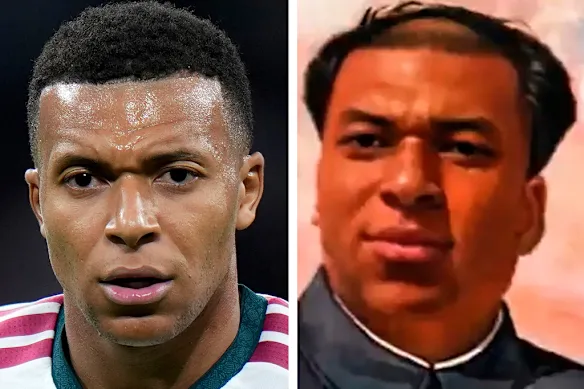
The Real Madrid and France superstar was discussing the countless memes that have followed him throughout his career when he recalled one that particularly amused him. It depicted Mbappé as Mao Zedong, the revolutionary leader who founded the People's Republic of China.
Referring to the figure in the meme, Mbappé described him as a "Chinese dictator."
A comment that might have passed almost unnoticed elsewhere quickly became something much bigger in China.
Within days, Chinese companies were cutting ties with one of football's biggest stars. State television suspended broadcasts involving him. His presence on Chinese social media was restricted. La Liga apologized. Then Real Madrid apologized.
Finally, Mbappé himself apologized.
What began as an internet meme had become an international controversy involving football, business, nationalism and one of the most politically sensitive figures in modern Chinese history.
A joke that crossed a political line
The origins of the meme have little to do with China.
For years, football fans have jokingly portrayed Mbappé as an authoritarian figure because of perceptions about the influence he wielded, particularly during his time at Paris Saint-Germain.
Internet users placed his face on images of dictators and powerful political leaders. The joke was essentially that Mbappé had become so influential that he could dictate what happened around his club.
During an appearance associated with French talk show The Bridge, Mbappé discussed those memes and referred to one showing him as what he believed was "a Chinese dictator." The accompanying image depicted Mao.
The footage was reportedly recorded months earlier but resurfaced around the Ballon d'Or ceremony in late October.
In Europe, describing Mao as a dictator would hardly be an extraordinary characterization. Mao ruled China from the Communist victory in 1949 until his death in 1976 under a one-party political system.
But the politics surrounding Mao inside China are far more complicated.
Mao is not merely another historical ruler.
His portrait still overlooks Tiananmen Square. His face appears on Chinese currency. He remains intimately connected to the legitimacy and history of the Chinese Communist Party.
That makes ridicule of Mao particularly sensitive.
Mbappé had accidentally stepped into one of the most politically charged areas of Chinese public life.
The commercial punishment came quickly
The consequences demonstrated how little separation exists between politics, celebrity and business when international stars operate in China.
Chinese companies began distancing themselves from Mbappé.
Dongpeng Beverage and dairy giant Mengniu were among the companies that terminated partnerships with him. Reports estimated that two of his Chinese sponsorship agreements were worth roughly 50 million yuan, or around €6.7 million.
Then the dispute moved beyond advertising.
China Media Group suspended broadcasts of matches involving Mbappé and demanded apologies from the player, Real Madrid and La Liga.
For Spanish football, that raised the stakes considerably.
China isn't simply another television market. European football clubs have spent decades building enormous audiences there through preseason tours, sponsorship agreements, merchandise and broadcasting partnerships.
Real Madrid reportedly has tens of millions of followers in China.
Suddenly, the words of one player threatened commercial relationships extending far beyond Mbappé himself.
Real Madrid was pulled into the dispute
Mbappé apologized first.
He called his remark "ill-judged" and acknowledged that it had hurt people in China and Chinese communities elsewhere. His apology was issued in multiple languages, including Mandarin.
La Liga also apologized and stressed the importance of its relationship with Chinese football supporters.
Then Real Madrid followed.
The club said it regretted any discomfort caused by its player's remarks and emphasized its respect for China, its history, culture and citizens.
China's Foreign Ministry subsequently said it took Mbappé's apology "seriously."
The speed of that sequence tells its own story.
A footballer made a joke.
Sponsors reacted.
State media reacted.
A major European football league apologized.
One of the world's most powerful football clubs apologized.
And the Chinese government publicly acknowledged the apology.
This was no longer really a story about a meme.
The strange part: some Chinese fans couldn't see what he had said
Perhaps the most revealing aspect of the controversy was what happened inside China's information system.
Chinese outlets condemned Mbappé's remarks, but some avoided reproducing precisely what he had said.
The sports platform Dongqiudi, for example, said the remarks were offensive and that it would therefore not translate them. Other discussions referred indirectly to Mao rather than naming him.
The original footage was also difficult to find on China's heavily controlled social-media ecosystem.
That produced an unusual situation.
People were being told that Mbappé had offended China while some were simultaneously being prevented from easily seeing the material that had caused the offence.
It demonstrates the peculiar logic of political censorship.
The offending statement can be considered too objectionable to circulate, while outrage over that statement is permitted—or even amplified.
Why Mao remains different
Understanding the reaction requires understanding Mao's position in contemporary China.
Modern China has never completely rejected him.
The Chinese Communist Party has acknowledged that Mao made serious mistakes, particularly later in his rule. But repudiating him entirely would be politically difficult because Mao is inseparable from the founding mythology of the People's Republic.
His legacy therefore occupies an unusual position.
Mao can be discussed historically, and aspects of his rule can be criticized within limits. But mocking him, particularly by an enormously wealthy foreign celebrity, can easily be interpreted as something broader than historical criticism.
It can become an insult to China itself.
This is where Mbappé's joke collided with nationalism.
He may have thought he was laughing at an image of himself.
Many Chinese viewers saw something else: a foreign celebrity earning money from Chinese consumers while casually mocking the founding leader of their country.
Those interpretations are very different.
And in China's political and commercial environment, the second one mattered more.
China has used this pressure before
Mbappé is hardly the first international sports figure to discover how quickly access to China's market can become political.
The most famous previous example came in 2019, when then-Houston Rockets general manager Daryl Morey posted support for Hong Kong protesters.
The reaction extended far beyond Morey.
Chinese broadcasters stopped showing NBA games, sponsors reconsidered partnerships and the dispute developed into a major crisis for the league.
The financial consequences ran into hundreds of millions of dollars.
The message to international sport was difficult to miss.
Access to China's enormous consumer market comes with enormous opportunities—but also political risks.
Athletes and organizations remain free to say things China dislikes.
China's broadcasters, consumers and companies are equally capable of withdrawing their money and access.
That creates a powerful incentive for self-censorship long before governments need to formally demand it.
Mbappé's controversy is bigger than Mbappé
That is what makes this episode worth paying attention to.
On the surface, it is a bizarre celebrity story.
A footballer laughed at a meme.
A country became angry.
He apologized.
The news cycle moves on.
But underneath it is a much larger struggle facing global companies, sports leagues and celebrities.
Globalization allowed Western entertainment and sports organizations to reach hundreds of millions of Chinese consumers.
China's economic rise made that audience extraordinarily valuable.
But dependence works both ways.
The more valuable the Chinese market becomes, the greater China's ability to influence how international companies and celebrities behave outside China.
No law in Madrid has to prohibit jokes about Mao.
No Chinese official needs to tell every European footballer what he can say.
The possibility of losing sponsors, television audiences and access to a huge consumer market can perform much of that work by itself.
That is the real significance of the Mbappé affair.
One meme, a much bigger lesson
Mbappé's description of Mao was politically sensitive, and Chinese people are entitled to find it offensive.
But the scale of the reaction tells us something beyond whether one footballer's joke was tasteful.
It demonstrates the extraordinary intersection of national identity, political censorship and commercial power in modern China.
Mbappé is one of the most recognizable athletes on Earth. Real Madrid is one of the world's most valuable sporting institutions.
Yet within days, both were issuing apologies because of a few words spoken while discussing an internet meme.
That is an impressive demonstration of China's economic influence.
And perhaps the strangest element is that some of the people expected to be outraged were unable to freely view the thing they were supposed to be outraged about.
For Mbappé, the lesson will probably be simple: some memes are better left unexplained.
For international sport, the lesson is considerably bigger.
When access to hundreds of millions of consumers is at stake, a joke made thousands of kilometres away can suddenly become a matter of diplomacy.
 Analysis
Japan weighs emergency nuclear-entry exception in year-end security rewrite
 Briefing
One Life, Eight Second Chances: The Story of a 22-Year-Old South Korean Woman Who Saved Eight Lives Through Organ Donation
 Briefing