Japan weighs emergency nuclear-entry exception in year-end security rewrite
Local media report that Tokyo may write into its revised National Security Strategy an emergency exception allowing nuclear weapons into Japan, while leaving the Three Non-Nuclear Principles formally intact. Even without rewriting the principles themselves, the change would sharpen East Asian debates over deterrence and Japan’s nuclear identity.
The Japanese government is considering writing an emergency exception into its revised National Security Strategy that would allow nuclear weapons to enter Japan in a crisis, while keeping the country’s Three Non-Nuclear Principles formally unchanged, according to local media reports citing people familiar with the matter.
Kyodo News reported on 5 November 2026 that one leading option under review is to incorporate a government view — dating to a March 2010 Diet statement by then Foreign Minister Katsuya Okada — that Japan could permit temporary port calls by U.S. vessels carrying nuclear weapons if that were judged necessary to protect national security. Sankei Shimbun reported a similar account earlier, on 8 October, saying officials were discussing how to record such an exception for the “not permitting introduction” principle in the year-end rewrite of Japan’s three core security documents.
No Cabinet decision has been announced. The reporting rests on anonymous government and ruling-party sources, and the wording remains unsettled inside the governing coalition. What is clear is the direction of the debate: Tokyo is weighing whether to put an emergency-entry caveat into an official strategy document while insisting that the principles themselves — not possessing, not producing and not permitting the introduction of nuclear weapons — will stay on paper.
What the reported exception would and would not do
As described by Sankei and Kyodo, the proposal concerns temporary introduction of nuclear weapons aboard U.S. ships in an emergency — not Japanese possession or production of nuclear arms, and not a standing forward deployment. Prime Minister Sanae Takaichi has separately said Japan is not considering nuclear sharing with the United States and that such an arrangement would not be appropriate.
Okada’s March 2010 remark, quoted across Japanese coverage of the current debate, held that if Japan’s safety could not be guaranteed without allowing a temporary port call by a U.S. vessel carrying nuclear weapons, the government of the day should stake its political fate on a decision and explain it to the public. Successive cabinets have treated that view as part of Japan’s official understanding. Writing it into the National Security Strategy would still matter: an emergency caveat in the state’s supreme security document carries more weight than a parliamentary answer alone.
Kyodo reported that if the exception is stated formally, Tokyo would also need criteria for when entry would be allowed and procedures for joint Japanese–U.S. decision-making. Sankei noted open questions about how port-host municipalities would be handled. Those details have not been published.
Why the principles still constrain deterrence politics
Prime Minister Eisaku Sato articulated the Three Non-Nuclear Principles in the Diet on 11 December 1967. Japan’s Foreign Ministry still presents that statement as the authoritative origin of the policy of not possessing, not producing and not permitting the introduction of nuclear weapons. Diet resolutions later reinforced the principles as political national policy, though they are not a statute that automatically binds Cabinet wording in strategy documents.
Japan’s December 2022 National Security Strategy commits the country to an exclusively defence-oriented policy, to not becoming a military power that threatens others, and to observing the Three Non-Nuclear Principles. The same document calls the Japan–U.S. alliance, including U.S. extended deterrence, the cornerstone of Japanese security. That pairing — a non-nuclear identity alongside dependence on a nuclear-armed ally — has always contained a practical tension over whether U.S. nuclear forces can operate credibly in or through Japanese territory in a contingency.
The tension is not new. In 2010, a Foreign Ministry investigation and an expert panel examined alleged Cold War–era “secret agreements,” including arrangements related to nuclear weapons and prior consultation under the Japan–U.S. security treaty. Kyodo notes that Okada led the inquiry that brought those issues into public view. The present debate, in other words, is less a sudden break with the past than an attempt to state more openly a contingency Japan’s governments have long left partly in parliamentary and bureaucratic shadow.
Takaichi’s government and the year-end rewrite
Takaichi, who took office on 21 October 2025 as Japan’s first woman prime minister, has long argued that the ban on introducing nuclear weapons sits uneasily with reliance on U.S. extended deterrence. In her 2024 book Kokuryoku Kenkyu (A Study of National Power), she wrote that expecting U.S. extended deterrence while maintaining “not possessing,” “not producing” and “not permitting introduction” was unrealistic, and that rigid adherence to the three principles could become an obstacle in an ultimate crisis, according to Asahi Shimbun’s account of the passages.
In the Lower House Budget Committee on 14 October 2026, Takaichi said the government maintains the principles as a policy guideline but that there was “room for consideration” regarding how the forthcoming security documents should address U.S. extended deterrence and Okada’s remarks, Nikkei and other outlets reported. Foreign Minister Toshimitsu Motegi has both stressed that the regional threat environment has grown more severe since 2010 and cautioned that Tokyo must weigh how other countries would perceive an explicit reference to Okada’s statement in the strategy documents.
Defence Minister Shinjiro Koizumi, speaking at a Tokyo symposium on 3 November, said Japan needed an environment for candid debate on nuclear threats and that he wanted the “best possible revision” of the three security documents under existing constraints, Kyodo reported via Tokyo Shimbun.
Coalition politics will shape the final text. In June 2026, the Japan Innovation Party, the Liberal Democratic Party’s junior partner, submitted proposals calling for a “realistic review” of the no-introduction principle and study of nuclear sharing; the LDP’s own panel proposal stressed the credibility of U.S. extended deterrence without matching that language, The Japan Times reported. Kyodo’s November account says some LDP members remain wary of revising the principles themselves, while Innovation Party lawmakers are more supportive of change — making an “exception on paper, principles unchanged” formula a possible compromise.
Regional stakes if the exception is written in
Even a narrowly framed emergency-entry clause would land in a sharper East Asian nuclear environment than the one Okada addressed in 2010. China’s rapid nuclear and missile expansion, North Korea’s advancing arsenal and Russia’s closer military coordination with Beijing are the pressures Japanese officials cite when arguing that U.S. extended deterrence must be made more operationally credible. Kyodo reported concern inside Tokyo that China would intensify accusations of Japanese “neo-militarism” if the exception is stated formally; that is a projected political risk, not a confirmed diplomatic response to the latest leaks.
For Japan, the immediate audience is also domestic. Atomic-bomb survivor groups and opposition parties treat the three principles as a political red line that should not be diluted by Cabinet strategy language. For the United States, clearer Japanese contingency planning could ease alliance planning — but only if Tokyo and Washington agree on thresholds, consultation and public explanation that Japanese politics can actually sustain.
South Korea and other regional governments will watch whether Japan’s move stays limited to emergency transit and port calls or becomes a wider opening toward nuclear sharing or indigenous nuclear options. On the public record so far, Takaichi has rejected nuclear sharing. The harder question is whether writing an emergency exception into the National Security Strategy would reduce ambiguity that has complicated deterrence — or simply relocate that ambiguity into new disputes over when an “emergency” begins.
What remains unresolved
The year-end deadline for revising the National Security Strategy and related defence documents is approaching, but the government has not published draft language. Until it does, the story remains one of deliberation reported by Japanese media, not adopted policy. The material choice before Tokyo is whether to preserve the political symbolism of the Three Non-Nuclear Principles while acknowledging, in black and white, that Japan’s security may require U.S. nuclear forces to enter its territory in a crisis.
That acknowledgment would not, by itself, place nuclear weapons in Japanese ports. It would, however, make explicit a bargain Japan has lived with for decades: non-nuclear status at home, nuclear deterrence through the alliance, and a grey zone between the two that peacetime politics prefers not to define. Defining it now would clarify deterrence planning for some and confirm, for others, that the principles’ third pillar was always more conditional than national mythology allowed.
 Briefing
One Life, Eight Second Chances: The Story of a 22-Year-Old South Korean Woman Who Saved Eight Lives Through Organ Donation
 Briefing
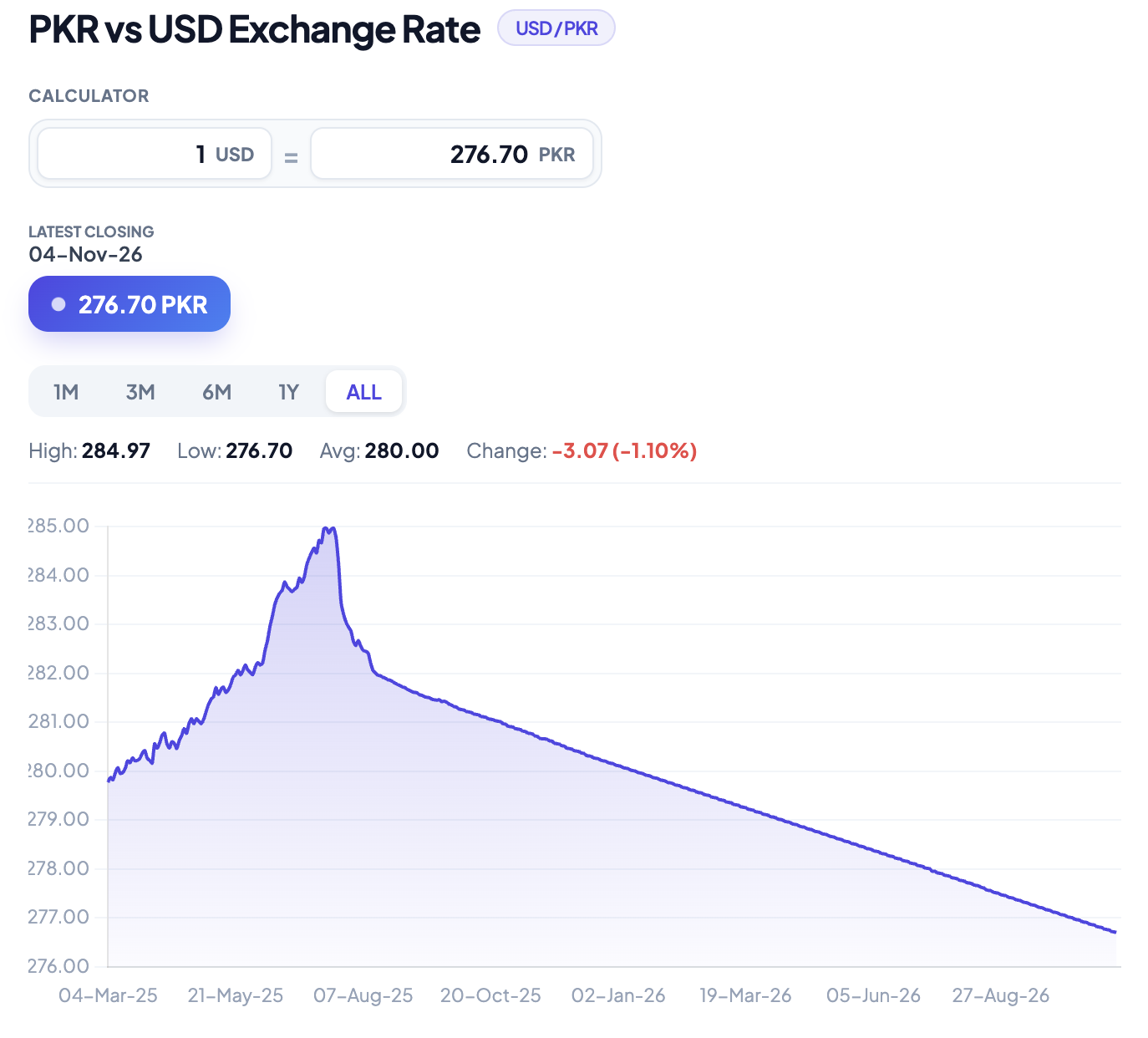
Pakistan's Rupee Strengthens Against the Dollar: How US Politics and Oil Prices Are Shaping Emerging Markets
 Analysis