US Secrets, Ethiopia’s War and the Price of Intelligence: Inside the Espionage Case That Reaches From Washington to Tigray
Ethiopian-born former US government contractor has admitted passing highly classified American intelligence to Ethiopian officials during the Tigray war. The case raises troubling questions about foreign intelligence, the use of American surveillance capabilities in an internal conflict, and the extent to which governments can turn access to global intelligence networks into battlefield advantages
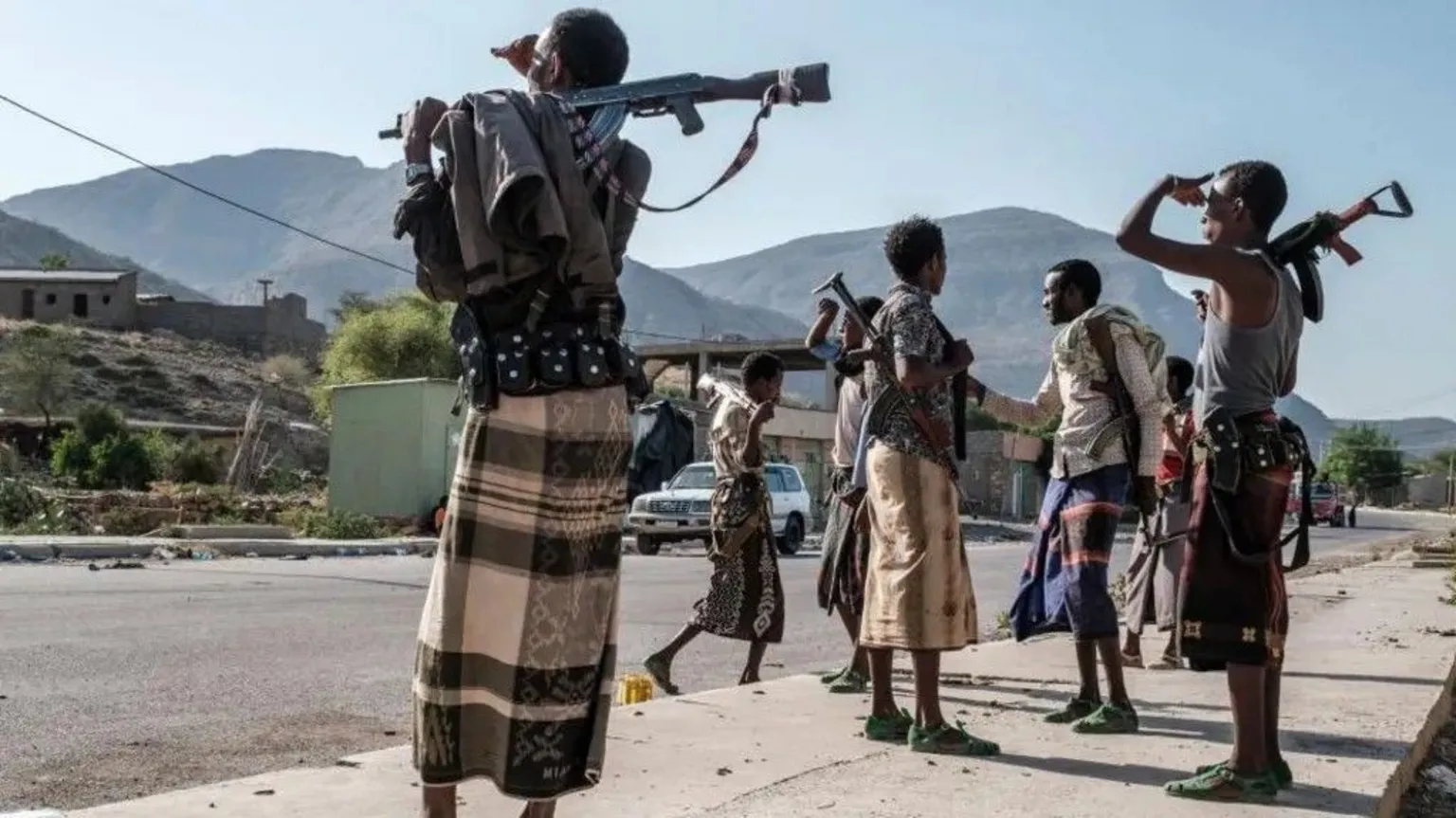
The case against Abraham Teklu Lemma is extraordinary not simply because an American government contractor passed classified intelligence to a foreign government. It is extraordinary because the information was allegedly intended to help Ethiopia identify and target fighters during one of the deadliest conflicts in modern African history.
On November 3, 2026, Lemma pleaded guilty in a Washington federal court to conspiring to transmit national defence information to the Ethiopian government. According to the US Department of Justice, he had spent more than two years secretly collecting and transferring highly classified American intelligence to senior Ethiopian officials.
The disclosures included dozens of classified documents, photographs, handwritten notes and other sensitive materials. Some carried the highest levels of American security classification, including Top Secret and Sensitive Compartmented Information.
The revelations expose an intelligence operation that connected secure American government facilities with Ethiopia's political, military and intelligence establishment at a particularly consequential moment in the country's history.
But beyond the criminal case lies a much larger question: how did American intelligence become part of the information environment surrounding Ethiopia's war?
Inside the intelligence operation
Lemma had worked as an information technology contractor for three major American government institutions: the Department of State, the Department of Justice and the National Reconnaissance Office.
The latter is particularly significant. The National Reconnaissance Office operates America's intelligence satellite systems, providing capabilities that support military planning, surveillance and national security operations.
Lemma's position gave him access to classified government systems. Prosecutors say he exploited that access to collect information that he was not authorised to transfer to a foreign government.
The operation reportedly involved several methods of removing sensitive material from secure facilities. He allegedly copied electronic intelligence files, transferred information into handwritten notes and physically carried classified material outside government buildings.
He then transmitted the information to Ethiopian government contacts through encrypted communications.
According to prosecutors, the recipients included senior officials across Ethiopia's political, military and intelligence institutions.
This was not an isolated disclosure or a single document falling into the wrong hands. The Justice Department describes a sustained relationship that operated from 2021 until Lemma's arrest in August 2023.
The material was particularly sensitive because much of it concerned an armed conflict inside Ethiopia.
When intelligence becomes a battlefield weapon
Perhaps the most disturbing element of the case concerns the alleged purpose behind the intelligence transfers.
According to the Justice Department, Lemma sometimes encouraged his Ethiopian contacts to take direct action against paramilitary groups fighting the government.
One message, dated December 18, 2021, is particularly revealing.
"We have to finish these people once and for all, otherwise there will never be peace in Ethiopia," he reportedly told an Ethiopian contact.
Later that day, after sharing additional information, he wrote: "Please send Dro[nes]."
The significance of these communications extends beyond the language used. They suggest that the intelligence was not simply being transferred for general political or strategic awareness. Prosecutors say Lemma hoped the information would help Ethiopian officials target and kill fighters opposing the government.
The FBI has stated that Ethiopian officials used the information in military operations during an ongoing conflict.
However, American authorities have not publicly identified the specific operations in which the intelligence was used. Nor have they established publicly whether particular deaths or attacks can be directly attributed to the material Lemma supplied.
That distinction matters. The case establishes a serious intelligence breach and an admitted conspiracy. It does not, by itself, establish a complete account of the military consequences.
Nevertheless, the allegations illustrate the growing importance of intelligence in contemporary warfare.
Satellite imagery, military activity reports, information about logistical facilities and other classified assessments can help military planners understand where opposing forces operate, how they move and where they may be vulnerable.
In a conflict involving drones and increasingly sophisticated surveillance capabilities, access to accurate intelligence can influence the battlefield long before a weapon is deployed.
The Tigray war and the international dimension
The disclosures must be understood against the background of Ethiopia's 2020–2022 civil war.
The conflict began in November 2020 when fighting erupted between the federal government and the Tigray People's Liberation Front (TPLF), which had dominated Ethiopia's political establishment for nearly three decades before Abiy Ahmed became prime minister.
The war rapidly expanded beyond a domestic political confrontation. Eritrean forces became involved alongside Ethiopian federal forces, while other armed groups and regional actors shaped the conflict.
The humanitarian consequences were catastrophic. Hundreds of thousands of people died through violence, hunger and the collapse of essential services, according to estimates cited by researchers. Millions were displaced.
The Pretoria Agreement, signed in November 2022, formally ended the main phase of the war. Yet the settlement did not resolve every political, territorial and security dispute that had produced the conflict.
The intelligence operation described by American prosecutors overlapped with the war's most destructive period.
This makes the case particularly consequential. It raises questions about the extent to which intelligence collected by a global power was transferred into a domestic conflict, and what advantages that information may have provided to one side.
It also demonstrates that the international dimensions of Ethiopia's war extended beyond the more visible involvement of foreign troops, weapons suppliers and diplomatic supporters.
Intelligence itself was another potential instrument of foreign involvement.
The uncomfortable questions for Washington
For the United States, the case represents a serious counterintelligence failure.
Government contractors often have access to highly sensitive systems because they provide technical services that government institutions depend on. Their responsibilities may involve maintaining networks, administering systems and ensuring that classified information remains accessible to authorised personnel.
But access is not the same as unrestricted authority.
The Lemma case demonstrates how an individual with technical privileges can potentially exploit institutional trust to move sensitive information beyond the boundaries of the system designed to protect it.
The implications are particularly serious for an organisation such as the National Reconnaissance Office. Intelligence derived from satellite systems can reveal information about military installations, troop movements, infrastructure and strategic activities.
A breach involving such material can compromise not only individual intelligence assessments but also the methods and capabilities used to produce them.
The case therefore raises difficult questions about contractor oversight, internal access controls and the ability of foreign intelligence services to exploit individuals working inside sensitive government institutions.
It also places Washington in a complicated diplomatic position.
The United States has maintained an important relationship with Ethiopia, one of Africa's most strategically significant countries. Ethiopia's location in the Horn of Africa, its influence in regional security affairs and its proximity to the Red Sea make it an important consideration in American foreign policy.
At the same time, Washington has repeatedly had to confront the consequences of Ethiopia's internal conflicts and their humanitarian implications.
The revelation that classified American intelligence was allegedly transferred to Ethiopian officials during the war adds another layer to that relationship.
It does not establish that the American government authorised or supported the intelligence transfers. On the contrary, Lemma's guilty plea concerns an illegal conspiracy that American authorities have prosecuted.
But it does expose how the security interests of two governments can intersect through individuals who possess access to sensitive information.
What Ethiopia's government must answer
The American criminal proceedings establish that Lemma conspired to transmit classified national defence information to Ethiopian officials.
They also identify his alleged contacts as senior figures in the political, military and intelligence branches of the Ethiopian government.
Yet the public account leaves several important questions unanswered.
Who were the officials receiving the intelligence? Which government institutions handled it? How was the material incorporated into military planning? And what specific operations benefited from the information?
These are not peripheral questions.
If classified intelligence was used to guide military operations, understanding how it moved through Ethiopia's state institutions is essential to establishing the full consequences of the operation.
The Ethiopian government has an interest in addressing these questions transparently, particularly given the enormous human cost of the Tigray conflict.
The allegations should not be used to assign collective responsibility to Ethiopians or to the Ethiopian diaspora. Nor should the conduct of one individual be treated as evidence that every intelligence transfer represented an official policy.
But the involvement of senior government contacts, as described by American prosecutors, makes the institutional dimension impossible to ignore.
The case deserves a substantive public explanation.
A diaspora identity caught between two states
There is also a broader question about citizenship, political identity and the relationship between diaspora communities and their countries of origin.
Lemma was an Ethiopian-born American citizen who had access to some of the most sensitive information held by the United States government.
His case demonstrates the potential security risks that arise when personal political loyalties intersect with professional access to classified information.
However, it would be a mistake to turn this case into a general indictment of the Ethiopian diaspora.
Millions of people maintain deep connections with their countries of origin while building lives in other nations. Cultural attachment, political interest and concern about events back home are not inherently incompatible with citizenship elsewhere.
The boundary becomes fundamentally different when an individual uses privileged access to transfer classified national defence information to a foreign government.
That is the distinction at the heart of this prosecution.
The next chapter: A guilty plea, but unanswered questions
Lemma now faces a substantial prison sentence.
Under his plea agreement, he has agreed to a term of between 120 and 262 months, equivalent to 10 years and nearly 22 years, subject to the court accepting the agreement. His sentencing is scheduled for April 14, 2027.
The criminal case may ultimately establish the legal consequences of his actions. But it will not necessarily answer every question about how the intelligence was used or who within Ethiopia's government directed, received and acted upon it.
For Ethiopia, the revelations arrive amid renewed instability in the north and continuing tensions surrounding the country's security and regional position.
For Washington, the case is a warning about the vulnerabilities inside its own intelligence infrastructure and the risks created when sensitive information is entrusted to people with privileged access.
For the wider Horn of Africa, it offers another reminder that modern conflicts are rarely confined to the territory where fighting takes place. Information, technology, foreign relationships and intelligence networks can all shape the balance of power.
The most important question may therefore extend beyond Abraham Lemma himself.
If American intelligence reached Ethiopian officials and was subsequently used in military operations, the public deserves to know how far that information travelled, what it enabled and whether the consequences can ever be fully established.
The guilty plea closes one chapter of an espionage investigation. It does not close the questions surrounding the war in which the intelligence was allegedly intended to be used.