Uniqlo: The Japanese Clothing Company That Turned Basics Into a Global Technology Business
How a retailer built around plain T-shirts, fleece, heat-retaining underwear and everyday clothes became one of the world’s most powerful fashion businesses.
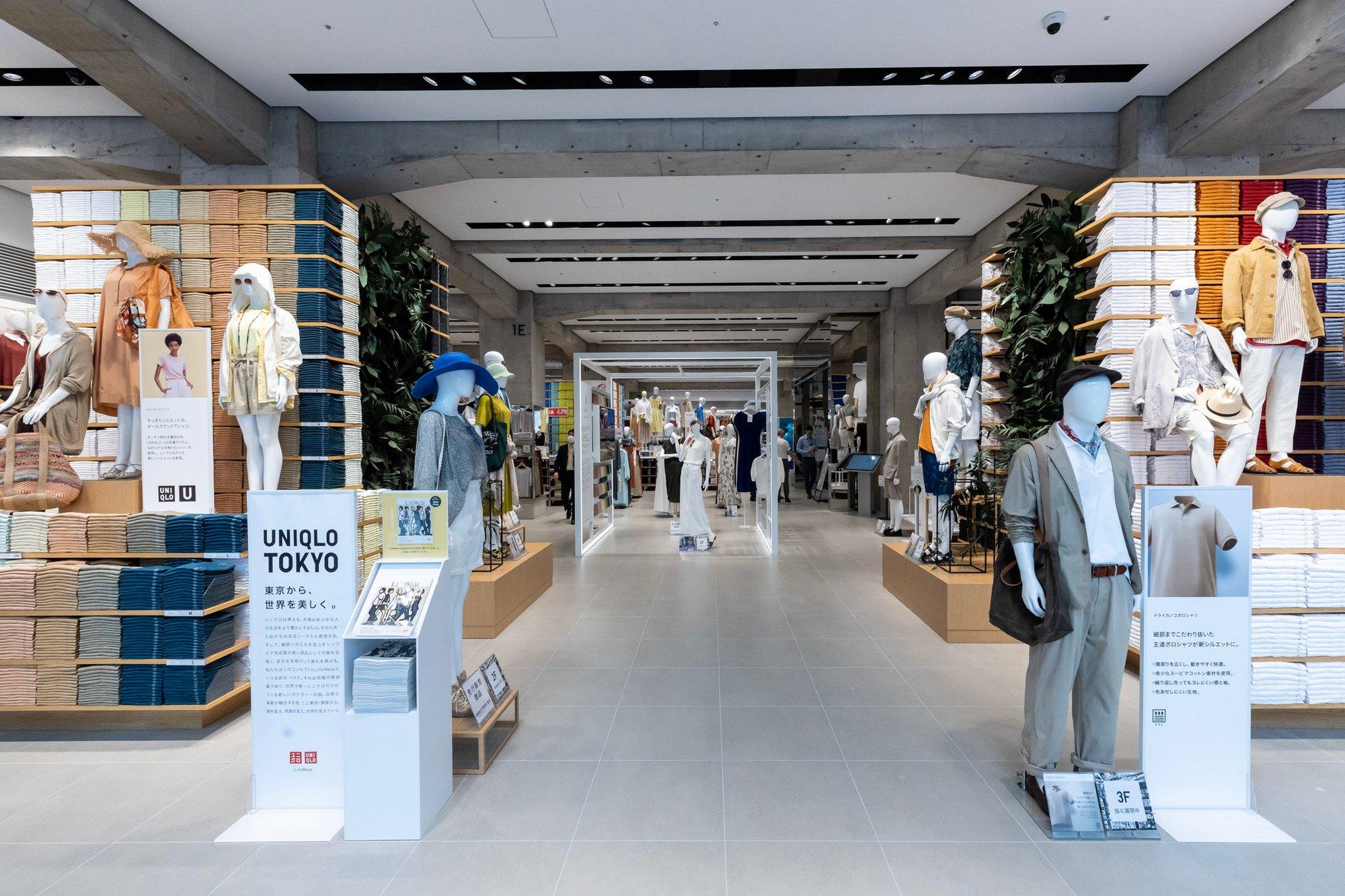
There is nothing particularly dramatic about walking into a Uniqlo store.
There are no giant logos demanding attention. The clothes are rarely designed to make their wearer look like they have just stepped out of a fashion show. Rows of T-shirts, trousers, jackets, sweaters and underwear are arranged with almost industrial precision.
And yet behind this apparent simplicity sits one of the most sophisticated businesses in global retail.
Uniqlo has spent decades doing something that sounds almost contradictory: making ordinary clothes extraordinarily scalable.
The company does not primarily sell the fantasy of becoming someone else. It sells the idea that the clothes you already need can be made better.
That distinction is at the heart of Uniqlo's rise.
In fiscal 2026, Uniqlo generated ¥3.4959 trillion in sales and operated 2,499 stores worldwide. Its parent company, Fast Retailing, reported group revenue of ¥3.9633 trillion and business profit of ¥718.4 billion for the year ended August 31, 2026. It was the group's fifth consecutive record year. Fast Retailing
On October 28, 2026, Uniqlo was ranked No. 38 in Interbrand's Best Global Brands, with an estimated brand value of $20.5 billion, up 16% from the previous year. Fast Retailing
That is a remarkable transformation for a company whose original store was essentially a low-price clothing warehouse.
From a clothing warehouse to a global machine
Uniqlo's story begins in Hiroshima in 1984.
The first store was designed around a straightforward proposition: offer a large selection of clothes at affordable prices. But the original wholesale-oriented model quickly reached its limits.
Fast Retailing says that in 1987 it moved toward what became known as the SPA model — specialty retailer of private-label apparel.
The difference was fundamental.
Instead of simply buying finished clothing and selling it, the company began taking much greater control over the process: product planning, materials, manufacturing, distribution and retail.
That gave Uniqlo something most traditional retailers struggled to achieve.
Control.
The company could think about a product from the perspective of the customer, determine what material it wanted, negotiate directly with suppliers, manufacture at enormous scale and then sell the finished product through its own stores.
It was less like running a collection of fashion boutiques and more like operating a highly optimized consumer-products company.
That model would eventually become the foundation of Uniqlo's global expansion. Fast Retailing
The radical idea was that clothing did not have to be exciting
Fashion traditionally thrives on change.
New season. New silhouette. New color. New designer. New status symbol.
Uniqlo took a different route.
Its central idea eventually became LifeWear: clothing designed around everyday life rather than the fashion calendar.
That sounds simple. But commercially, it is powerful.
A fashion brand may convince a customer that they need another jacket because the jacket is fashionable.
Uniqlo tries to convince the customer that they need another jacket because this jacket is better.
It is warmer.
It dries faster.
It stretches.
It is lighter.
It is easier to layer.
It protects against ultraviolet radiation.
It is comfortable enough to wear every day.
The result is a subtle shift in what the company is actually selling.
Uniqlo is not merely selling clothes.
It is selling solutions to everyday problems that happen to be worn on the body.
The company's own description of LifeWear emphasizes simple, high-quality everyday clothing, practical design and continuous improvement. UNIQLO
HEATTECH was more important than it looked
One of Uniqlo's most important breakthroughs was HEATTECH.
Rather than treating underwear as an invisible commodity, Uniqlo turned the basic garment into a piece of technology.
The idea was straightforward: create lightweight clothing capable of helping the wearer retain warmth without requiring the bulk associated with traditional winter clothing.
Uniqlo developed the technology with Japanese chemical and materials company Toray Industries.
That relationship illustrates something important about the company's strategy.
Uniqlo does not necessarily need to invent every material itself.
Instead, it can identify a consumer problem and then work with specialists to develop a material capable of solving it.
The same thinking appears in AIRism, which focuses on moisture management, quick drying and comfort in warmer conditions. Fast Retailing
This is why some of Uniqlo's most successful products look almost boring.
The innovation is hidden inside the fabric.
The secret is scale
Uniqlo's business becomes particularly interesting when you look at the numbers behind an apparently simple T-shirt.
The company says many of its products are manufactured in lots of roughly one million units.
That scale changes the economics.
If Uniqlo can predict demand accurately enough, purchase huge quantities of material and manufacture enormous volumes of a relatively small number of products, it can spread development and procurement costs across millions of garments.
It also gives the company enormous bargaining power with material suppliers.
Fast Retailing says Uniqlo negotiates directly with materials manufacturers around the world and uses its scale to secure high-quality materials at competitive prices. Fast Retailing
This creates a powerful loop:
More customers → larger production → better purchasing economics → competitive prices → more customers.
But scale alone is dangerous.
If you manufacture millions of unwanted shirts, you have not created an advantage.
You have created millions of unsold shirts.
That is why inventory management sits at the center of Uniqlo's model.
Uniqlo's real product may be its feedback loop
One of the least visible parts of the company is also one of its most important.
Uniqlo collects customer feedback and feeds it back into product development.
Its designers and research teams do not simply create collections and wait for consumers to react. Customer opinions are incorporated into the development process, while merchandising teams monitor sales and adjust production.
According to Fast Retailing, product concepts can begin roughly a year before launch, with R&D, merchandising, marketing and materials teams determining designs, materials and product ranges before designers develop samples. Fast Retailing
The process resembles software development more than traditional fashion.
Release.
Observe.
Collect feedback.
Improve.
Release again.
The difference is that instead of pushing a software update to a phone, Uniqlo can change the fabric, cut, color, stitching or functionality of a garment.
That creates a business that can continuously refine its products without constantly reinventing its identity.
Why Uniqlo does not need to chase every trend
This is perhaps the company's greatest strategic advantage.
A fashion retailer dependent on trends has a difficult problem: it must constantly guess what consumers will want next.
Uniqlo's core products have a longer life.
A plain T-shirt does not become irrelevant because another T-shirt has appeared.
A lightweight jacket does not become obsolete because a celebrity wore something different.
HEATTECH does not need a new aesthetic every season to justify its existence.
This gives Uniqlo a different relationship with fashion.
It can participate in fashion without becoming completely dependent on it.
The company does this through collaborations, designers and collections such as Uniqlo U while maintaining a core business based on functional everyday clothing.
That balance is important.
Fashion creates excitement. Basics create repeat purchases.
Uniqlo needs both.
The global expansion was not easy
The Uniqlo story is sometimes presented as though global domination was inevitable.
It was not.
The company opened its first store outside Japan in London in 2001. The initial excitement did not last.
The breakthrough came later, particularly in Hong Kong and Shanghai in 2005.
A year later, Uniqlo opened its Soho global flagship in New York.
That store became an important lesson.
Uniqlo discovered that international expansion was not simply about exporting Japanese stores to foreign cities. The brand had to communicate what made it distinctive.
Its global flagship strategy helped establish Uniqlo's identity in major markets, with stores subsequently opening in cities including London, Paris and Shanghai. Fast Retailing
The company was gradually learning how to become Japanese in origin but global in relevance.
The economics are changing dramatically
For years, Japan was the center of the Uniqlo story.
That is no longer true.
In fiscal 2026, Uniqlo Japan generated ¥1.0848 trillion in revenue.
Uniqlo International generated ¥2.4111 trillion — more than twice as much — with revenue rising 26.2% and business profit increasing 44.1%. Fast Retailing
The international business is increasingly becoming the engine of the company.
North America and Europe have been particularly important to this transformation.
The Southeast Asia, India and Australia region is also expanding rapidly, while South Korea continues to contribute strong growth. Greater China remains enormous but has required structural reforms as the Chinese consumer market has become more difficult.
This geographical shift changes the nature of Uniqlo itself.
It is no longer simply a Japanese company selling abroad.
It is becoming a global retailer whose Japanese origins are part of its identity rather than the center of its business.
Why the flagship stores matter
At first glance, opening enormous stores in expensive global locations seems almost contradictory for a company known for affordable clothing.
But the stores are not merely sales outlets.
They are advertisements.
A large Uniqlo store in New York, London, Paris or another major city tells consumers that the brand belongs there.
It communicates scale.
It communicates confidence.
And it gives customers an environment in which the company can explain the LifeWear concept.
Fast Retailing says its continued investment in high-quality and flagship stores is intended to strengthen Uniqlo's global presence and communicate the value of LifeWear. Fast Retailing
In other words, the store itself has become part of the marketing strategy.
The company is becoming less dependent on winter
There is another interesting change happening beneath the surface.
Uniqlo historically benefited enormously from winter products, particularly HEATTECH and other cold-weather clothing.
But relying too heavily on winter creates a problem: weather becomes a business risk.
A warm winter can hurt sales.
Fast Retailing has therefore been pushing a broader range of year-round products.
In fiscal 2026, the company highlighted stronger growth from products that were not dependent on winter demand. Fast Retailing
This may sound like a small operational adjustment.
It is actually strategically important.
The more Uniqlo can sell clothing throughout the year, the less its financial performance depends on whether a particular season is unusually cold.
That makes the business more predictable.
The uncomfortable question: is Uniqlo really sustainable?
This is where the story becomes more complicated.
Uniqlo presents LifeWear as part of a broader effort to produce longer-lasting clothing, reduce environmental impact, improve working conditions and eventually encourage recycling and reuse.
Those ambitions are significant.
But clothing is still clothing.
A global retailer producing millions of garments faces unavoidable environmental questions around raw materials, manufacturing, transportation, energy use, waste and consumer behavior.
The danger for any large apparel company is that sustainability becomes another marketing layer rather than a fundamental change in how clothes are produced and consumed.
Uniqlo's scale gives it an unusual opportunity here.
If it can use that scale to make better materials cheaper, extend garment life, reduce waste and improve manufacturing conditions, the impact could be meaningful.
But the same scale also means that mistakes are multiplied.
That is the paradox of Uniqlo.
Its greatest strength can also magnify its greatest weaknesses.
The Tadashi Yanai philosophy
Behind the company is Tadashi Yanai, the businessman who transformed his father's small Japanese clothing operation into Fast Retailing.
Yanai's philosophy has always been unusually ambitious for a clothing retailer.
The goal is not simply to operate more stores.
Fast Retailing says its long-term target is ¥10 trillion in annual sales.
That target reveals how Yanai thinks about the business.
Uniqlo is not being built as a conventional fashion label.
It is being built as a global consumer-products platform.
The ambition is closer to creating the Toyota of everyday clothing than creating another seasonal fashion brand.
Toyota standardized engineering, manufacturing and quality while adapting vehicles for markets around the world.
Uniqlo is attempting something conceptually similar with clothing.
The product is simpler.
The engineering is hidden.
But the underlying philosophy is comparable:
design carefully, manufacture at enormous scale, control quality, continuously improve and make the result accessible to as many people as possible.
And that may explain why Uniqlo feels different
Walk through a Uniqlo store and it is easy to underestimate what you are looking at.
There may be no spectacular runway collection.
No luxury logo.
No obvious attempt to create exclusivity.
Just shelves of ordinary clothes.
But that ordinariness is precisely the achievement.
Uniqlo has taken one of the world's oldest consumer categories and asked a surprisingly modern question:
What if clothing were treated less like fashion and more like technology?
A shirt can be improved.
A jacket can become lighter.
Underwear can become warmer.
Fabric can become faster-drying.
A basic garment can be redesigned around the way people actually live.
And if enough people want those improvements, they can be produced by the millions.
That is the Uniqlo machine.
The next challenge
The company's success creates a new problem: how big can Uniqlo become without losing the simplicity that made it successful?
At nearly 2,500 stores and ¥3.5 trillion in annual sales, the company is already operating at extraordinary scale.
Its next stage will require it to succeed in markets with very different climates, incomes, tastes and retail cultures.
China presents one set of challenges.
Europe presents another.
India and Southeast Asia offer enormous opportunities but require careful localization.
The United States remains potentially transformative but fiercely competitive.
And everywhere, Uniqlo must maintain the balance between affordability, quality, innovation and sustainability.
Its recent numbers suggest that the strategy is working.
But the more successful Uniqlo becomes, the more difficult the next billion customers will be.
The bigger lesson
Uniqlo's most important innovation may not be HEATTECH, AIRism or any particular fabric.
It is the company's decision to make the ordinary strategically important.
The fashion industry spent decades teaching consumers to want novelty.
Uniqlo built a giant business by persuading them to want improvement.
That distinction allowed the company to combine the economics of mass production with the appeal of innovation.
It turned the humble T-shirt into a product that could be researched, engineered, tested, improved and sold around the world.
And in doing so, a Japanese clothing retailer created something much bigger than a fashion brand.
It created a new idea of what a clothing company could be.
Uniqlo's clothes may be simple. Its business is anything but.
 Analysis
Japan weighs emergency nuclear-entry exception in year-end security rewrite
 Briefing
One Life, Eight Second Chances: The Story of a 22-Year-Old South Korean Woman Who Saved Eight Lives Through Organ Donation
 Briefing