TPLF Warns Ethiopian Airlines Could Become a ‘Legitimate Target’ Over Military Transport
The TPLF’s warning that Ethiopian Airlines could face attack over the alleged transport of troops and military supplies has put civilian aviation back at the center of the Tigray conflict, reviving concerns raised during the previous war over the use of commercial aircraft for military logistics.
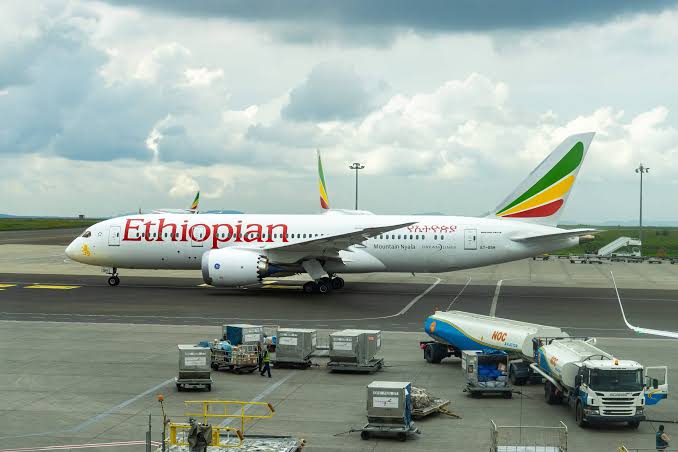
A TPLF warning that Ethiopian Airlines could become a “legitimate target” if it is used to transport Ethiopian troops or military equipment has raised serious questions over the safety of civilian aviation in Tigray. The controversy also revives a sensitive issue from the previous war, when a CNN investigation found evidence that Ethiopian Airlines aircraft had been used to transport weapons between Ethiopia and Eritrea.
Key Takeaways
The TPLF has accused the Ethiopian government of using Ethiopian Airlines and Mekelle's Alula Aba Nega Airport to transport military personnel and supplies.
A warning attributed to the TPLF said the airline could become a “legitimate target” if it continued supporting military operations.
Another documented version of the warning said “the airline itself would bear responsibility for any attack it might face.”
The warning comes amid renewed fighting in Tigray and shortly after Ethiopian Airlines resumed flights to Mekelle.
The allegations carry additional weight because CNN reported in 2021 that it had found documentary and witness evidence of Ethiopian Airlines aircraft transporting weapons during the previous Tigray war.
Ethiopian Airlines strongly denied those allegations at the time, saying its records showed it had not transported war armaments.
Ethiopian Airlines Drawn Into the Conflict Again
Ethiopian Airlines has once again found itself at the center of Ethiopia's conflict in Tigray after the Tigray People's Liberation Front accused the federal government of using the country's flag carrier for military transportation.
The TPLF alleges that Ethiopian Airlines flights and Mekelle's Alula Aba Nega Airport are being used to move Ethiopian military personnel and supplies as fighting intensifies.
The group subsequently warned against continued use of the airport for military purposes.
Most significantly, a warning attributed to the TPLF said Ethiopian Airlines could be regarded as a “legitimate target” if it continued facilitating military operations.
A separate account documented by the Critical Threats Project quoted TPLF leader Debretsion Gebremichael as warning:
“The airline itself would bear responsibility for any attack it might face.”
The Critical Threats Project described the statement as a threat against Ethiopian Airlines aircraft suspected of transporting military personnel or equipment.
The warning dramatically raises the stakes surrounding one of Africa's largest and most internationally connected airlines.
What Does Becoming a ‘Legitimate Target’ Mean?
Calling something a “legitimate target” in an armed conflict has a specific and potentially grave implication.
Civilian aircraft are ordinarily protected from attack. But under the laws of armed conflict, civilian objects can lose protection against attack if — and for such time as — they become military objectives by making an effective contribution to military action and their destruction, capture or neutralization offers a definite military advantage.
That does not automatically mean an entire civilian airline becomes lawfully attackable simply because someone declares it a legitimate target.
Nor does carrying military personnel automatically make every aircraft belonging to an airline a military objective.
The status of a particular aircraft would depend on the circumstances, including its actual use at the relevant time. Any attack would also remain subject to fundamental rules including distinction, proportionality and precautions to protect civilians.
But from an aviation perspective, the warning itself is deeply consequential.
If an armed force says aircraft suspected of carrying military personnel or equipment may be targeted, passengers and crews could face increased risk — particularly if civilian and alleged military transportation are occurring through the same airport or aboard aircraft belonging to the same carrier.
Why the TPLF Issued the Warning
The warning comes amid a dramatic deterioration in the security situation in northern Ethiopia.
Renewed fighting has overturned much of the relative calm established following the Pretoria peace agreement of November 2022, which ended the previous two-year Tigray war.
Federal government-allied forces retook Mekelle in early October after TPLF forces withdrew from the regional capital.
The fighting disrupted transportation across Tigray. Ethiopian Airlines suspended flights to Mekelle, Axum and Shire during the escalation before later restoring service to Mekelle.
The TPLF now claims the federal government is exploiting that air connection to reinforce its forces.
Its warning is therefore tied directly to the military significance of Mekelle airport.
If ground supply routes are contested, air transportation becomes considerably more valuable for moving personnel and supplies.
But that also creates a dangerous problem when the same aviation infrastructure serves ordinary civilian passengers.
Ethiopian Airlines Has Faced This Accusation Before
The current controversy has an important precedent.
During the previous Tigray war, CNN conducted an extensive investigation into allegations that Ethiopian Airlines aircraft were being used for military purposes.
CNN reported in October 2021 that it had obtained cargo manifests, airway bills, photographs and witness testimony indicating that Ethiopian Airlines aircraft transported weapons between Ethiopia and Eritrea during the opening weeks of the war.
The investigation reported evidence of at least six occasions in November 2020 in which Ethiopian Airlines billed Ethiopia's Ministry of Defense for shipments involving military items.
CNN also verified photographs it said showed weapons being loaded onto an Ethiopian Airlines aircraft.
One employee told CNN that cargo already aboard an aircraft had to be removed to make space for weapons.
CNN concluded from the evidence it reviewed that Ethiopian Airlines aircraft had been involved in transporting weapons between Ethiopia and Eritrea.
Ethiopian Airlines Denied CNN's Findings
Ethiopian Airlines strongly rejected the allegations.
The airline maintained that it complied with aviation regulations and said that, according to its knowledge and records, its aircraft had not transported war armaments.
The Ethiopian government and airline therefore disputed one of the most controversial findings involving civilian aviation during the previous war.
But CNN stood by its investigation.
Its reporting was significant because the evidence went beyond allegations from the TPLF or other combatants. CNN said its findings were based on documentary records, photographs and testimony from airline employees.
That history now provides an important backdrop to the latest confrontation.
Why the CNN Investigation Matters Today
The circumstances in 2026 are not necessarily the same as those documented in 2020.
There is currently no publicly presented body of evidence comparable to CNN's 2021 investigation establishing that Ethiopian Airlines is again transporting weapons.
But the historical record explains why the latest TPLF allegations cannot be viewed in isolation.
Ethiopian Airlines has previously faced documented accusations that its civilian aviation network became entangled with military logistics during the Tigray war.
Now, as fighting returns, essentially the same issue has resurfaced.
The TPLF is accusing the federal government of again using civilian aviation for military purposes — and this time it is accompanying that accusation with a warning about potential attacks.
The Risk for Ethiopian Airlines
For Ethiopian Airlines, the implications extend far beyond Tigray.
The carrier is not simply a domestic airline.
It is one of Africa's most important aviation companies, connecting Addis Ababa with destinations across Africa, Europe, Asia, the Middle East and the Americas.
Its international business depends heavily on passenger confidence, aviation safety and its reputation as a civilian commercial carrier.
Even the perception that its aircraft could become entangled in military operations creates significant risks.
The immediate concern is obviously the Addis Ababa–Mekelle route.
Passengers boarding those flights need confidence that civilian aircraft will not be mistaken for, or deliberately treated as, military transports.
Pilots and cabin crews need the same assurance.
But the reputational consequences could extend further if allegations of military transportation persist.
Civilian and Military Aviation Cannot Be Blurred
The deeper danger is the erosion of the distinction between civilian and military activity.
Civil aviation depends on that distinction.
Commercial aircraft carry families, business travelers, humanitarian workers, patients and ordinary citizens. They operate on the assumption that they are civilian objects and will be treated accordingly by parties to an armed conflict.
Using civilian aircraft directly for military operations can complicate that protection.
At the same time, an armed group cannot simply declare an entire civilian airline a “legitimate target” and thereby remove the protections afforded to civilian aircraft and passengers under international humanitarian law.
Each potential target must be assessed according to its actual military use and the circumstances at the time.
The consequences of getting that distinction wrong could be catastrophic.
The Bigger Picture
Ethiopian Airlines survived the previous Tigray war with its international network and commercial reputation largely intact.
But the airline is now confronting a familiar controversy under potentially even more dangerous circumstances.
During the previous war, the central question was whether civilian Ethiopian Airlines aircraft were being used to transport weapons.
CNN's 2021 investigation produced evidence indicating that they had been, while Ethiopian Airlines denied the findings.
Five years later, the allegation has returned.
This time, however, it is accompanied by a warning from the TPLF that alleged military use of the airline could make it a “legitimate target.”
That changes the stakes.
The question is no longer only whether Ethiopian Airlines is being used for military transportation.
It is also whether one of Africa's most important civilian airlines could now find its aircraft caught directly in the battlefield — and what that means for the passengers and crews who depend on them.