Sudan's Dams Under Drone Attack: Is Ethiopia Becoming a Launchpad for the RSF?
Sudan says drones targeting strategic dams and civilian infrastructure have been launched from Ethiopian territory. With the RSF expanding its drone campaign and evidence emerging of an alleged Ethiopian training camp for its fighters, the conflict is becoming a growing security challenge for the entire Horn of Africa.
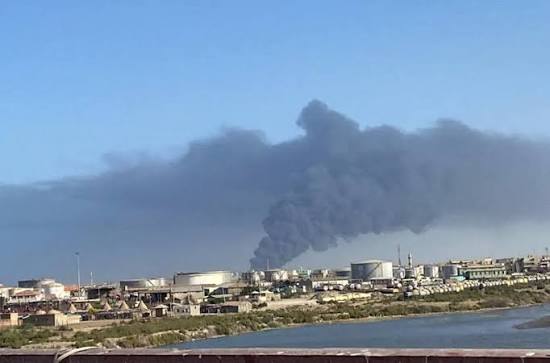
Sudan's war is increasingly moving beyond the battlefield. Electricity networks, fuel depots, military installations and strategically important water infrastructure are now exposed to a growing campaign of drone attacks. Among the most concerning incidents are reported attempts to strike two major dam complexes in eastern Sudan, close to the Ethiopian border.
On September 15, 2026, Sudanese air defences intercepted drones targeting the Upper Atbara and Setit dam complex in Gedaref State and the nearby Khashm al-Girba Dam in Kassala State, according to military and local sources cited by Sudan Tribune. The authorities reported no casualties or structural damage.
The incident was not isolated. On October 18, Sudanese military sources reported another attempted drone attack against the same eastern infrastructure, including positions near the Upper Atbara and Setit complex and Khashm al-Girba Dam. Again, the reported attacks were intercepted, with no major damage recorded.
These incidents matter because dams are not ordinary military installations. They support electricity generation, irrigation, water management and agricultural production. An attack that successfully damages one could affect communities far beyond the immediate military front.
But the question now extends beyond who is operating the drones. Sudan is increasingly accusing neighbouring Ethiopia of allowing its territory to become a staging ground for attacks by the Rapid Support Forces (RSF), the paramilitary group fighting Sudan's national army.
Why Sudan's dams matter
The Upper Atbara and Setit Dam complex is one of Sudan's important water and energy projects. Located in eastern Sudan, it was developed to support electricity generation, irrigation and agricultural production.
Khashm al-Girba Dam, also in eastern Sudan, is particularly important to irrigation and agricultural activity in the region. Its role in water management makes it strategically significant even beyond its direct contribution to electricity.
Further south, the Roseires Dam on the Blue Nile is another critical piece of Sudan's infrastructure. It is one of the country's major hydroelectric facilities and supports irrigation across the Gezira agricultural region.
Drone attacks in Ed Damazin, the city where Roseires Dam is located, have raised additional concerns. However, reporting of those attacks has described damage to fuel depots and civilian infrastructure, not confirmed damage to the dam itself.
The distinction matters. There is evidence of attempted attacks against Upper Atbara and Setit and Khashm al-Girba. There is not established evidence that these dams were destroyed or that Roseires Dam was directly struck.
Nevertheless, the strategic implications are considerable. A successful attack on a major dam or its associated power infrastructure could disrupt electricity supplies, water management and agricultural production. In a country already experiencing severe humanitarian and economic disruption, the consequences could be extensive.
The RSF's expanding drone campaign
The dam incidents form part of a wider pattern of drone warfare in Sudan.
Since the conflict began in April 2023, the Sudanese Armed Forces (SAF) and the RSF have increasingly relied on unmanned aircraft. Drones have become important tools for surveillance, targeting, battlefield coordination and long-range attacks.
The RSF has intensified its use of drones against army-held territory and infrastructure. Attacks have increasingly reached locations far from the main front lines, including electricity facilities, fuel installations and other strategic sites.
On October 28, Sudanese officials accused Ethiopia of involvement in a series of drone attacks against civilian infrastructure and power facilities. At a press conference in Khartoum, officials presented what they described as flight data and satellite imagery indicating that drones had been launched from Ethiopian territory, including Bahir Dar Airport.
Sudan also identified locations around Assosa as part of the alleged drone-launch network.
According to Sudan's army-led Transitional Sovereignty Council, 70 attacks involving 187 one-way attack drones and 82 munitions were recorded between February 15 and October 27.
These figures are Sudanese government claims, not independently verified totals. The reported attacks targeted electricity infrastructure and other civilian facilities across several states.
The consequences have been serious. Sudanese authorities have reported widespread damage to electricity distribution stations, fuel facilities and other essential infrastructure. Some attacks have left communities without reliable electricity, affecting hospitals, water supplies, businesses and other essential services.
The growing geographical reach of these attacks suggests that the war is no longer confined to the territories where ground forces are fighting.
Sudan Has Lost Three-Quarters of Its Electricity Generation
The scale of the destruction becomes clearer when Sudan's electricity production is compared with its pre-war position.
Before the conflict began in April 2023, Sudan generated approximately 4,400 megawatts of electricity. By November 2026, production had fallen to around 1,100 megawatts, representing a decline of approximately 75%, according to reporting by the Associated Press.
The collapse reflects the cumulative impact of attacks on power plants, substations and transmission infrastructure, alongside fuel shortages, disrupted operations and the departure of experienced engineers and technicians.
The latest drone campaign has made an already critical situation worse. Attacks have disabled the Um Dabaker thermal power station, damaged Shendi's main substation and knocked out electricity facilities in Al-Dabbah and Abu Hamad. Fifteen substations have reportedly been targeted since early October, according to the Sudanese rights group Emergency Lawyers.
The consequences extend far beyond electricity bills and household blackouts. Hospitals need reliable power to operate medical equipment, dialysis centres require continuous electricity, and pharmacies depend on functioning refrigeration to preserve temperature-sensitive medicines. Water pumping stations, bakeries, businesses and agricultural operations are also affected.
The Merowe Dam has consequently become even more important to the remaining electricity supply. According to an electricity company employee cited by the Associated Press, it now provides more than 70% of Sudan's electricity generation.
This concentration creates another strategic vulnerability: damage to one of the country's remaining major sources of electricity could have consequences across an already weakened national grid.
Sudan's electricity crisis is therefore not simply an infrastructure problem. It is becoming a humanitarian and economic emergency, with the country's ability to deliver basic services increasingly dependent on a shrinking number of functioning facilities.
Why Ethiopia has become central to Sudan's accusations
The allegations against Ethiopia are not emerging in isolation. They follow months of mounting suspicion over Addis Ababa's relationship with the RSF.
In February 2026, a Reuters investigation reported that Ethiopia was hosting a military training camp in Benishangul-Gumuz, near the Sudanese border, intended to train thousands of RSF fighters.
Reuters cited eight sources, including a senior Ethiopian government official, who said the United Arab Emirates financed the camp's construction and provided trainers and logistical support. Satellite imagery reviewed by Reuters showed extensive construction, hundreds of tents and military activity at the site.
The investigation also reported upgrades at nearby Asossa Airport, including infrastructure that could support drone operations.
The UAE has denied involvement in supporting the RSF. The Reuters investigation provided significant evidence of an alleged support network, although it did not independently establish every aspect of the operation or prove that Ethiopian forces themselves were conducting attacks inside Sudan.
The reporting nevertheless changed the context in which Sudan views Ethiopia's role in the conflict.
If RSF fighters are being trained, equipped or supplied from Ethiopian territory, the border becomes more than a geographical boundary. It becomes a potential logistical corridor for a war that is already destabilising the region.
Sudan's latest allegations go further, suggesting that Ethiopian territory is being used not simply for training or transit but also as a platform for launching drone attacks.
The UAE connection and the wider regional dimension
Sudan's accusations also point towards a broader regional contest.
Khartoum has repeatedly accused the UAE of supporting the RSF with weapons, financing and logistical assistance. The UAE denies backing the paramilitary group.
The Reuters investigation into the alleged Ethiopian training camp added weight to questions about the external networks sustaining the RSF. Its sources said the UAE financed the facility and supplied military trainers and logistical support.
This does not establish that the UAE directed the reported attacks on Sudanese dams or that Ethiopia's government ordered them. Those are separate allegations requiring separate evidence.
But the possibility of external support matters because it changes the scale of the conflict. The RSF's ability to sustain operations, recruit fighters and conduct long-range drone attacks depends partly on access to resources, equipment and logistical networks.
Sudan's accusations suggest that Khartoum increasingly views the war not simply as a domestic struggle against the RSF but as a conflict supported by external actors operating through neighbouring countries.
That interpretation is now central to its diplomatic campaign against Ethiopia.
Sudan takes the allegations to the United Nations and African Union
The confrontation escalated further in late October and early November.
On October 31, Sudan's Foreign Ministry urged the international community to take action against Ethiopia, alleging that its territory was being used to facilitate drone attacks against Sudanese infrastructure.
On November 2, Sudan announced that it had submitted complaints against Ethiopia to the United Nations Security Council and the African Union's Peace and Security Council.
Khartoum said it had provided documents that it believes demonstrate the RSF's use of Ethiopian territory to launch explosive-laden and missile-equipped drones against civilian facilities and critical infrastructure.
Sudan has described the alleged activity as a violation of its sovereignty and warned that it reserves the right to defend itself.
Ethiopia has previously rejected accusations that it supports the RSF and said it respects Sudan's sovereignty. The allegations concerning the October drone campaign have not been independently established by the public evidence available.
The diplomatic escalation is significant because Ethiopia and Sudan have a long history of disputes over border territory, agricultural land and regional security. The al-Fashaga border area has been a particularly sensitive source of tension.
A military confrontation between the two countries would create another major crisis in an already unstable region.
Could the conflict threaten the Grand Ethiopian Renaissance Dam?
The possibility of attacks on Sudanese dams also raises a question for Ethiopia: could the conflict eventually threaten the Grand Ethiopian Renaissance Dam (GERD)?
The GERD, built on the Blue Nile in Ethiopia's Benishangul-Gumuz region, is Africa's largest hydroelectric dam. It is central to Ethiopia's electricity ambitions and has been a major source of tension with downstream Sudan and Egypt.
The dam's location makes the security situation around the Ethiopian-Sudanese border particularly important.
The Reuters investigation into the alleged RSF training camp reported that the facility was located relatively close to the GERD. This creates an additional security concern as the conflict's regional dimensions expand.
There is, however, no established evidence that the RSF has attacked the GERD or that Sudan is preparing to target it.
The risk is more indirect. A deterioration in relations between Ethiopia and Sudan could create an environment in which critical infrastructure becomes increasingly vulnerable to military threats, miscalculation or retaliation.
The GERD is not merely an electricity project. It is a strategic national asset, and any escalation that threatens its security would have implications extending well beyond Ethiopia.
A dangerous shift in the geography of Sudan's war
The most important development is not simply that drones have been used against dams. It is that the conflict is increasingly reaching infrastructure far from the traditional front lines while drawing neighbouring countries into its political and security calculations.
The attempted attacks against Upper Atbara and Setit and Khashm al-Girba demonstrate the vulnerability of critical infrastructure. The subsequent accusations against Ethiopia suggest that Sudan believes the conflict's operational geography now extends beyond its own borders.
If Sudan's allegations are substantiated, the implications would be serious. Allowing a neighbouring country's territory to serve as a launch platform for attacks against another state would represent a major escalation in the regionalisation of the war.
For Ethiopia, the stakes are also considerable. Its relationship with Sudan has been shaped by shared borders, trade, water security and the GERD. Becoming directly associated with the military operations of one side in Sudan's civil war would place those interests under greater pressure.
For Sudan, the danger is that a war already devastating its population and economy could become a wider regional confrontation.
The dams have so far survived the reported attacks. But the events surrounding them reveal a more consequential problem: Sudan's war is no longer just about control of territory. It is increasingly about control of the infrastructure, supply routes and regional relationships that determine whether the country can function at all.