Why Africa cannot copy-paste Singapore—and what a real attempt would require
The city-state’s entrepôt wealth, forced savings and investment bureaucracy grew from geography and politics that few African states share. African governments have borrowed pieces of the model; turning slogans into durable institutions is the harder test.
African policymakers keep returning to Singapore for a reason. World Bank data put the city-state’s GDP per capita at about $94,900 in 2024, against roughly $12,000 in Mauritius, $7,650 in Botswana, $2,130 in Kenya, $1,130 in Ethiopia and about $1,060 in Rwanda. The gap is not a moral ranking. It is a reminder that “becoming Singapore” remains a slogan until the institutions that produced those numbers are tested on African ground.
The attraction is practical. Singapore’s Economic Development Board chased export-oriented foreign investment; public housing and the Central Provident Fund locked land and savings into a national project; Temasek and other government-linked companies gave the state a commercial arm; a well-paid civil service and the Corrupt Practices Investigation Bureau sold investors a predictable deal. For governments short of capital and impatient with donor templates, that package looks like a ready-made developmental state. It is not.
Lee Kuan Yew, speaking to an Africa Leadership Forum audience in Singapore in November 1993, framed the comparison as a question and called Singapore and Africa “opposites”: a small urban island without agriculture or minerals, versus large countries with rural populations and extractive bases. The business question is narrower. Which pieces of the playbook travel—and what would a serious attempt still have to build?
Built for a city on a shipping lane
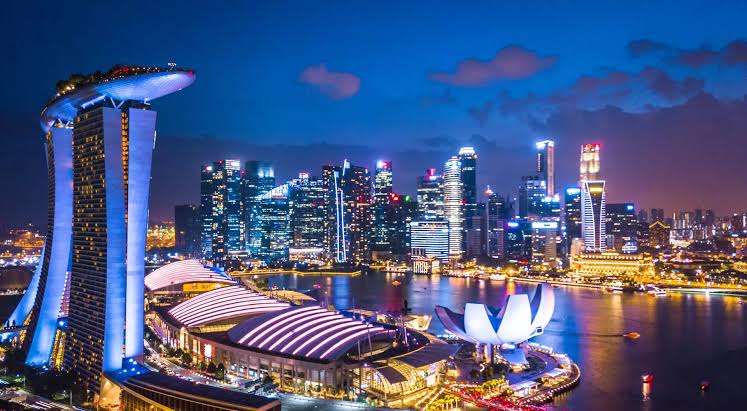
Singapore’s advantage began with the Strait of Malacca: an entrepôt that later became a manufacturing and finance hub for multinationals seeking a reliable Asian base. Scale helped enforcement. A population of about 6.0 million in 2024 is not Nigeria’s 233 million or Ethiopia’s 132 million. English as a working language lowered investor costs. Continuous People’s Action Party government after independence created policy horizons that many African electoral or succession cycles do not. Timing mattered too: the early industrial push coincided with US, Japanese and European offshoring into labour-intensive assembly. Today’s African parks compete amid automation, Chinese manufacturing capacity and tougher preferential-trade politics.
Why the transplant keeps failing at scale
Geography is the first constraint. Sixteen African states are landlocked developing countries on UNCTAD’s list. Rwanda and Ethiopia can build parks; they still pay for distance to ports and corridor politics Singapore never faced. Urbanisation widens the gap. World Bank figures for 2023 show Singapore fully urban, while Ethiopia was about 23% urban, Rwanda about 29% and Kenya about 32%. A city-state housing policy does not organise a rural majority.
Politics is the second. Large African federations must bargain across regions and security forces in ways a compact city-state did not. Investors notice credibility gaps. Transparency International’s 2024 Corruption Perceptions Index scored Singapore at 84. Botswana and Rwanda both scored 57; Mauritius 51; Ethiopia 37; Kenya 32. Those are perceptions scores, not courtroom findings—but investment agencies alone cannot close them. Power completes the mismatch: electricity access in 2023 was 100% in Singapore and Mauritius, about 76% in Kenya and Botswana, 61% in Nigeria, 55% in Ethiopia and 64% in Rwanda.
African experiments that borrowed pieces
Mauritius remains the closest analogue. Export processing zones from the 1970s combined political continuity, preferential market access and labour-intensive textiles into a genuine platform. Success in a country of about 1.25 million people does not prove the same toolkit scales to Lagos or Kinshasa. Botswana shows another partial parallel: relatively prudent diamond-rent management and a stronger bureaucracy lifted living standards without creating an entrepôt manufacturing hub.
Rwanda has been the most explicit student. Reporting has long documented President Paul Kagame’s interest in Singapore; the Rwanda Development Board, created in 2008, was modelled on the EDB as an investor one-stop shop, though academic comparisons note it never received the EDB’s full financing powers. Surbana Jurong led Kigali’s city master plans, including the Master Plan 2050 update with SMEC. The result is a stronger services and meetings hub—not Jurong’s manufacturing ascent. Rwanda’s 2024 GDP per capita remained about $1,060.
Ethiopia tried a harder manufacturing route, with Hawassa as the flagship park after 2016. World Bank and UNDP assessments credit the parks with substantial investment and jobs at their peak, and document the limits: landlocked logistics, foreign-exchange stress, unreliable utilities, agency coordination failures, conflict and Ethiopia’s suspension from the US African Growth and Opportunity Act. Local business media citing the Ethiopian Investment Commission put industrial-park exports around $115 million in the 2024 fiscal year—far below earlier ambitions.
Kenya’s Vision 2030 planners looked to Singapore and Malaysia. Singapore Cooperation Enterprise signed arrangements covering housing concepts, special economic zones and trade-facilitation systems later advanced through Kenya’s electronic single window. Singapore’s Ministry of Foreign Affairs says more than 13,000 African officials have taken Singapore Cooperation Programme courses. Firms such as Olam and Surbana Jurong show commercial engagement. Courses and master plans are inputs. They do not produce Temasek-grade state capacity by themselves.
What it would take to replicate it
A full national replica of Singapore is the wrong target for most African states. Importing the working parts would still be a multi-decade institutional project, not a rebranding exercise.
Leadership has to treat investment rules as surviving the next election or succession. Without a coalition that protects contracts, customs discipline and civil-service merit from patronage resets, an EDB clone becomes a ribbon-cutting office. Term limits are not disqualifiers; short policy half-lives are.
Pay and protect a narrow core of the state. Singapore’s bargain was a well-paid, meritocratic bureaucracy plus an anti-corruption agency with teeth. Reformers who want the brand need prosecutorial independence and salaries that make stealing optional, not merely new ethics manuals. Botswana and Rwanda’s stronger CPI scores show African improvement is possible; they also show the distance to Singapore’s 84.
Build an investment agency with real authority: one window that can allocate land, coordinate power and water, police incentive conditions and escalate blockages to cabinet within days. Rwanda’s RDB is the clearest African attempt; Ethiopia’s parks showed how quickly service collapses when dozens of agencies retain vetoes.
Fix the tradable backbone before promising factories—reliable power, working ports or transit corridors, and predictable customs. Mauritius could run EPZs because administration held. Hawassa’s troubles after market-access and macro shocks show what happens when parks outrun the national system. For landlocked states, corridor performance is as central as any tax holiday.
Settle land and housing rules that can fund urbanisation without endless disputes. Singapore’s state-land and HDB–CPF loop is not copyable where customary tenure and unserviced settlements dominate. A realistic path is clearer industrial and urban leasehold, transparent compensation, and housing finance that grows with formal jobs.
Train for the industries being recruited, and use AfCFTA to widen the market Singapore enjoyed through shipping routes—but only if rules of origin and border posts work. Special economic zones, or more ambitious ring-fenced governance experiments, can concentrate better rules; they cannot float free of national politics. A credible programme would pilot one or two corridors for a decade, publish occupancy, export and linkage numbers, and kill failing incentives—the discipline Singapore’s EDB practised as it moved up the value chain.
What travels, and what does not
What travels is institutional craft: investment facilitation with authority, civil-service pay, anti-corruption enforcement, port and customs modernisation, targeted zones tied to real logistics, and long-horizon skills policy. What does not travel intact is the whole machine—city-state scale, chokepoint geography, mid-century offshoring conditions and a political settlement that made continuous investor-facing administration possible.
The useful business lesson is austere. Study Singapore. Hire its planners if they help. Do not confuse a master plan, a park fence or a presidential study tour with the decades of state capacity that turned a harbour into a balance sheet. For African economies, the transferable prize is not to become a tropical Singapore. It is to build the few institutions that would make any development model actually executable.