Nike Was Unbeatable. Then It Lost Its Way.
The world's most powerful sportswear brand spent years moving away from the product innovation, athletes and retail partners that built its empire. Now Nike is trying to rebuild the machine while competitors take pieces of the market.
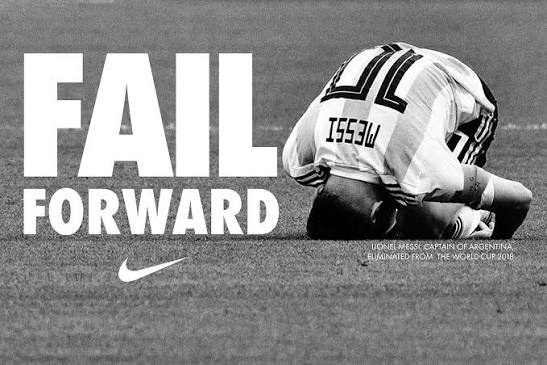
There was a time when Nike seemed almost impossible to beat. The swoosh was more than a logo; it was a piece of cultural infrastructure. It appeared on the feet of the world's greatest athletes, on basketball courts and football pitches, in running races and gyms, and eventually on almost every kind of casual clothing. Nike had mastered something that few consumer companies ever achieve: it could turn a product into a symbol of aspiration. A pair of shoes could represent athletic performance, but it could also represent ambition, youth and status.
That is what makes Nike's recent decline so remarkable. The company's shares reached an intraday record of about $179 in November 2021. By September 2026 they had fallen to roughly $38, a decline of almost 79%. Yet Nike's revenue has not disappeared. In fiscal 2026, Nike generated $46.4 billion in total revenue, compared with $44.5 billion in fiscal 2021. The problem, therefore, is not that Nike stopped being a giant. It is that investors stopped believing the giant was still capable of growing like one. Nike Investor Relations
The difference is crucial. Nike's decline is not really a story about bankruptcy, irrelevance or consumers suddenly abandoning the brand. It is a story about a company that became extremely good at exploiting the strengths of its past and, for a while, became less good at creating the future.
The company that sold aspiration
Nike's original advantage was not simply that it made good shoes. Plenty of companies could make good shoes. Nike understood that sports products could become emotional products.
The company connected athletes to consumers in a way that few competitors could replicate. Michael Jordan transformed basketball footwear into a cultural phenomenon. Other athletes helped Nike establish credibility across running, football, golf and virtually every major sport. Advertising was not simply about explaining why a shoe was comfortable or durable. It was about making consumers feel that buying the shoe brought them closer to the world of elite athletes.
That model created an extraordinary competitive advantage. Nike could spend heavily on athletes and marketing because the brand generated demand, and that demand gave Nike enormous scale. Scale helped fund research and development, global distribution and more marketing. The resulting products created more demand, which created more scale.
For decades, the machine reinforced itself.
But eventually the company began relying too heavily on the machine it had already built.
Nike started selling its past
One of the clearest signs of the problem was Nike's growing dependence on its lifestyle franchises.
The Air Force 1, Dunk and Jordan retro ranges became extraordinarily important businesses. Their popularity was understandable: they were recognizable, fashionable and connected to Nike's enormous cultural history. But the very success of these products created a problem. When a company can sell a familiar product repeatedly, there is less immediate pressure to create something genuinely new.
Nike eventually acknowledged that it had been oversupplying some of its classic footwear franchises. In fiscal 2026, the company said it had reduced those classic franchises by more than $2 billion. CEO Elliott Hill has also identified Sportswear and Jordan Streetwear as major areas where demand remains weak. NIKE, Inc.
The problem was not that consumers suddenly hated Jordan or the Dunk. It was that Nike had allowed some of its most famous products to become too common, too heavily promoted and too dependent on discounting.
Scarcity creates desire. Oversupply eventually creates a sale rack.
And once a premium product becomes routinely discounted, the psychology surrounding it changes.
The direct-to-consumer revolution backfired
Nike then made another strategic bet that looked logical at the time: it decided to take greater control of the customer.
For years, Nike had depended heavily on retailers. A pair of Nike shoes might be sold through Foot Locker, department stores or sporting-goods chains. The retailer owned the customer relationship and took a share of the economics.
Nike wanted more control.
Its stores and website offered a way to sell directly to consumers, collect customer data and control how the brand was presented. Digital commerce appeared to offer even greater potential. The company could theoretically reduce dependence on middlemen while improving margins and developing a closer relationship with customers.
The strategy worked for a while.
Then the market changed.
Nike eventually pulled back from some wholesale relationships, while its own direct business began struggling. The irony is striking: the retailers Nike had once regarded as less strategically important became increasingly useful when Nike needed to restore reach and rebuild demand.
The numbers tell the story. In fiscal 2026, Nike Brand wholesale revenue increased 6% to $27.5 billion, while Nike Direct revenue fell 6% to $17.7 billion. Nike Brand digital revenue fell 12%, and revenue from Nike-owned stores declined 4%. Nike Investor Relations
Nike is therefore rebuilding relationships with the very distribution system it had spent years trying to reduce its dependence on.
That does not mean the direct-to-consumer strategy was inherently wrong. It means Nike overestimated how much control over distribution could compensate for weaknesses in product demand.
You can control your website.
You cannot force people to want what is on it.
The running shoe exposed the weakness
Perhaps the most revealing battlefield has been running.
Running should have been Nike's natural territory. The company has spent decades developing running shoes, sponsoring elite runners and associating itself with speed and performance.
Yet competitors began creating excitement around running in different ways.
On built an entire brand around its distinctive cushioning technology and premium positioning. Hoka transformed maximalist cushioning into a recognizable category. New Balance and Asics gained momentum by combining performance credibility with strong lifestyle appeal.
Nike still possesses extraordinary technological capabilities, but the perception of innovation matters almost as much as innovation itself.
A sportswear company cannot rely indefinitely on the greatness of its archive. Athletes want to know what is next.
Nike now says its performance business is recovering. Under Hill, running has been one of the clearest areas of progress: the company says Nike Running has delivered five consecutive quarters of double-digit growth, while Nike gained five points of running market share in statement footwear across Western Europe and North America during fiscal 2026. NIKE, Inc.
That is encouraging.
It is also revealing.
Nike's recovery is beginning where Nike should arguably have been strongest all along: with sport.
China became a much harder market
China exposed another weakness in Nike's old global formula.
For years, China was treated as one of the company's most important growth opportunities. A growing middle class, increasing interest in sport and the prestige of international brands seemed to create an enormous opportunity.
But Chinese consumers have become more demanding, while domestic competitors have become considerably stronger.
Nike can no longer assume that an American brand automatically possesses the cultural authority it once enjoyed. Local companies understand Chinese consumers, local sports culture and local retail better than foreign companies do. At the same time, the broader Chinese economy has become more difficult.
Nike's Greater China business fell sharply in fiscal 2026. In the fourth quarter alone, revenue declined 17%, while Nike Direct fell 14% and wholesale fell 19%. NIKE, Inc.
Hill has effectively admitted that repairing China will not be quick. Nike is trying to become more locally relevant, reduce promotions, clean up inventory and reconnect the brand with sport and innovation.
That is sensible.
But it illustrates the larger problem: Nike's global scale sometimes encouraged it to think like a global company when consumers increasingly wanted brands that understood their local markets.
The discount problem
Perhaps the most damaging consequence of Nike's mistakes was not falling sales. It was discounting.
When retailers have too much inventory, they eventually need to clear it. That means promotions.
But promotions can create a vicious cycle.
A consumer who sees a $150 pair of Nike shoes repeatedly discounted to $100 begins to question why they should ever pay $150. The consumer waits for the next promotion. Retailers order more cautiously. Nike has to promote more heavily to clear inventory. The brand becomes less exclusive.
This is particularly dangerous for Nike because the company's power has always depended partly on desirability.
Nike needs consumers to want the product before they need it.
Its recent strategy has therefore involved deliberately reducing promotions and cleaning up inventory, even when doing so hurts short-term sales.
Hill has described the goal as creating a healthier marketplace with stronger full-price selling. Nike's fiscal 2026 results showed the company reducing promotional activity while simultaneously dealing with weak sell-through in Sportswear and Jordan. NIKE, Inc.
That is a painful process.
Nike is effectively trying to teach customers to want its products again.
Elliott Hill's problem is bigger than cutting costs
Nike brought Elliott Hill back as CEO in October 2024 after he had retired from the company. His appointment was revealing. Nike did not hire a technology executive to reinvent the business or a luxury-fashion executive to reposition the brand. It brought back someone who understood Nike's culture and history.
Hill's answer has been to return Nike to sport.
The company has reorganized thousands of employees into sport-focused teams, simplified parts of its operations, rebuilt wholesale relationships and increased its emphasis on performance products. Nike says about 8,000 employees were moved into vertical sport teams under the new operating model. NIKE, Inc.
The strategy makes sense.
But it also demonstrates how far Nike had moved from its original center of gravity.
The company is essentially trying to rediscover what made it great.
And that is harder than it sounds.
Nike does not have to become smaller. It has to become interesting again.
The biggest misconception about Nike's decline is that the company simply needs to cut costs.
It doesn't.
Cost-cutting can improve margins, but it cannot make consumers excited about a shoe. It cannot create the next Air Jordan. It cannot make an athlete want to wear a product. It cannot make a teenager believe the newest Nike represents something culturally important.
That is why Nike's turnaround is ultimately a product and brand problem rather than merely a financial one.
Reuters noted in October 2026 that investors remained skeptical of Hill's turnaround because Nike was still struggling with China, Sportswear, Jordan and its reliance on discounted lifestyle products. The company was also forecasting further pressure before the benefits of restructuring were expected to arrive. Reuters
The challenge is therefore not simply to make Nike cheaper to operate.
It is to make Nike desirable again.
The strange thing about Nike's 80% fall
There is an important lesson hidden in the stock-market collapse.
Nike's shares did not fall nearly 80% because the company lost nearly 80% of its revenue. It didn't. Revenue in fiscal 2026 was actually slightly higher than in fiscal 2021. Nike Investor Relations
The market was paying for a different future.
In 2021, investors believed Nike could continue expanding its digital business, grow rapidly in China, dominate global sportswear and turn its enormous brand into ever-higher profits.
Those assumptions collapsed one by one.
The stock market eventually stopped valuing Nike as an unstoppable growth story and started valuing it as a mature company fighting for renewed relevance.
That distinction explains why the share price could fall so dramatically even while Nike remained one of the world's largest sportswear companies.
Nike's biggest competitor may be Nike itself
The company's most serious challenge is not Adidas.
It is not Hoka.
It is not On.
It is not New Balance.
Those companies matter, but Nike's greatest problem is the enormous success of its own past.
Nike has an extraordinary archive of products. It has perhaps the strongest collection of sports marketing assets in the industry. It has relationships with elite athletes that most competitors would spend decades trying to replicate.
But history can become a burden when a company starts treating its heritage as a substitute for innovation.
The next generation does not necessarily care that Nike dominated the 1990s.
It wants to know what Nike is doing now.
That is the test Elliott Hill faces.
The comeback will not be won with another Air Jordan
Nike can still recover.
The company has money, distribution, technology, athletes, designers and one of the most recognizable brands in the world. Its performance business is already showing signs of renewed momentum, particularly in running. Its wholesale relationships are improving, and management is deliberately reducing excess inventory and promotional dependence. NIKE, Inc.
But a real turnaround will require something more fundamental.
Nike has to rediscover the ability to surprise people.
It needs products that make runners curious, athletes excited and consumers willing to pay full price. It needs to create new franchises instead of endlessly extending old ones. It needs to make sport feel central again rather than treating sport as a marketing backdrop for lifestyle footwear.
That is why Nike's next chapter will be much more interesting than the stock's collapse.
The company has already demonstrated that it can sell millions of shoes.
It has already demonstrated that it can build a global brand.
It has already demonstrated that it can turn an athlete into a cultural icon.
The question now is whether it can do something much harder:
invent the next Nike.
The swoosh is not dead. The company is not broken. But the era in which Nike could rely on its history to guarantee its future appears to be over.
And that may be the real reason the stock fell almost 80%.
The market did not lose faith in the swoosh. It lost faith that the swoosh alone was enough.