Niger blames Chad—and France—for an Agadez drone strike Chad denies
Niamey says a 24 October strike at Emi Lulu near the Salvador Pass killed two civilians and vows to take the case to the UN and AU. N’Djamena rejects the charge and wants an international inquiry, while Algeria’s foreign minister shuttled both capitals with presidential letters—without an announced mediation mandate.
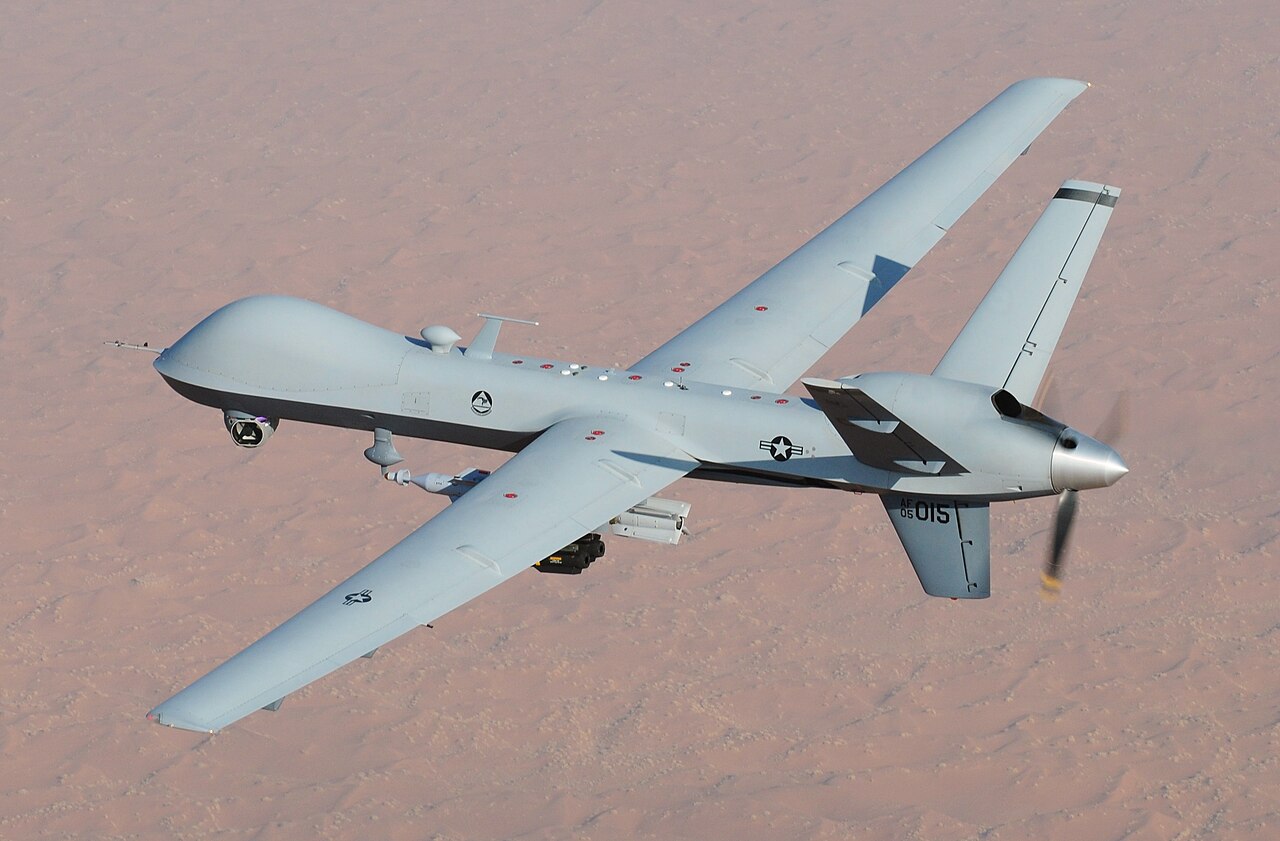
Niger’s military government has turned a remote desert strike into an open diplomatic crisis with Chad—and a fresh accusation against France. In a statement read on national television on 26 October, Niamey said a drone hit the Emi Lulu (also rendered Emi Loulou) area of Agadez region early on 24 October, killing two civilians, wounding others and damaging vehicles. It blamed Chad for launching the aircraft “with the support” of France, summoned Chad’s ambassador, demanded an end to “hostile actions” and compensation, and said it would refer the matter to the United Nations Security Council and the African Union Peace and Security Council.
Those attributions remain Niamey’s claims. No independent investigator has publicly confirmed the launch point, the drone type or French involvement. Chad denied any role and called for evidence and an international inquiry. France had not issued a detailed public rebuttal of the October strike accusation in the main English- and French-language accounts reviewed for this article. The dispute matters because it sits on top of earlier, also unverified, charges that Chad and French forces backed an August mutiny in Niamey—and because French combat aircraft are again scheduled to touch Chad’s airspace under a rebuilt defence partnership.
What each capital says
Africanews, citing AFP, and Nigerien outlets including Niameyinfo place the strike around 1 a.m. on 24 October in mountainous terrain near the Salvador Pass, a smuggling and militant corridor close to the Algerian and Libyan borders. Niamey’s communiqué, as carried by state media and summarised by Defence Mena and The Rio Times, says defence and judicial investigators found “concordant material and technical elements” pointing to a launch from Chadian territory. It has not published that dossier. It invokes Article 2(4) of the UN Charter against the use of force and has asked partners for solidarity while promising to strengthen air and border surveillance.
On 27 October, Chadian government spokesperson Gassim Chérif Mahamat rejected the accusation on national television, according to reporting relayed by Senego, Madar and The Rio Times. N’Djamena says it neither ordered nor supported an air operation against Niger, asks Niamey to make its evidence public, and favours an independent international investigation. Some Chadian-facing coverage also restates an older complaint that Niger shelters Chadian rebels—another allegation, not a proven finding in this dispute.
Whether the Security Council or the AU Peace and Security Council has actually scheduled a public examination remains unclear. Niamey announced referrals; searchable open reporting through early November has not shown a published Council outcome. That gap should be read as absence of a documented hearing so far, not as proof the complaint was never filed.
Algeria’s shuttle—and what officials did not say
On 3 November, Algerian Foreign Minister Ahmed Attaf visited N’Djamena as a special envoy of President Abdelmadjid Tebboune and met President Mahamat Idriss Déby Itno. On 4 November he continued to Niamey, was received by Foreign Minister Bakary Yaou Sangaré, and was due to deliver a presidential letter to General Abdourahamane Tiani. RFI, Madar and Algerian diplomatic notices describe the trips as carrying Tebboune’s messages and reinforcing bilateral cooperation.
Several African outlets labelled the sequence a mediation. Official texts quoted in careful secondary reporting speak of cooperation, regional security consultation and “positive dynamics” with Niger; they do not, in the versions reviewed, announce a formal mediation mandate, timetable or proposed settlement between Niamey and N’Djamena. RFI explicitly noted that no clarification had filtered on whether the mission was “bons offices.” The accurate formulation is that Algeria interposed high-level contact with both capitals during the crisis—not that Algiers has publicly assumed the role of mediator.
The diplomacy coincides with a deeper Algeria–Niger military alignment. Algerian authorities moved to authorise troop deployments in Niger after the August unrest, with reporting of early units linked to shared energy-security interests. That posture makes Algeria an interested neighbour, not a distant referee.
France’s return to Chadian skies is real—and separate from proof
Niger’s charge that the strike had French support lands in a charged context. Paris withdrew forces from Niger after the 2023 coup and left Chad after N’Djamena terminated the defence accord in late 2024. In mid-October 2026, however, President Emmanuel Macron hosted Déby and announced a renewed defence partnership. On 30 October, RFI reported a French armed-forces spokesman saying two Mirage 2000 fighters and a CASA transport would make a short technical stopover in Chad with training for the Chadian air force, tied to a November exercise involving Côte d’Ivoire and Gabon.
That confirmed planning for French jets in Chad does not prove French participation in the 24 October Agadez strike. Conflating a scheduled cooperation stopover with Niamey’s accusation would be analytically reckless. It does explain why Niamey’s wording resonates politically: any French military footprint near Chad now feeds a narrative the junta has used since breaking with Paris.
A Sahel rift that international bodies have not settled
The Africa Report’s 9 November reading places the row inside wider alliance splits—over France, Russia and rebel sanctuaries—even as foreign ministers appeared together in Moscow. Smiles at summits have not produced a shared fact pattern about the drone. Until Niamey publishes technical evidence, or an international inquiry begins, the public record remains asymmetric: a deadly incident asserted by Niger, a categorical denial by Chad, an unproven French-backing claim, Algerian letters without an announced mediation charter, and French aircraft due back in Chad under a separate, acknowledged training plan.
For civilians in Agadez’s far north, the immediate stakes are protection and truth about who fired. For the Sahel’s diplomacy, the stakes are whether bilateral accusation can still be contained by neighbours when ECOWAS and other regional tools are weakened. The next verifiable steps are narrow: publication of evidence, a real inquiry mandate, or an official Algerian text that finally names mediation as policy rather than press shorthand.
 Briefing
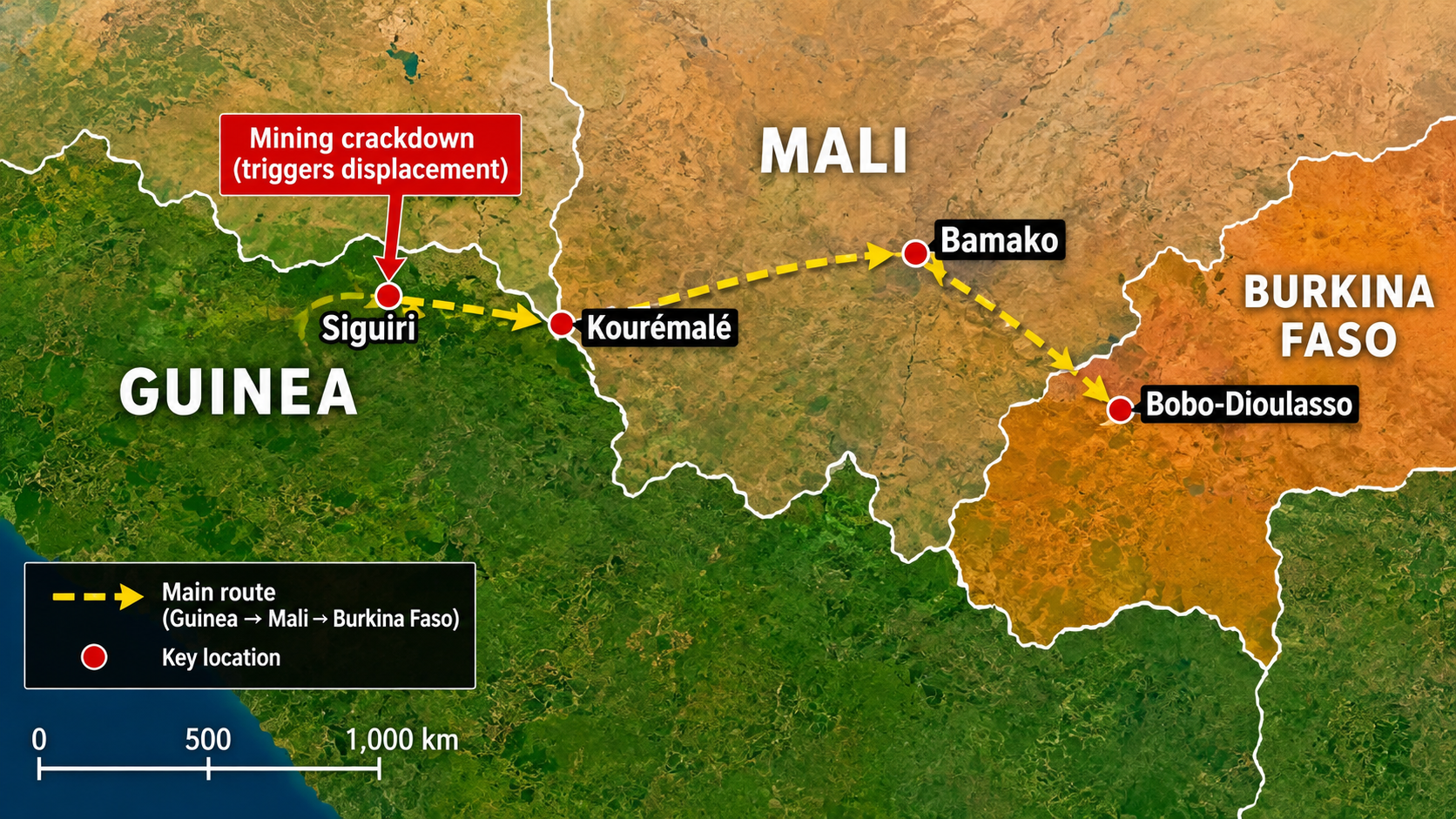
Guinea mining crackdown leaves Mali managing mass arrivals and disputed death toll
 Briefing
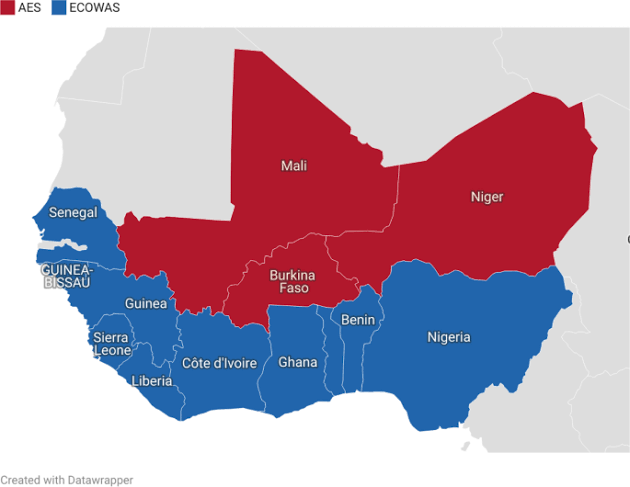
The Three Sahel Countries That Walked Away from West Africa: How Mali, Burkina Faso and Niger Challenged ECOWAS
 Analysis