Burkina Faso’s Gold Experiment: Can Traoré Turn Mineral Wealth Into National Power?
Captain Ibrahim Traoré’s government is overhauling Burkina Faso’s mining sector to capture more value from gold, though the economic results remain unproven.
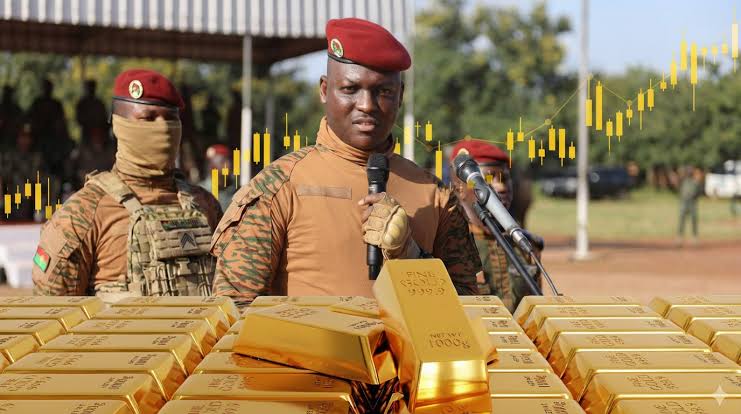
At the processing plants and industrial sites across Burkina Faso, raw bullion is measured, packed, and prepared for export, illustrating a central economic paradox: the country stands as one of Africa's significant gold producers, yet its population remains among the poorest in the world.
Annual gold production runs in the double digits of tonnes, anchoring national exports, government revenue, and gross domestic product. Major industrial mines are operated by foreign multinationals, while artisanal and small-scale mining runs parallel to corporate extraction, employing hundreds of thousands of people and contributing a massive share of the volume leaving the country. Historically, the vast majority of this mineral wealth left the country unprocessed, heading to international trading hubs, refiners, and buyers in Europe, South Africa, and other global markets, leaving minimal value behind for Burkinabè public finances.
This dynamic prompted the administration of Captain Ibrahim Traoré, who came to power in 2022, to pursue an aggressive mineral sovereignty strategy. The government overhauled mining codes, altered royalties and taxes, and demanded greater state participation and ownership in major mining operations. State acquisitions of existing projects and the creation or restructuring of state mining companies became central to official policy, alongside ambitious announcements regarding domestic gold refining, purchasing initiatives, and the accumulation of national gold reserves.
At the heart of these industrial ambitions stands the domestic gold refinery project. Billed as a cornerstone of the new economic framework, the facility's ownership, planned capacity, financing, construction status, and actual operational readiness require rigorous verification against viral claims. While state authorities frequently announce milestones, distinguishing between announced projects and completed, operational refineries is essential for assessing actual state capacity.
To understand the mechanics of the industry, trace a hypothetical kilogram of Burkina Faso gold from an industrial or artisanal site to the international market. Miners at the grassroots level receive a fraction of the market price; industrial mining companies shoulder operating and capital expenditures while paying taxes, duties, and royalties to the Burkinabè government. Middlemen, exporters, international traders, and foreign refiners then take their cuts before the metal reaches global bullion markets. Proponents argue that domestic refining will capture substantial additional value. However, refinery margins depend heavily on continuous operating costs, high electricity requirements, security, logistics, international London Bullion Market Association certification, and direct access to global buyers. Industry experts note that wealth capture relies as much on plugging smuggling routes, tightening tax collection, and negotiating stronger baseline agreements as it does on physical refining.
Beyond formal channels lies the hidden gold economy. Credible sources and trade data point to substantial volumes of artisanal gold leaving Burkina Faso without appearing in official export statistics. Smuggling networks allegedly move metal through neighboring countries and international hubs, while regional insecurity and jihadist insurgencies complicate oversight. Armed groups operating in mining regions generate revenue from artisanal taxation, protection payments, and control over supply routes.
This economic recalibration aligns with a broader geopolitical realignment away from traditional partners like France and toward new allies, including Russia, China, Turkey, and the United Arab Emirates. Russian involvement in security and mining sectors has drawn international attention, though analysts distinguish between documented commercial engagements and broader speculation regarding foreign control. Rather than eliminating foreign dependence entirely, the government appears to be diversifying its external partnerships.
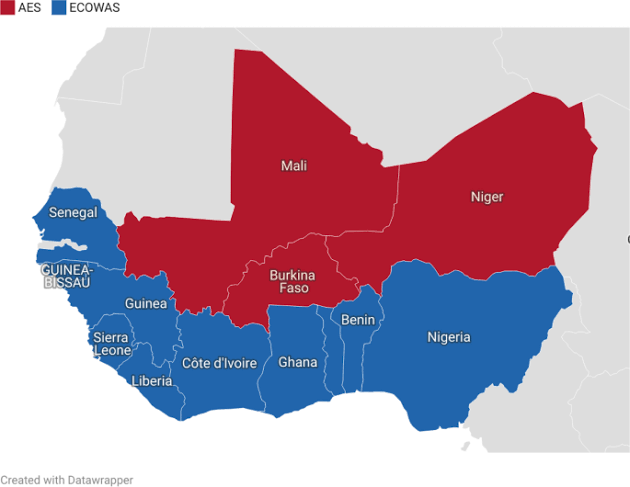
Burkina Faso’s path mirrors developments in neighboring Mali and Niger, where military-led governments have similarly demanded renegotiated mining terms and resource sovereignty. These Sahelian experiments evoke earlier waves of African resource nationalism, where historical success depended on maintaining operational stability, attracting technical expertise, and avoiding capital flight.
Proponents argue that higher government revenues can finance critical infrastructure, electricity grids, irrigation, industrialization, health, education, and defense against insurgent groups. Yet, a wide gap separates the gross market value of mineral production from actual government tax receipts. The central risk remains whether aggressive reforms will trigger a chilling effect on foreign investment, technical bottlenecks, corruption, or economic isolation.
Ultimately, whether Burkina Faso is genuinely building a new economic model or executing a political promise whose economic results remain unproven will depend on measurable outcomes rather than rhetoric. The evidence shows an ambitious state intervention altering the terms of engagement with global capital, while the tangible transformation of state revenues and public welfare is still underway.