Guinea mining crackdown leaves Mali managing mass arrivals and disputed death toll
Mali says more than 40,000 people were registered at Kourémalé after departures from Guinea’s gold-mining areas. As Burkina Faso begins bringing workers home, conflicting death counts and allegations of forced expulsions put the handling of the operation under scrutiny.
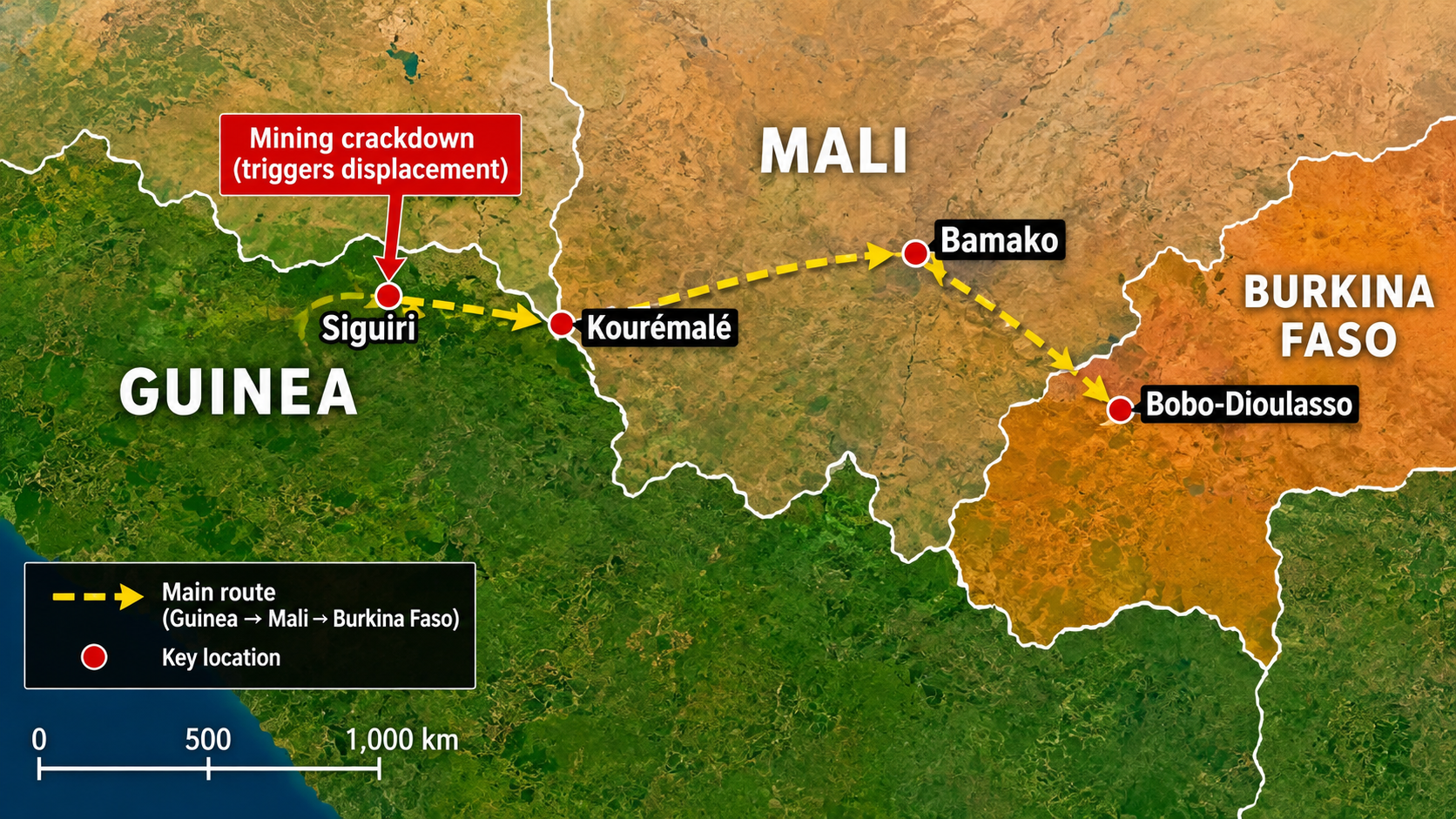
Guinea’s crackdown on irregular gold mining around Siguiri has left Mali handling a large cross-border humanitarian emergency, with its prime minister’s office reporting more than 40,000 people registered at Kourémalé. Many are Burkinabè workers now awaiting assistance or onward transport after leaving Guinea.
The Malian prime minister’s office described the situation as a “humanitarian catastrophe” after visits to reception sites near Bamako. Its crisis committee met on 5 November to coordinate assistance, identification, safe movement and return arrangements. The official count is a registration figure, not an independently verified total of everyone expelled or a measure of how many remain at the border.
Four recorded deaths, a higher diplomatic count
Mali’s state news agency AMAP reported on 5 November that Kourémalé’s community health centre had recorded four deaths among arrivals and was treating about 100 patients, some with gunshot wounds. Ramdé Antoine, a counsellor at Burkina Faso’s embassy in Mali, gave a higher toll of nine deaths at the local assessment meeting.
APA’s subsequent report cautioned that it was unclear whether the two figures covered the same places or stages of the movement. They should not be added together. Nor do the available reports establish the cause of every death or who inflicted the gunshot wounds.
Benkadi mayor Mamby Keïta attributed the mass departures to Guinean security operations involving gunfire and forced expulsions, according to AMAP. That is an allegation from a local official receiving the arrivals, not an independently established account of every operation in Siguiri.
Conakry’s environmental case
A joint Guinean government communiqué issued on 2 November, reported by Guinéenews, said uncontrolled mining was destroying farmland and forests and polluting the Niger River and its tributaries. It prohibited mining in riverbeds and along riverbanks, protected areas, classified forests and near settlements, while tightening controls on gold trading.
The communiqué said the measures were intended to protect people and the environment, not to choke the gold sector. It also promised respect for free movement and human rights. Those commitments provide a standard against which the treatment of workers can be assessed; they do not by themselves resolve the accounts of violence and forced departure.
The restriction should not be described as a verified nationwide ban on every form of artisanal mining. The published measures concern irregular activity and specified sensitive areas, although their enforcement has displaced workers well beyond the mining sites.
Returns begin, but the scale remains unsettled
DW’s 5 November reporting from Bamako described workers being assisted by Malian and Burkinabè authorities, associations and volunteers. Some interviewed workers said they had gone to Guinea to support relatives and lost that income when ordered to leave. Burkina Faso’s security minister promised a secure return corridor in cooperation with Mali.
On 7 November, leFaso.net reported, citing a Burkinabè ministry account, that a first convoy of 48 buses carrying 3,400 people had reached Bobo-Dioulasso overnight. The announced reception arrangements include medical checks, psychosocial support and assistance with return to families. These are reported arrivals and planned services, not evidence that all affected workers have been repatriated.
A separate 7 November report by Guinean outlet Le Djely quoted Burkina Faso’s solidarity minister estimating roughly 50,000 people affected, while stressing that biometric registration was needed for a consolidated count. That estimate cannot be substituted for Mali’s Kourémalé registrations: the population covered and method are not identical.
Regional solidarity without a confirmed rupture
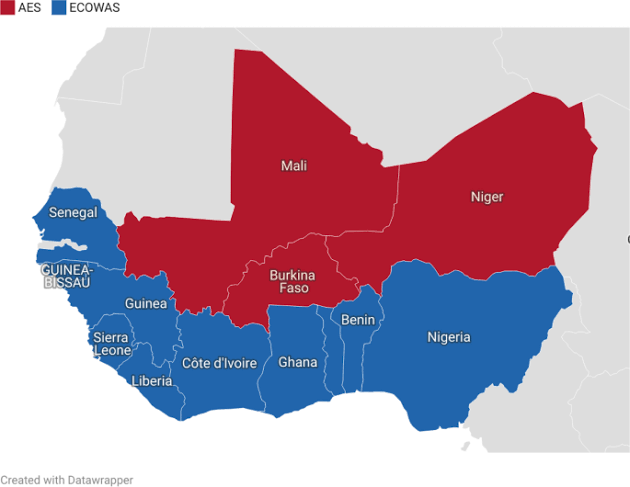
Mali has explicitly framed its response as solidarity within the Confederation of Sahel States, whose members are Mali, Burkina Faso and Niger. Its prime minister’s office has also recommended contacting Guinean authorities to establish what happened. The evidence shows a cross-border protection and coordination problem; it does not establish a diplomatic rupture between Guinea and the Sahel bloc.
Le Djely also reported the Burkinabè solidarity minister calling for restraint and rejecting reprisals against Guinean residents in Burkina Faso. Protecting those communities is distinct from determining responsibility for the mining operation. The immediate priorities are a reliable account of deaths and injuries, continued treatment and transport, and returns that do not leave workers stranded after the first convoys depart.