Nelson Mandela and Winnie: The Untold Story of Sacrifice, Love and Divorce
Nelson Mandela and Winnie endured decades of separation, apartheid persecution and personal sacrifice. But when freedom finally came, their marriage fell apart. Their story reveals the human cost of South Africa’s liberation struggle and the complicated relationship behind one of history’s most celebrated political couples.
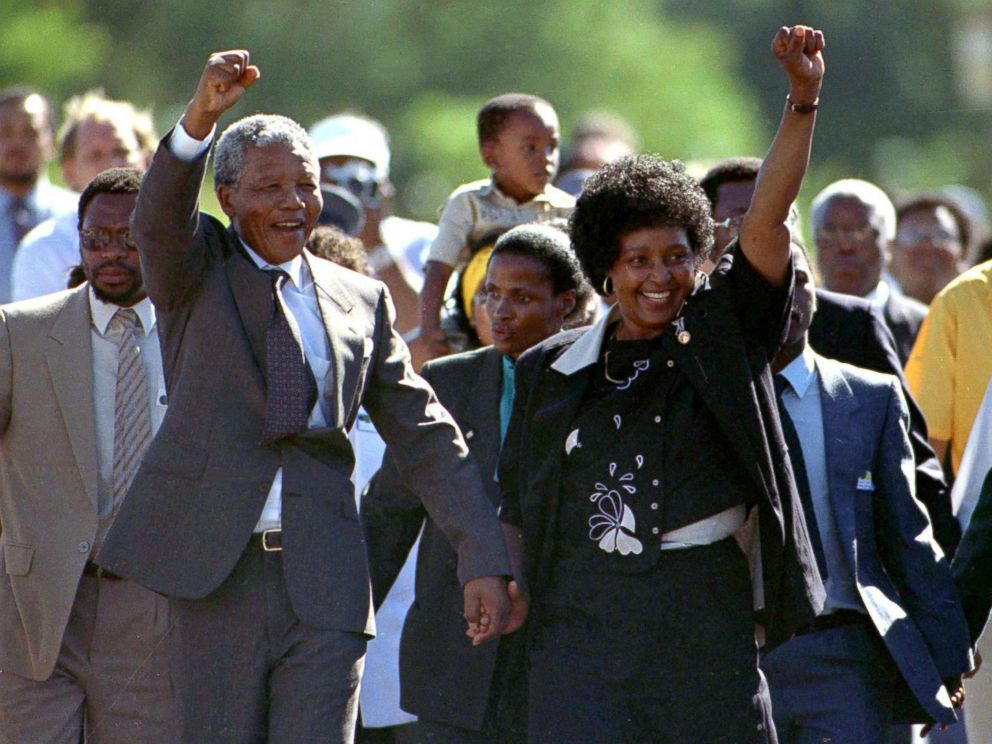
Nelson Mandela's release from prison on February 11, 1990, produced one of the most powerful images in modern political history. After 27 years behind bars, the anti-apartheid leader walked out of Victor Verster Prison holding the hand of his wife, Winnie Madikizela-Mandela. Their raised fists became a symbol of resistance, endurance and the promise of a new South Africa.
For millions watching around the world, the moment appeared to be the happy ending of a love story that had survived extraordinary hardship. Winnie had waited for her husband through decades of imprisonment, endured harassment by the apartheid security forces and raised their two daughters largely on her own. Nelson had become one of the world's most famous political prisoners, while Winnie had become a powerful figure in the struggle at home.
But the reunion did not produce the ending many expected. Just over two years after Mandela's release, the couple announced their separation. In 1996, their divorce became final after 38 years of marriage.
The collapse of their relationship raises an uncomfortable question: how could a marriage that had survived apartheid, imprisonment and decades of separation fail after the freedom it had fought for finally arrived?
The answer is more complicated than a story of abandonment, betrayal or a woman who waited for a man who eventually moved on. Their marriage was shaped by political struggle, personal sacrifice, different ambitions and the enormous pressures that came with becoming national symbols.
A marriage that began in the middle of a revolution
Nelson Mandela and Winnie Madikizela married on June 14, 1958, when South Africa was still firmly under white minority rule. Mandela was already a prominent African National Congress activist and lawyer, increasingly involved in the campaign against apartheid. Winnie was a young social worker who would eventually become one of the most recognizable women in the liberation movement.
Their marriage was not built around the expectation of an ordinary family life. Mandela was deeply involved in political organizing, facing state surveillance, arrests and the possibility of imprisonment. Winnie was entering a relationship with a man whose political commitments were likely to place the entire family under pressure.
They had two daughters, Zenani and Zindzi. But the family had little opportunity to develop the stable domestic life that most couples might expect. Mandela went underground in 1961, was arrested in 1962 and was sentenced to life imprisonment in 1964 following the Rivonia Trial.
The separation that followed would last nearly three decades.
In a statement issued when the couple announced their separation in 1992, Mandela acknowledged that their shared commitment to the African National Congress and the struggle against apartheid had prevented them from enjoying a normal family life. He also said they had understood that his decision to go underground meant the end of family life for the foreseeable future.
Their marriage had begun during a political struggle, and that struggle would eventually consume much of the life they might otherwise have shared.
Winnie Mandela's struggle while Nelson was in prison
It is sometimes suggested that Winnie simply waited for Nelson Mandela to be released. That description does not do justice to her role in the anti-apartheid movement.
While Mandela was imprisoned, Winnie became one of the most prominent figures associated with the campaign for his freedom. She helped mobilize support for him and other political prisoners, maintained contact with the liberation movement and became an important symbol of resistance inside South Africa.
The apartheid government understood the political importance of her position. She faced repeated arrests, restrictions on her movements, banning orders, detention and harassment. In 1969, she was detained under the Terrorism Act and spent 17 months in solitary confinement. In 1977, she was banished to Brandfort in the Orange Free State, far from her political and social networks in Soweto.
She also had to raise her daughters under the pressure of state surveillance and intimidation. Her personal circumstances were inseparable from the political struggle: the government was not simply targeting an activist's family but attempting to weaken one of the most recognizable symbols of resistance.
The Nelson Mandela Foundation has described her as a torchbearer for Mandela during his imprisonment, while also documenting the torture and persecution she endured herself.
Her contribution should not be reduced to her relationship with her husband. Winnie was a political actor in her own right, with her own following, ambitions and influence. She was not simply the woman standing behind a famous man.
Did Winnie Mandela free Nelson Mandela?
The image of Winnie walking beside Nelson when he left prison can create the impression that she personally secured his freedom. It is an understandable interpretation of an emotional moment, but it is not an accurate account of how Mandela was released.
Nelson Mandela's freedom was the result of a much broader struggle. The African National Congress, activists inside South Africa, trade unions, student movements, international solidarity campaigns and pressure from foreign governments all contributed to the weakening of apartheid.
International sanctions and diplomatic isolation increased the costs of maintaining white minority rule. Inside South Africa, mass protests and resistance made the country increasingly difficult to govern. Negotiations between the apartheid government and the ANC eventually created the conditions for Mandela's release and the transition to democracy.
Winnie played an important part in keeping the campaign alive and sustaining Mandela's public profile during his imprisonment. But she did not single-handedly negotiate his release or bring down apartheid.
Nor did Nelson Mandela achieve liberation alone. The transition was the result of decades of resistance involving thousands of people, many of whom never became internationally recognized figures.
That distinction matters because it allows us to recognize Winnie's contribution without turning a complex national struggle into a story about one marriage.
The man who returned was not the same man who had left
When Mandela walked out of prison in 1990, he was no longer simply a husband returning to his family. He was an international political figure expected to help lead South Africa out of apartheid.
His responsibilities changed almost immediately. He became central to negotiations with the government of F. W. de Klerk, took over as president of the ANC in 1991 and became one of the principal architects of the transition to democratic elections.
The demands on Winnie were different. She had developed her own political identity during the years of separation. She was no longer simply the wife of a political prisoner, and she was not necessarily prepared to return to a supporting role after years of carrying responsibilities independently.
The two had also spent most of their marriage apart. Mandela had been imprisoned for 27 years, while Winnie had lived under intense state pressure and developed her own political networks and public standing. Their reunion required them to rebuild a private relationship after decades in which both had changed profoundly.
Freedom did not erase those years. It brought two people together again, but it also exposed how much had changed between them.
Political differences and growing controversy
The couple's difficulties were not only personal. Their political positions and public responsibilities also became increasingly difficult to reconcile.
Mandela was focused on negotiations and a peaceful transition that could prevent South Africa from descending into a wider civil conflict. He became internationally associated with reconciliation and the creation of a democratic, multiracial state.
Winnie was often identified with a more militant political position and remained a powerful figure among sections of the anti-apartheid movement. Her political style and growing influence generated tensions within the ANC.
Her public reputation was also damaged by serious allegations surrounding the Mandela United Football Club, a group of young men who acted as her bodyguards and supporters. Members of the group were accused of intimidation and violence. In 1991, Winnie was convicted of kidnapping and being an accessory to assault in connection with the abduction and beating of young activists. The case was particularly damaging because one of the teenagers, 14-year-old Stompie Seipei, was later found murdered.
It is important to distinguish the legal findings from wider allegations. Winnie was convicted in the kidnapping and assault case; she was not convicted of murdering Stompie. The controversy nevertheless created a major political crisis and intensified criticism of her leadership.
Mandela publicly expressed concern about the allegations, but when he announced their separation in April 1992, he specifically rejected the suggestion that the decision had been prompted by the media accusations. He said the couple had developed tensions over differences on several issues and that separation was best for both of them.
The political and personal pressures were difficult to separate. Their marriage was unfolding in public at a moment when both were under extraordinary scrutiny.
Why did Nelson and Winnie Mandela divorce?
On April 13, 1992, Mandela announced that he and Winnie had mutually agreed to separate. His statement was notable for its affection and its refusal to publicly humiliate his wife.
He praised her courage during his imprisonment, acknowledged the suffering she had endured and recognized the burden of raising their children. He described her as an indispensable source of support during his years behind bars.
His most striking words were: "My love for her remains undiminished."
He also said he would never regret the life they had tried to share. Yet he acknowledged that tensions and differences had made continuing the marriage difficult.
The announcement did not provide a detailed account of what had gone wrong. It was a public declaration of separation, not a full explanation of the private breakdown.
The divorce was finalized on March 19, 1996, with irreconcilable differences cited as the reason. During the proceedings, allegations of adultery and the deterioration of their relationship became part of the public record. Mandela described the loneliness he had experienced after returning from prison, while Winnie resisted the separation and sought reconciliation through traditional processes.
The details that emerged during the proceedings made clear that the marriage had become deeply troubled. But it would be misleading to reduce its collapse to one allegation or one person's decision. The relationship had been under extraordinary strain for decades, and the couple had developed separate lives before they were reunited.
Mandela married Graça Machel, the former first lady of Mozambique, in 1998. Winnie never remarried.
Did Mandela abandon the woman who stood by him?
This is one of the most emotionally powerful interpretations of their story. Winnie had endured years of persecution while Mandela was in prison. She raised their daughters, maintained his public profile and became a prominent figure in the movement that demanded his freedom. After he was released, the marriage ended, and Mandela eventually married another woman.
Viewed from that angle, the story can appear deeply unfair.
But the historical record does not support a simple conclusion that Mandela discarded Winnie after she had served her purpose. His own public statement in 1992 praised her sacrifices and insisted that he continued to love her. He said the separation was mutual and that their differences had made it necessary.
At the same time, acknowledging the complexity of the relationship should not erase the sacrifices Winnie made. She endured imprisonment, banishment, surveillance and the burden of raising their children during years when Mandela could not be present as a husband or father.
Mandela also lost years of family life to imprisonment. He was separated from his children, unable to participate in their upbringing and unable to protect his family from the full force of the apartheid state. In his 1992 statement, he recognized the pain and responsibility associated with that absence.
Both experienced the consequences of a political struggle that demanded extraordinary sacrifices. But they experienced those consequences differently, and those differences did not disappear when Mandela came home.
The complicated legacy of Winnie Mandela
Winnie Madikizela-Mandela's legacy remains contested. She is remembered by many South Africans as a fearless opponent of apartheid who endured severe state persecution and refused to retreat from political activism. Others point to the violence and controversies associated with her political circle, particularly the Mandela United Football Club, as evidence of the dangers of unchecked power and political intimidation.
Both parts of the historical record matter.
It is possible to recognize the brutality she endured without excusing every action associated with her. It is equally possible to criticize her conduct without pretending that her contribution to the anti-apartheid struggle was insignificant.
Her story also exposes a broader problem in how history remembers political movements. Women who carry the burden of resistance at home are often remembered mainly through their relationships with famous male leaders. Winnie was Nelson Mandela's wife, but she was also an activist, organizer and political figure whose life cannot be understood only through the marriage.
Her relationship with Mandela shaped her public identity, but it did not define the entirety of her contribution.
The complicated legacy of Nelson Mandela
Nelson Mandela is rightly remembered as one of the central figures in the struggle against apartheid and South Africa's transition to democracy. His commitment to negotiations, democratic government and reconciliation helped shape the country's political future.
But his international image has sometimes become so idealized that the personal costs of his political life are pushed aside. He was a historic leader, but he was also a husband and father whose long imprisonment transformed his family relationships.
The end of his marriage to Winnie does not erase his achievements. Nor does his reputation as a reconciler mean that every personal decision he made should be beyond scrutiny.
The same standard should apply to Winnie. Her sacrifices deserve recognition, but they do not make her immune from criticism.
Their story reminds us that political greatness and personal happiness do not necessarily travel together. A person can help change the course of a nation and still struggle to maintain a marriage. A woman can endure extraordinary hardship for a cause and still have a complicated political record. History becomes less useful when it demands that its most important figures be either heroes without flaws or villains without achievements.
The love story that could not survive liberation
The photograph of Nelson and Winnie Mandela walking out of prison together remains one of the defining images of the anti-apartheid struggle. It captured a moment of triumph after decades of suffering. But it could not capture everything that had happened during those years, or everything that would follow.
Their marriage had survived the apartheid state, but it had also been transformed by it. The years of imprisonment and persecution created separate experiences, separate political identities and expectations that freedom could not automatically reconcile.
Winnie had spent decades fighting for her husband's release, but she had also built a life and political identity of her own. Nelson returned to a country that expected him to lead a historic transition, leaving little room for an ordinary private life. Their reunion was therefore not simply the restoration of a marriage. It was the meeting of two people whose lives had been shaped by years of extraordinary pressure.
The lesson is not that Mandela was a false symbol of love, or that Winnie's sacrifices were meaningless because the marriage ended. Their relationship was never simply a romantic story. It was a marriage caught inside one of the most consequential political struggles of the twentieth century.
Mandela's freedom became a national victory. But for the two people who had once imagined sharing that freedom as husband and wife, it did not bring the happy ending the world expected.
 Analysis
Botswana doubles down on De Beers—without the control Boko once promised
 Analysis
ANC falls to about 31% in local polls as hung councils double and Ramaphosa's future is debated
 Briefing