ANC falls to about 31% in local polls as hung councils double and Ramaphosa's future is debated
South Africa's governing party has recorded its weakest result in any election since 1994, losing ground in every metro and leaving more than 120 councils without a majority. The real contest now moves to coalition rooms, and to an ANC leadership that is openly arguing over who should pay for the defeat.
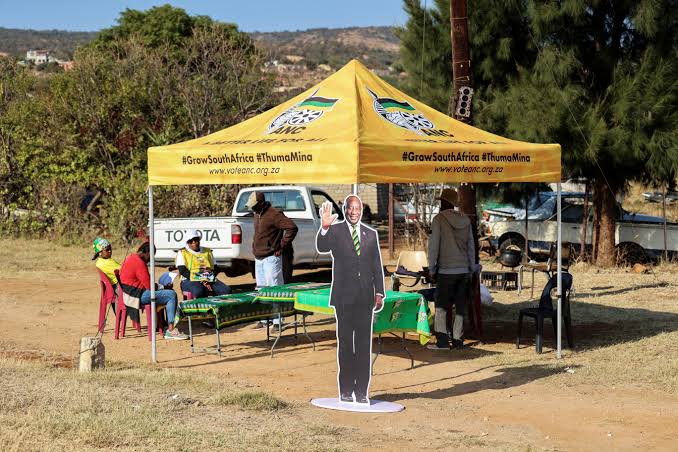
The African National Congress is set to finish South Africa's 4 November municipal elections with about 31% of the national vote. With more than 99% of voting districts counted, the Electoral Commission's results dashboard put the party on roughly 30.8%. That is its lowest share in any election since the end of apartheid, and it leaves the ANC without an outright majority in any of the country's eight metropolitan councils.
The fall is steep even by the standards of a party that has been losing ground for a decade. The ANC won 53.91% of the municipal vote in 2016 and 45.59% in 2021, according to published results. A drop of nearly 15 points in five years is close to twice the decline of the previous cycle, and it puts the party well below the 40.18% it won in the 2024 national election that forced it into the government of national unity.
The Democratic Alliance is second on about 24.6%, followed by Jacob Zuma's uMkhonto weSizwe (MK) Party on about 9.8%, the Economic Freedom Fighters on about 6.2% and ActionSA on roughly 6%, according to IEC-derived trackers. Turnout rose to about 52%, from 45.9% in 2021, according to The Outlier's IEC-based tally. The figures remain provisional until the commission formally declares the results; the ordinary legal deadline is 11 November.
## A map of hung councils
The national share matters less than what happens council by council, and there the picture is fragmented. By Sunday, trackers drawing on IEC data showed about 130 of 205 local councils with no party holding a majority of seats. In 2021 the commission reported 66 hung councils nationally.
The metros tell the story. The DA kept Cape Town outright with about 56% and emerged as the largest party in Johannesburg, Tshwane, Ekurhuleni and Nelson Mandela Bay, but short of a majority in each. In Nelson Mandela Bay, it won 53 of 120 seats, eight short of the 61 needed to govern alone, Inside Politics reported. MK is the largest party in eThekwini, where projected seat counts put the ANC third, behind the DA. The ANC still leads in Buffalo City and Mangaung, but even there it lacks the seats to govern without partners.
In Gauteng, the province that holds Johannesburg, Tshwane and Ekurhuleni, ActionSA's seat haul makes it a likely kingmaker. That gives a party founded by former Johannesburg mayor Herman Mashaba a central role in deciding who runs the country's economic heartland.
For residents, hung councils are not an abstraction. Councils pass budgets and oversee water, electricity and refuse collection. Johannesburg's last term was marked by repeated mayoral changes as coalitions collapsed, and the larger number of hung councils this time raises the risk of the same instability spreading to smaller municipalities with fewer resources to absorb it.
## An argument inside the ANC
The result has opened a public argument about responsibility at the top of the party. The Sunday Times, citing at least five members of the ANC's national executive committee, reported that President Cyril Ramaphosa raised the possibility of resigning as party leader, arguing that the ANC could not lose two successive elections under his leadership without consequences. According to the paper's sources, he said he could step down alone if the party's top seven officials were not prepared to go with him.
Those accounts say Deputy President Paul Mashatile urged the leadership to reflect before acting, and that second deputy secretary-general Maropene Ramokgopa proposed bringing forward the party's national conference, possibly to April. ANC spokesperson Mahlengi Bhengu said she had no knowledge of any such discussion, according to Briefly News. The ANC's next elective conference is scheduled for December 2027. None of these accounts has been confirmed on the record by Ramaphosa.
One NEC member told the Sunday Times that Ramaphosa's resignation as party leader would mean the end of the government of national unity. That is a view from inside the party, not a constitutional rule; Ramaphosa's position as head of state rests on Parliament, not the ANC presidency. But it illustrates how far the local result has travelled up the political system.
Secretary-General Fikile Mbalula has struck a more cautious tone on coalitions. "The ANC will not be in a hurry to get into coalitions," he said, according to The Citizen. "That is not the only option. There is also an option to sit in opposition." He said the national executive committee would decide the party's approach municipality by municipality.
## What comes next
Three things will shape the coming weeks. The first is the IEC's formal declaration, which will fix seat allocations and set the arithmetic for every coalition negotiation. The second is how the DA handles its new position as the largest party in four metros: whether it seeks deals with ActionSA and smaller parties, or tests arrangements that could strain its national partnership with the ANC. The third is whether the ANC treats the result as a reason for a leadership change, an early conference, or a period of reflection that its own members have described as overdue.
The opposition is already trying to shape that choice. EFF leader Julius Malema said on Saturday that if MK demanded Ramaphosa's departure as a condition for coalition talks, the ANC should accept it, The Citizen reported. Whether that pressure gains traction will depend on talks that now have to produce mayors and governing majorities in more than a hundred councils.