Botswana doubles down on De Beers—without the control Boko once promised
President Duma Boko says Botswana will lift its De Beers stake to 30% under a consortium buyout of Anglo American’s 85%, becoming the largest shareholder. But the figure is still being negotiated, the price reflects a shrunken company, and producer states are taking on more of the risk.
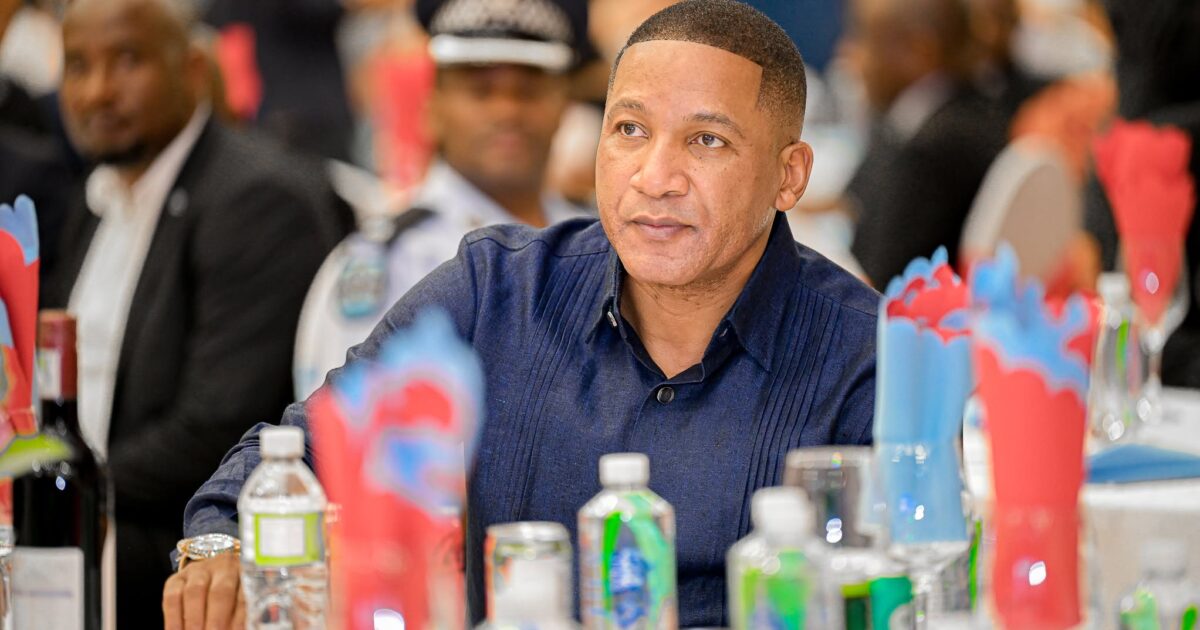
For a quarter of a century Botswana has owned 15% of De Beers while supplying most of the diamonds that made the company valuable. On 9 November, in his State of the Nation address, President Duma Boko said that share would double. His government has selected the Global Diamond Consortium (GDC), led by former De Beers chief executive Gareth Penny, as its preferred bidder for Anglo American’s 85% stake. “When this transaction is complete, Botswana’s shareholding in De Beers will double from the current 15% to 30%,” he told parliament, making the country De Beers’ “single largest shareholder”.
The announcement removes the biggest obstacle to a sale Anglo American has pursued since May 2024, because Botswana holds a right of first refusal over Anglo’s stake. It also clarifies what Botswana is—and is not—getting. It is not getting control. It is getting a larger seat in a company worth far less than it once was, and a larger share of the risk in a market that De Beers itself has struggled to defend against laboratory-grown stones.
What was announced, and what remains open
The deal is not done. Anglo American said it would keep working with Botswana, other governments and the consortium “towards agreeing binding transaction documents”. Neither Boko nor the GDC disclosed financial terms. The trade publication JCK reports a proposed price of $1 billion for Anglo’s stake; Rapaport News, citing an unnamed source, said Anglo would receive $750 million up front and $250 million deferred, with a further $500 million capital injection into De Beers still under discussion. Anglo has written De Beers down three times in three years, most recently to a carrying value of $2.3 billion in February, according to JCK.
Even the headline figure is not settled. Rapaport, citing a source close to the talks, reported that the consortium has so far agreed to only 25% for Botswana, which would make the 30% an opening position stated in public. The GDC’s statement after the speech gave no percentage. It thanked the governments of Botswana, Angola, Namibia and Oman as partners; Boko named only Angola and Namibia. Reuters reported that Richemont, the sightholders Diarough, Pluczenik and Grandview Klein, and the jeweller Signet were in talks to take part. The final ownership line-up is still unclear.
The control that wasn’t
When the sale process began, Boko spoke of Botswana taking a controlling stake. In Monday’s speech he acknowledged that the pledge had drawn criticism and argued that being the largest single shareholder still brings “all the attendant rights and protections”, Rapaport reported. The difference matters. A 30% holding in a consortium-owned company can carry a strong voice—board seats and possibly vetoes over some decisions—but how much depends on a shareholder agreement that has not been published. It does not, on its own, give Botswana the final word on how much De Beers mines, how it markets rough diamonds or how it allocates capital.
Boko’s own criteria suggest why the government stopped short. Its advisers assessed bids, he said, on sustainable profitability under an experienced, well-funded operator; greater strategic influence for Botswana; broader participation along the value chain, including local beneficiation; a deal that can be completed under global regulations; and “limiting the call on public money”. A controlling stake would have required the state to fund most of the purchase and any recapitalisation at a time when diamond earnings—the backbone of Botswana’s exports and public revenue—are depressed. On the evidence of the speech, 30% looks like the largest exposure the treasury was willing to take, though the government has not said so in those terms.
Where Botswana’s leverage really lies
Equity is one lever, and arguably not the strongest. Botswana’s more consequential bargain with De Beers was struck in 2023, when the two agreed a new ten-year sales agreement for Debswana, their 50-50 mining joint venture, and a 25-year extension of its mining licences to 2054. Under that deal, as reported by Reuters at the time, the state-owned Okavango Diamond Company’s share of Debswana’s output starts at 30% and rises to 50% by the agreement’s final year. Those rights—over rough supply and over the licences without which De Beers has no Botswana business—do not change with the shareholder register. What a bigger equity stake adds is a seat inside the company that sells the rest of Debswana’s output, and a larger claim on any recovery in value.
Boko also pitched the stake as a technology bet. He highlighted Element Six, De Beers’ synthetic-diamond materials business, and its role in a planned $600 million facility in the United States, saying he had agreed with US Commerce Secretary Howard Lutnick that Element Six should sit at the heart of a new Botswana–US technology partnership. “Synthetics don’t belong around a beautiful woman’s finger,” he said. “They belong at the end of a drill bit.” The framing is politically adroit—it ties Botswana to industrial demand for synthetic diamonds while defending natural stones in jewellery—but the speech gave no figures on how much of De Beers’ value Element Six represents.
Who bears the burden
The proposed structure shifts risk towards producer states. Under Anglo, De Beers’ losses and write-downs were absorbed by the shareholders of a diversified, London-listed miner. Under the consortium, Botswana, Namibia and Angola take on more of that exposure directly, and Botswana’s taxpayers stand behind the largest single stake. If the discussed $500 million recapitalisation goes ahead, the terms of who funds it—and whether Botswana’s share rises with its stake—have not been disclosed. The upside is real: if demand for natural diamonds recovers, producer governments capture more of it. But the downside would be concentrated in economies with the least room to absorb it.
Industry voices are cautious. Rapaport chief executive Dan Mano said a change of ownership “alone will not restore confidence”, and that new owners must align rough supply with demand and invest heavily in consumer marketing. Boko himself was pointedly critical of the company he is buying into, saying De Beers “seemed to have lost sight of what gives a natural diamond its value” and “stopped telling the natural diamond’s story”.
A regional seat at the table
“For the first time, the great diamond-producing nations of our region will sit together at the ownership table of the company that markets their diamonds,” Boko said. That is the genuinely new element. Producer states have long bargained with De Beers one by one. Shared ownership could, in principle, let them coordinate on supply discipline and local beneficiation. It could equally bring their differences into the boardroom: each government has its own revenue needs and its own pressure to keep mines and jobs going, which will not always align with a strategy of restraining output to support prices. The presence of Oman, which produces no diamonds, suggests the consortium also needs sovereign capital from beyond the region.
What happens next
The next milestones are binding agreements between Anglo and the consortium; a settlement of Botswana’s stake somewhere between 25% and 30%; the size and funding of any capital injection; and regulatory approvals. The detail to watch is the shareholder agreement. Botswana’s influence will depend less on the headline percentage than on board seats, veto rights and the rules for future capital calls. Boko has secured a bigger seat at De Beers’ table. Whether it was worth buying—and at what price—will be decided by a diamond market that neither Gaborone nor the consortium controls.
 Analysis
ANC falls to about 31% in local polls as hung councils double and Ramaphosa's future is debated
 Briefing
South Africa's Historic Killarney Mall Sells for R397.5 Million: What the Deal Reveals About the Property Market
 Argument