South Africa's Historic Killarney Mall Sells for R397.5 Million: What the Deal Reveals About the Property Market
Johannesburg's Killarney Mall has officially changed ownership after Octodec completed a R397.5 million sale to AJPG Property 1. The transaction marks the departure of a long-standing property from a listed investment group and raises a bigger question: are South Africa's established shopping centres becoming opportunities for specialist investors?
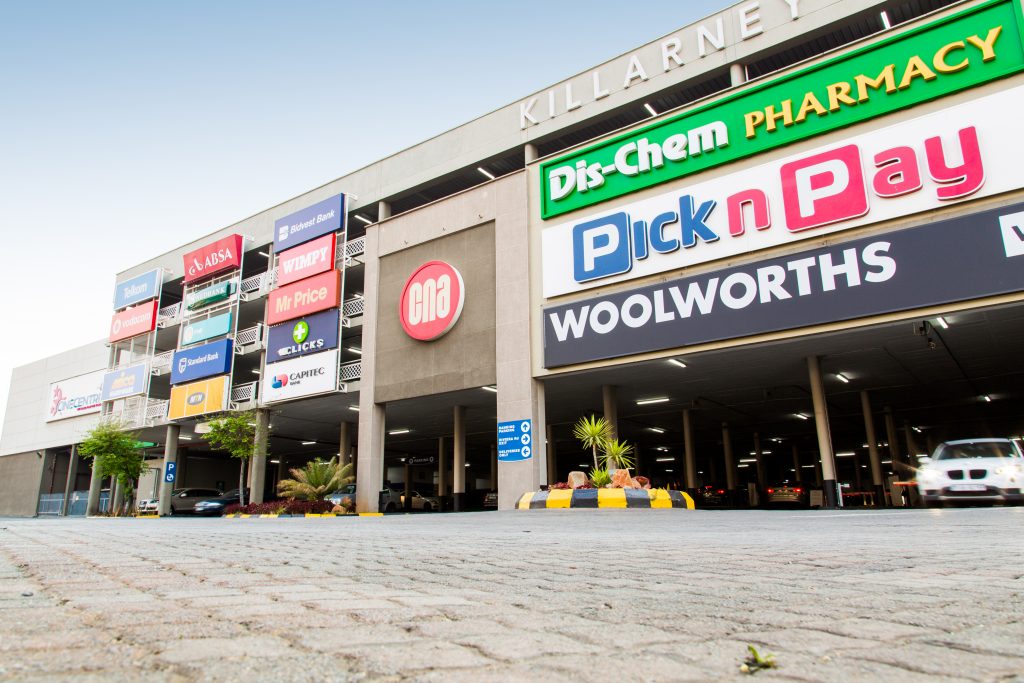
A historic Johannesburg landmark changes hands
One of South Africa's most recognisable retail landmarks has entered a new chapter.
Octodec Investments has completed the sale of Killarney Mall in Johannesburg to AJPG Property 1 Proprietary Limited for R397.5 million, bringing an end to its ownership of the property. The transfer took place on 2 November 2026, following the fulfilment of the transaction's conditions, including approval from the Competition Commission.
The completion was confirmed in an announcement to the Johannesburg Stock Exchange's Stock Exchange News Service (SENS) on 5 November.
The sale is more than a change in the ownership of a shopping centre. Killarney Mall occupies a distinctive place in South Africa's retail history. Established in 1961, it is regarded as the country's first shopping mall, representing an era when the modern shopping-centre concept was beginning to reshape urban commercial life.
For generations, shopping centres have served as more than places to buy goods. They have become meeting points, commercial hubs and important parts of the neighbourhoods surrounding them. Killarney Mall's history makes its change of ownership particularly notable.
Why Octodec decided to sell
For Octodec, the transaction is principally a capital-allocation decision.
The JSE-listed property investment company had previously identified Killarney Mall as a non-core asset. Its decision to sell forms part of a broader strategy to recycle capital, reduce borrowings and redirect resources towards priorities that better fit its investment objectives.
The agreed consideration of R397.5 million was below the property's reported valuation of R407.6 million as at August 2025. However, the difference between the valuation and the sale price should not, on its own, be interpreted as evidence of a distressed disposal. Property valuations and transaction prices reflect different considerations, including market conditions, financing, expected income and the specific terms of a deal.
The mall had also reported attributable profit of approximately R16.6 million alongside net liabilities of R38.6 million in the financial information reported around the transaction.
For a property investment company, holding an established asset is not necessarily the same as achieving the best possible return on capital. Selling a property can make strategic sense if the proceeds can reduce debt, improve financial flexibility or support investments with more attractive expected returns.
Octodec has said that the proceeds will be used, among other things, to reduce borrowings and pursue its strategic priorities.
Why the buyer sees an opportunity
The buyer, AJPG Property 1, is associated with AJP Group, a South African property group with experience in owning, developing and operating retail centres.
AJP has described itself as a retail property turnaround specialist. Its portfolio includes shopping centres such as Steeledale Mall, Glen Balad Mall, Elgin Mall and Kempton Gate Mall.
The group's interest in Killarney Mall appears to rest on the possibility of improving the property's commercial performance rather than simply acquiring an established building.
AJP Group chief executive John Baladakis previously described the mall as having significant turnaround potential. The group has indicated that its experience in managing tenant relationships, understanding consumer demand and improving retail-centre performance could help unlock additional value.
That ambition will now face the practical test of ownership.
Revitalising an established shopping centre requires more than cosmetic improvements. It can involve attracting new retailers, retaining existing tenants, improving the shopping experience, responding to changing consumer behaviour and ensuring that the centre remains relevant to its surrounding community.
The real measure of the acquisition will be whether the new owner can translate those ambitions into stronger occupancy, sustainable rental income and improved long-term value.
The changing economics of South Africa's shopping centres
The Killarney Mall transaction also reflects a broader question facing commercial property investors: what makes an established shopping centre valuable in an increasingly competitive retail environment?
South Africa's retail property market has been shaped by several changes. Online shopping has altered consumer purchasing habits, while economic pressure has affected household spending. At the same time, consumers increasingly expect convenience, accessibility, a variety of services and experiences that cannot easily be replicated online.
These pressures do not affect every shopping centre equally.
Large regional malls with substantial entertainment, retail and leisure offerings operate under different conditions from smaller neighbourhood centres. The latter often depend on their ability to serve a defined local market, providing everyday shopping, essential services and convenient access.
Killarney Mall's location in an established Johannesburg neighbourhood gives it a particular commercial identity. Its future will depend on how effectively its new owners respond to the needs of that market.
This is where specialist property investors may see opportunities that larger listed property companies no longer consider central to their strategies.
For a listed real estate investment trust, capital must be allocated across a portfolio while taking account of debt, financing costs, shareholder returns and competing investment opportunities. A private property operator with a different investment horizon may be more willing to acquire an asset that requires active management and repositioning.
The difference is not necessarily that one owner understands the property better than another. It may simply be that they have different investment priorities and different assessments of where value can be created.
What the transaction means for the local community
The change in ownership also raises questions beyond the financial performance of the property.
Shopping centres support businesses, provide employment and create commercial opportunities for independent retailers. A successful redevelopment or repositioning could strengthen the mall's role in the surrounding community.
The Competition Commission's approval of the transaction included public-interest conditions, bringing an additional dimension to the deal. These conditions included measures intended to support small businesses and historically disadvantaged entrepreneurs.
Such requirements matter because property transactions can affect more than shareholders and institutional investors. The way a shopping centre is managed can influence the opportunities available to smaller businesses and the economic activity generated in its surrounding area.
However, the new owner's plans will need to be assessed through actual outcomes rather than announcements. The important questions are whether existing businesses can remain viable, whether new opportunities emerge and whether the centre becomes more commercially relevant to its customers.
A new owner, but an uncertain future
The R397.5 million sale concludes one chapter in Killarney Mall's history, but the more consequential story is only beginning.
For Octodec, the disposal represents an opportunity to strengthen its financial position and redirect capital. For AJP Group, it is an opportunity to demonstrate that an established retail property can be repositioned into a stronger commercial asset.
Neither outcome is guaranteed.
The transaction illustrates how South Africa's property market is not simply about buying and selling buildings. It is also about deciding which assets deserve continued investment, which properties can generate stronger returns under different ownership and how commercial spaces can adapt to changing consumer expectations.
Killarney Mall has survived decades of economic and retail change. Its next test is whether a new ownership strategy can preserve its relevance while creating a commercially sustainable future.
The R397.5 million question is therefore not just what the mall is worth today. It is what its new owners believe it could become tomorrow.