The Luxury Logo Is No Longer Enough: Why Shoppers Are Questioning What They're Really Paying For
Luxury shoppers are questioning whether designer brands still deliver the quality, craftsmanship and exclusivity their prices promise. As prices climb and customer dissatisfaction grows, famous logos are losing their power to justify thousands of dollars.
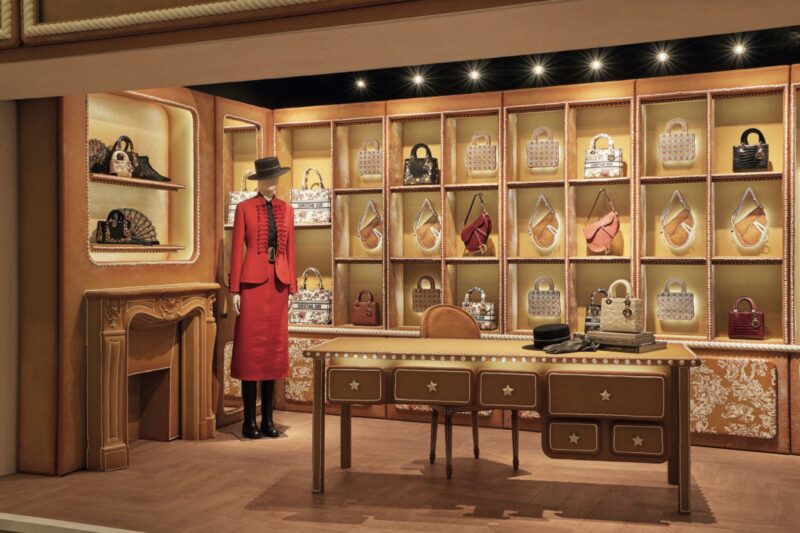
For decades, luxury brands sold more than handbags, shoes and clothing. They sold status, exclusivity, craftsmanship and the promise that an expensive product was worth owning. A recognisable logo could turn an ordinary-looking accessory into a symbol of success, while a famous fashion house could charge a premium because customers believed its reputation represented something exceptional.
That relationship is becoming increasingly difficult to sustain.
Across the luxury industry, shoppers are questioning why prices continue to rise when they do not always see corresponding improvements in materials, construction, design or customer experience. Some are moving towards independent designers and less expensive alternatives. Others are buying second-hand, waiting for discounts or simply deciding that a famous label is no longer worth the money.
This is not just a debate among fashion critics or financial analysts. Customers themselves are expressing dissatisfaction with the value they receive. And their complaints reveal a deeper problem for an industry that has increasingly relied on the power of its name.
Customers are asking what they are actually paying for
The frustration is particularly clear in a January 2025 survey conducted by Vogue Business. The publication surveyed 921 readers across the United States, the United Kingdom and other international markets, including 580 people who typically purchased luxury brands.
The findings were revealing. Seventy-seven per cent of respondents agreed that luxury fashion items had become more expensive than they were a year earlier. Thirty-seven per cent said they were buying less luxury fashion, while approximately two-thirds said they were more likely to wait for discounts or sales before purchasing.
Among those who had reduced their luxury spending, 41 per cent said luxury products no longer offered sufficient value to justify their prices. Another 41 per cent said they preferred to spend their money on other things.
The responses also exposed a growing concern about quality. One survey participant told Vogue Business: "Some luxury brands have increased their prices significantly but the quality has reduced. Luxury no longer means long-lasting quality product."
Another respondent questioned the value of new luxury goods compared with second-hand products, suggesting that older versions of the same brands could offer better quality.
These are important observations because they challenge the central promise of luxury. Customers are not simply complaining that expensive products cost too much. They are questioning whether the products deserve their prices in the first place.
When a logo costs thousands
The debate becomes more uncomfortable when consumers examine the economics behind luxury products.
A handbag may cost several thousand dollars, but its retail price is not a direct reflection of the materials and labour used to manufacture it. Luxury companies also pay for design, logistics, marketing, retail operations, research, distribution and other expenses. Their prices also reflect brand positioning, exclusivity and the commercial value of decades of reputation.
Nevertheless, the gap between manufacturing costs and retail prices has become a source of public controversy.
In 2024, a Wall Street Journal investigation examined the production of Dior's Book Tote, a handbag retailing for thousands of dollars. The report identified an Italian supplier that assembled the bag for approximately $57. That figure represented an assembly cost, not the complete cost of producing and bringing the product to market. Dior disputed aspects of the reporting.
The distinction matters. A $57 assembly cost does not establish that a $2,780 handbag should retail for $57. But it raises a legitimate question: how much of the final price reflects the actual product, and how much reflects the commercial power of the brand?
For customers, the answer is becoming increasingly important. When a handbag costs as much as a substantial household expense, buyers expect more than a recognisable name. They want excellent materials, careful construction, durability and a product that feels exceptional.
The problem emerges when the price communicates extraordinary quality but the customer's experience does not.
The complaints are no longer just about affordability
Individual customer experiences illustrate why the issue has become more serious than a disagreement over pricing.
In November 2025, a Louis Vuitton customer described receiving a handbag purchased for almost $3,000 that arrived dented, without protective stuffing or plastic packaging. The buyer also complained about crooked stitching and expressed frustration that the product was already sold out, making an immediate replacement difficult.
The complaint was reported by The Cool Down after the customer shared photographs on Reddit. It is one customer's account, not evidence that every Louis Vuitton product has the same problem. But it illustrates the reputational risk when a premium-priced product arrives in a condition that customers do not associate with luxury.
Another shopper, discussing a $2,500 Bottega Veneta bag purchased through Neiman Marcus in February 2026, complained that the item arrived damaged and without the expected presentation or protective packaging. The customer returned it and questioned what buyers were receiving in exchange for spending that amount.
These accounts are not representative industry surveys, and individual complaints should not be confused with proof of widespread manufacturing defects. Their significance is that they show how quickly the luxury promise can be undermined when the product or service falls short of expectations.
At these prices, customers do not expect perfection to be a marketing slogan. They expect it to be part of the purchase.
Even wealthy customers are questioning the price increases
The luxury industry's problem is not limited to middle-income consumers who have been priced out of expensive fashion.
McKinsey's 2025 State of Fashion: Luxury report found that around 80 per cent of interviewed ultra-high-net-worth clients expressed dissatisfaction with ongoing luxury price increases. Many connected their frustration to a perceived lack of improvement in quality and innovation.
One wealthy European client interviewed for the research said: "That’s the catch: the prices have gone through the roof while product quality has not necessarily gone in the same direction."
Another said: "You cannot just double the price in a few years... luxury does not justify it all."
These comments are particularly significant because they come from customers who can afford luxury products. Their objections are not necessarily about affordability. They concern whether the products justify the prices.
That distinction challenges an assumption on which the industry has long depended: that wealthy customers will continue paying almost any price as long as the brand remains prestigious.
Even affluent buyers have expectations. They may be willing to pay more for exceptional craftsmanship, distinctive design and exclusivity, but they are less likely to accept repeated price increases without a convincing improvement in the product.
How luxury brands priced out their own customers
The industry's pricing strategy helps explain how this dissatisfaction developed.
During the pandemic and the years that followed, major luxury houses benefited from strong demand and increased spending. Brands raised prices, positioning their products further upmarket and attempting to strengthen their exclusivity.
The increases were substantial. According to figures from Bernstein reported by Business of Fashion, Chanel and Dior raised selected product prices by approximately 59 per cent and 51 per cent, respectively, between 2020 and 2023.
The strategy helped reinforce the perception that luxury products were increasingly exclusive. But it also made them less accessible to aspirational customers: people who were not exceptionally wealthy but saved for a designer handbag, watch or pair of shoes as a personal milestone.
Those customers were important to the industry's expansion. They brought a much larger consumer base to luxury brands, even if they did not spend as much as the wealthiest clients.
Bain estimated that the global luxury market lost approximately 50 million customers between 2022 and 2024, with the customer base declining from around 400 million to 350 million.
By 2025, the market was facing further pressure. Bain estimated that the personal luxury goods market would contract by 2 per cent to approximately €358 billion, marking a second consecutive year of decline.
The problem is not that wealthy customers have disappeared. It is that the industry has become increasingly dependent on a smaller group of very wealthy buyers while alienating a much broader audience.
The rise of customers who choose quality over prestige
Another important change is the growing willingness among shoppers to consider products outside the traditional luxury system.
A customer no longer has to choose between an expensive designer handbag and an obviously inferior alternative. Independent leather makers, contemporary fashion labels, vintage sellers and second-hand platforms offer products that compete for the same spending.
Some shoppers are discovering that they can purchase well-made products without paying for a globally recognised logo.
A September 2026 discussion on Reddit's handbag community illustrates this change. A shopper who had previously purchased from major houses including Saint Laurent, Prada, Dior and Louis Vuitton described becoming more interested in materials and craftsmanship than brand recognition.
The customer argued that learning more about production standards and material quality had made some luxury purchases harder to justify. The shopper said they would rather own an exceptional product without a famous logo than spend thousands on a recognisable bag that did not offer noticeably better quality.
This is an individual consumer's perspective, not a measure of the entire market. But it reflects a broader shift identified in industry research: shoppers are becoming more conscious of the relationship between price and perceived value.
The second-hand market is also part of this change. It gives buyers access to established brands at lower prices and allows them to compare older products with newer versions. For some consumers, vintage luxury has become attractive precisely because they believe earlier products offered better construction or materials.
The result is a challenge to the traditional luxury business model. Brands are no longer competing only with other famous fashion houses. They are competing with every alternative that can convince customers it offers better value.
Luxury is losing the meaning of exclusivity
There is also a cultural problem behind the economic one.
Luxury has always depended partly on the idea that its products are different from ordinary consumer goods. Scarcity, heritage, craftsmanship and distinctive design helped justify premium prices.
But when a brand expands aggressively, produces more products, increases its visibility and repeatedly raises prices, exclusivity can become harder to communicate.
The logo may remain recognisable, but recognition alone does not guarantee admiration.
For some shoppers, displaying an expensive brand has become less attractive when the product is widely available, heavily marketed or perceived as overpriced. Others are turning towards understated designs, vintage products and smaller labels that offer distinction without prominent branding.
The change does not mean everyone has abandoned status consumption. Rather, the symbols of status are evolving. Some consumers increasingly want to demonstrate discernment through quality and individuality instead of simply displaying how much they can afford to spend.
A product without a famous logo can now communicate confidence just as effectively as one carrying a prestigious name.
The luxury industry is being forced to reconsider its strategy
Luxury companies are beginning to recognise that price increases alone cannot guarantee growth.
In August 2026, Vogue reported that Gucci had reduced the price of its medium leather Mercato tote by an estimated 20 to 25 per cent, according to Bernstein analysts. The move formed part of a broader effort by Kering to reconnect with aspirational shoppers and improve sales volumes.
The same report noted that the average price of personal luxury goods had increased by 52 per cent between 2019 and 2024, according to HSBC.
The adjustment is significant because it suggests that at least some major brands are reconsidering how far they can push prices before customers stop buying.
But lowering prices is not enough on its own. Customers who have lost confidence in a brand need reasons to return. That means better products, more consistent quality, stronger customer service, distinctive design and a clearer explanation of what makes the product worth its price.
The challenge is not simply to make luxury cheaper. It is to make luxury meaningful again.
The future of luxury depends on what is inside the label
The luxury industry's current difficulties reveal a contradiction at the heart of its business model. Brands have spent years strengthening their names, raising prices and selling exclusivity. But the more they ask customers to pay, the more customers expect the product itself to justify the expense.
A famous logo can attract attention. It can communicate heritage, identity and status. But it cannot indefinitely compensate for disappointing quality, repetitive design or an unsatisfactory customer experience.
The industry does not need to abandon premium pricing. Exceptional craftsmanship, rare materials, skilled labour and genuinely distinctive design can justify exceptional prices.
What it cannot assume is that a prestigious name automatically makes every product worth thousands of dollars.
The next phase of luxury will be determined by whether brands can restore the connection between price and value. Customers are not necessarily rejecting luxury. They are increasingly rejecting the idea that luxury should be expensive simply because a famous name is printed on it.
The logo may still open the door. But increasingly, the product has to justify the price.