Lula Wins Brazil Election 2026, Defeating Flávio Bolsonaro in Historic Comeback
Brazilian President Luiz Inácio Lula da Silva has won the 2026 presidential election, defeating Flávio Bolsonaro in a dramatic runoff and securing an unprecedented fourth term after trailing his rival in the first round.
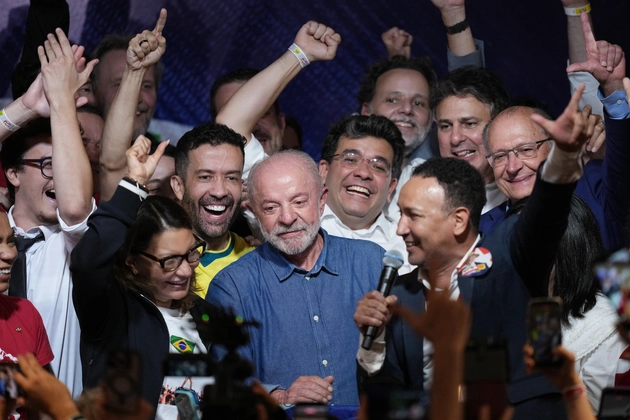
Luiz Inácio Lula da Silva has won Brazil’s 2026 presidential election, completing a remarkable political comeback against Senator Flávio Bolsonaro and securing a historic fourth term as president.
Brazil’s Superior Electoral Court, known as the TSE, declared Lula the winner following Sunday’s closely fought runoff.
According to the final official tally, Lula received 64,256,232 votes, or 51.79% of valid ballots, while Bolsonaro received 59,826,041 votes, or 48.21%. The margin between the two candidates was more than 4.4 million votes.
The result keeps the Workers’ Party leader in power for another term and adds another extraordinary chapter to the career of one of Latin America’s most consequential political figures.
But Lula’s victory was far from inevitable.
Lula Reverses First-Round Defeat
Perhaps the most striking feature of Brazil’s 2026 election was the scale of Lula’s turnaround between the two rounds.
Flávio Bolsonaro entered the runoff with momentum after winning the first round.
Bolsonaro received 47.03% of valid votes in the opening round, compared with 45.16% for Lula. Lula then reversed that deficit in the runoff — the first time since Brazil returned to direct presidential elections that the second-place candidate in the first round went on to win the presidency.
The numbers show how dramatically Lula expanded his coalition.
CNN Brasil reported that Lula gained approximately 10.3 million additional votes between the first and second rounds, while Bolsonaro added about 3.7 million.
That shift transformed what initially appeared to be a major setback for Lula into one of the most significant electoral comebacks in modern Brazilian politics.
Brazil Election 2026 Results
The final presidential runoff results were:
Luiz Inácio Lula da Silva (PT): 51.79% — 64,256,232 votes
Flávio Bolsonaro (PL): 48.21% — 59,826,041 votes
More than 128.2 million Brazilians voted in the second round from an electorate of more than 158 million eligible voters.
Abstention fell to approximately 19.2%, compared with 21.08% during the first round, according to the TSE.
The increased turnout appears to have been particularly important for Lula, whose campaign succeeded in mobilizing millions of additional voters after the first round.
Lula Makes Brazilian Political History
The victory gives Lula a fourth non-consecutive presidential term, something no other Brazilian president has achieved.
His political career has already spanned several generations of Brazilian politics.
The former metalworker and trade union leader first won the presidency in 2002 and was reelected in 2006. After years away from the presidency, he returned to power by defeating Jair Bolsonaro in the 2022 election.
Four years later, Lula faced another member of the Bolsonaro family — this time Jair Bolsonaro’s son, Flávio.
And once again, Lula won.
The 2026 victory is particularly remarkable because Lula, now 80, had appeared vulnerable after finishing behind Bolsonaro in the first round.
Instead, he will begin another presidential term in January 2027. Brazil’s Senate says the inauguration is scheduled for January 5, 2027.
Flávio Bolsonaro Rejects the Result
The political battle may not be completely over.
Flávio Bolsonaro has refused to concede and is challenging the election following controversy surrounding the extension of voting hours on election day.
Voting was extended in parts of the country after problems involving transportation and severe weather disrupted access to polling stations.
The episode immediately became a political flashpoint in an already deeply polarized election.
Bolsonaro has demanded that the election result be annulled, but the TSE has formally announced Lula’s reelection.
The dispute echoes the political tensions that followed Brazil’s 2022 presidential election, when Lula narrowly defeated Jair Bolsonaro.
What Lula’s Victory Means for Brazil
Lula may have won the election, but the narrow result underlines how politically divided Brazil remains.
Almost 60 million Brazilians voted for Flávio Bolsonaro, demonstrating that the conservative movement built around the Bolsonaro family remains a major political force even after another presidential defeat.
Lula, meanwhile, will enter his next term facing pressure over the economy, cost of living, public security, government spending and Brazil’s relationship with the United States.
His victory also carries international significance.
Brazil is Latin America’s largest economy and one of the world’s most influential emerging powers. Under Lula, Brasília has pursued a more independent foreign policy while strengthening Brazil’s role in BRICS and seeking deeper relationships across the Global South.
The election therefore carried implications far beyond Brazil’s borders.
A Historic Comeback — But a Divided Brazil
Lula’s 2026 victory is not simply another reelection.
He entered the runoff after losing the first round, mobilized millions of additional voters and ultimately defeated the son of the man he beat four years earlier.
The final margin — 51.79% to 48.21% — nevertheless shows that Brazil remains almost evenly divided between competing political visions.
For Lula, the result secures his place in Brazilian history as the country’s first president elected to four terms.
For the Bolsonaro movement, the nearly 60 million votes won by Flávio Bolsonaro demonstrate that it remains a formidable force in Brazilian politics.
And for Brazil, the election settles the question of who won the presidency — but it does not settle the political divisions that produced one of the most closely watched elections in the country’s recent history.
Key Takeaways
Lula won Brazil’s 2026 presidential runoff with 51.79% of valid votes.
Flávio Bolsonaro finished with 48.21%.
Lula received 64.26 million votes, compared with Bolsonaro’s 59.83 million.
Lula overturned a first-round defeat in which Bolsonaro had finished ahead.
The victory gives Lula an unprecedented fourth presidential term.
Bolsonaro has rejected the result and is challenging the election.
Lula’s next presidential term is scheduled to begin on January 5, 2027.