Flávio Bolsonaro Flees Brazil for the US. What Happens to His Political Future Now?
Days after losing Brazil’s presidential election to Luiz Inácio Lula da Silva, Flávio Bolsonaro has arrived in Florida despite a Supreme Court order requiring him to surrender his passports. His departure may protect him in the short term, but it raises a much bigger question: can the Bolsonaro political dynasty still lead Brazil’s right from abroad?
Flávio Bolsonaro was supposed to become the new leader of Brazil’s opposition.
Instead, days after losing the presidency to Luiz Inácio Lula da Silva, he is in Florida.
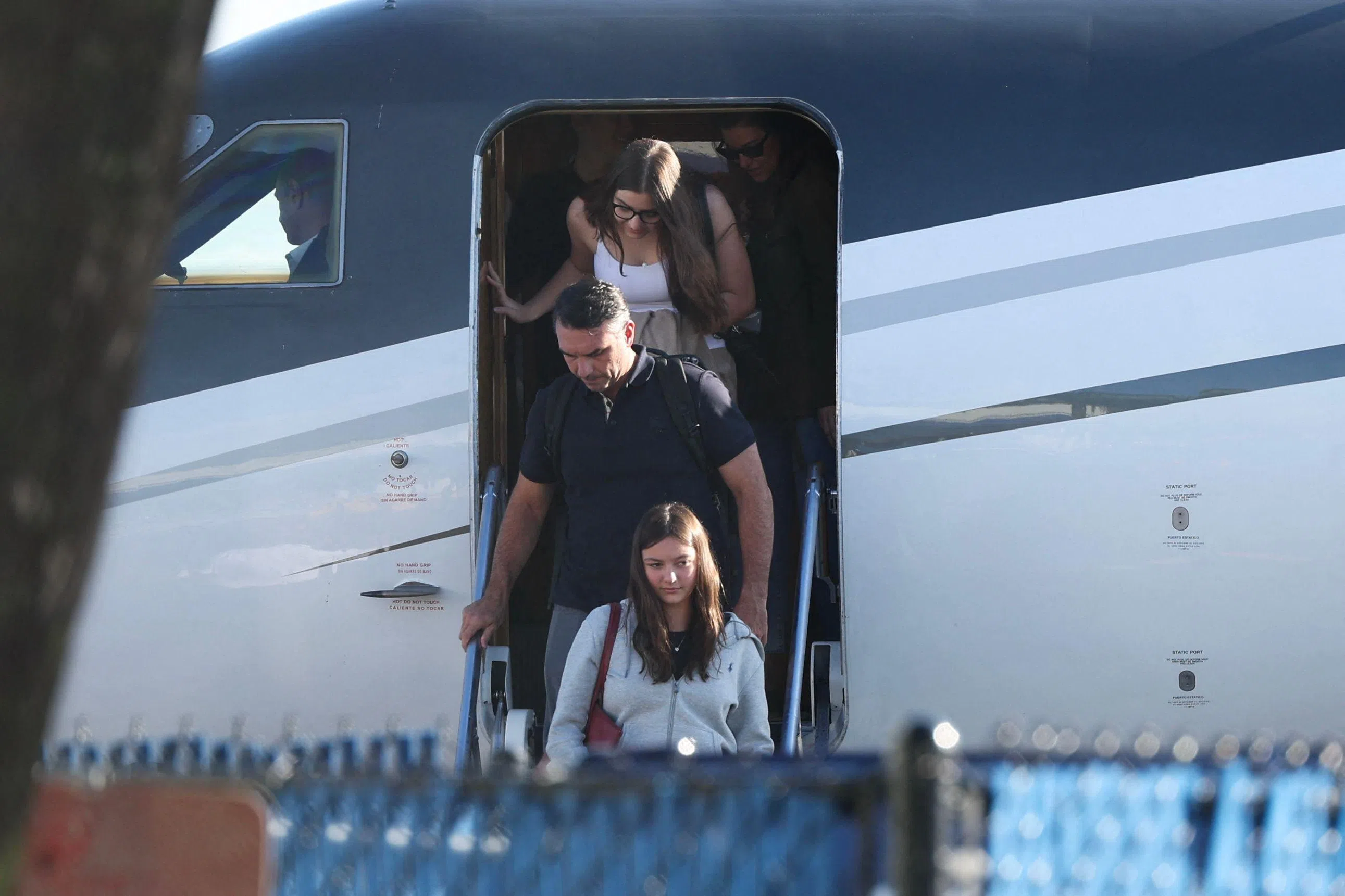
Bolsonaro arrived in the United States with his family on Wednesday after a remarkable journey out of Brazil that reportedly took him through Argentina and Ecuador before his private aircraft landed at Miami-Opa Locka Executive Airport.
His departure came at an extraordinary moment.
Brazil's Supreme Court had ordered Bolsonaro to surrender his passports as part of a money-laundering investigation. Bolsonaro denies wrongdoing and had publicly insisted that he had no intention of leaving Brazil.
Then he left.
Washington, meanwhile, has said Bolsonaro and his family will be allowed into the United States, while President Donald Trump has spoken sympathetically about the family.
The immediate legal consequences could be serious. But the political consequences may prove even larger.
Bolsonaro entered the presidential election with a realistic chance of becoming Brazil's next president. Despite his defeat, nearly 60 million Brazilians voted for him. That gave him an obvious claim to leadership of the country's conservative opposition.
Leaving Brazil puts that position at risk.
From Presidential Contender to Political Exile
Flávio Bolsonaro's defeat did not necessarily have to end his presidential ambitions.
At 45, he potentially had decades of political life ahead of him. He could have accepted defeat, returned to the Senate and positioned himself as the principal opposition figure confronting Lula.
He could also have prepared for another presidential campaign in 2030.
Instead, his departure changes the calculation.
His Senate term expires at the end of January 2027. Once it does, Bolsonaro will lose an important institutional position from which to lead the opposition.
More importantly, politics is difficult to conduct from another country.
Brazilian conservatives now face four years of opposition politics: congressional battles, state elections, economic debates, demonstrations and the daily contest over Lula's government.
If Bolsonaro remains in Florida while those battles take place in Brazil, other politicians will have an opportunity to occupy the space he leaves behind.
The most obvious beneficiary could be São Paulo Governor Tarcísio de Freitas, who has long been discussed as a possible successor to the Bolsonaro political movement.
That may ultimately be the greatest threat to Flávio Bolsonaro's political future.
Not Lula.
Not the courts.
But another conservative leader convincing Brazilian voters that Bolsonaroism can survive without a Bolsonaro.
The Bolsonaro Name Still Matters
Writing off Flávio Bolsonaro would nevertheless be premature.
The presidential election demonstrated that the Bolsonaro movement remains enormously powerful.
Lula won the runoff with 51.8% of the vote, while Bolsonaro received just under 48.2%. That translates into tens of millions of Brazilians who were prepared to put another Bolsonaro in the presidency.
That political constituency does not disappear because its candidate boarded a plane.
The Bolsonaro name also remains one of the most recognizable brands in Brazilian politics.
Jair Bolsonaro transformed Brazil's conservative movement around issues including crime, religion, nationalism, opposition to the political establishment and hostility toward the Workers' Party.
Flávio inherited much of that political machinery.
The question is whether he can continue controlling it from Miami.
Florida Could Become a Political Headquarters
There is another possibility.
Rather than ending Flávio Bolsonaro's political career, the United States could become the headquarters of a new phase of it.
His brother Eduardo Bolsonaro already lives in the United States and has worked to cultivate relationships with American conservatives.
The family also enjoys unusually warm relations with Donald Trump.
That creates the possibility of a Bolsonaro political operation operating partly from American soil—using interviews, social media, political allies and international pressure to remain relevant inside Brazil.
The strategy would not be unprecedented.
Political exiles throughout history have attempted to maintain domestic movements from abroad.
Modern communications make that considerably easier.
Bolsonaro can speak directly to millions of supporters through social media without physically standing in Brasília.
But there is an important difference between maintaining an audience and maintaining political power.
Presidential politics ultimately requires organization.
It requires alliances with governors, lawmakers, business leaders, religious organizations and local political machines.
Those relationships are harder to manage from thousands of kilometres away.
His Legal Problems Could Now Become More Serious
Bolsonaro's departure also risks strengthening the argument of prosecutors and investigators who view him as a flight risk.
He was ordered to surrender his passports as authorities investigated allegations of corruption and money laundering. Bolsonaro denies the accusations.
Brazilian legal experts have said that leaving the country after such an order could potentially strengthen the case for preventive detention, although any such measure would require judicial approval.
The investigations themselves do not disappear because Bolsonaro is in the United States.
Nor does receiving a U.S. visa mean he has been granted political asylum.
Those are very different things.
If Brazilian authorities eventually pursue extradition, Bolsonaro could find himself at the center of a diplomatic and legal dispute between Brasília and Washington.
That could transform his case from a Brazilian political controversy into an international one.
Trump Changes the Equation
The presence of Donald Trump in the White House makes Bolsonaro's decision considerably more consequential.
Trump has maintained a close relationship with the Bolsonaro family and has criticized the treatment of Jair Bolsonaro by Brazil's institutions.
He has also questioned the latest Brazilian election without presenting evidence that would overturn the internationally recognized result.
That means Flávio Bolsonaro is not arriving in an indifferent Washington.
He is arriving in a country whose president is politically sympathetic to his family.
For Bolsonaro, that could provide protection and an international platform.
For Lula, it could become a serious diplomatic irritation.
Brazil and the United States could increasingly find themselves arguing not only over trade and foreign policy, but over the legal fate of Brazil's defeated presidential candidate.
The Comparison With His Father Is Impossible to Ignore
There is also an extraordinary sense of political repetition.
After losing Brazil's 2022 presidential election to Lula, Jair Bolsonaro left Brazil for Florida shortly before Lula took office.
He eventually returned.
Years later, he was convicted over an attempt to overturn the result and sentenced to 27 years in prison.
Now his son has followed a strikingly similar path after losing to the same opponent.
But Flávio's situation may be more politically damaging.
Jair Bolsonaro left office after serving as president. He had already established himself as the unquestioned leader of Brazil's right.
Flávio is still trying to inherit that position.
Leaving Brazil before establishing himself as opposition leader gives potential rivals an opportunity his father never faced.
Can Bolsonaroism Survive Without a Bolsonaro?
That may now become one of the defining questions of Brazilian politics.
Bolsonaroism has always been closely connected to the Bolsonaro family.
But political movements eventually face a choice between remaining family enterprises and becoming broader ideological coalitions.
Brazil's conservative movement is large enough to survive without Flávio Bolsonaro.
The election itself proved that.
Millions of voters oppose Lula and the Workers' Party for reasons that extend far beyond loyalty to one family.
Governors, lawmakers and conservative activists therefore have an incentive to continue organizing whether Bolsonaro returns or not.
If Flávio remains abroad for an extended period, a new generation of leaders will have an opportunity to present themselves as conservatives without the Bolsonaro family's legal baggage.
That could gradually separate the Brazilian right from the family that built its modern political identity.
His Political Career Is Not Over
It would still be a mistake to declare Flávio Bolsonaro finished.
Brazilian politics has produced too many dramatic reversals for that conclusion.
Lula himself offers perhaps the clearest example.
He went from the presidency to prison and then returned to the presidency.
Political disgrace in Brazil does not necessarily mean permanent political death.
Bolsonaro also retains something extremely valuable: a large electoral base.
If he can portray himself successfully as the victim of political persecution, his departure could even strengthen his position among his most loyal supporters.
From that perspective, Florida could become part of the Bolsonaro narrative rather than its conclusion.
He could argue that Brazil's institutions prevented him from competing fairly, pursued him after the election and ultimately forced him abroad.
His opponents will tell a very different story: that a defeated candidate facing investigation ignored a court order and fled rather than remaining in Brazil to defend himself.
Which version becomes dominant could determine whether his exile destroys his political career or preserves it.
The Real Battle Is for Brazil's Right
Flávio Bolsonaro's immediate future may therefore be decided less by what happens in Miami than by what happens back home.
If Brazil's conservative opposition remains loyal to him, he could continue directing a powerful movement from abroad while preparing for an eventual return.
If alternative leaders emerge, however, his influence could erode quickly.
Politics does not tolerate a vacuum for long.
The Bolsonaro family transformed Brazil's right over the past decade. But the movement it created has now become larger than any single member of the family.
Flávio Bolsonaro's decision to leave Brazil therefore represents an enormous gamble.
He may have secured personal safety and a sympathetic political environment in the United States.
But he has surrendered something potentially more valuable:
his physical place at the center of Brazil's opposition.
Whether he can reclaim it may determine not only his own political future, but whether the Bolsonaro era of Brazilian politics continues into the next decade.