Whistleblower Alleges Bolsonaro-Linked Operative Met Meta Before Lula's Social Media Restrictions
A technical glitch that suppressed Luiz Inácio Lula da Silva’s digital reach during Brazil’s first-round vote has collided with unproven whistleblower claims of closed-door Silicon Valley lobbying by Bolsonaro allies.
Days before Brazilian voters cast ballots in the first round of the 2026 presidential election, the digital apparatus supporting President Luiz Inácio Lula da Silva ran into an invisible wall. Campaign aides monitoring engagement discovered that Lula’s accounts across Facebook and Instagram had ceased functioning normally. Recommendations slowed, search visibility narrowed, and distribution metrics plummeted across key geographic battlegrounds where the incumbent was fighting to fend off a challenge from Senator Flávio Bolsonaro.
Meta attributed the sudden degradation to internal technical glitches. The company acknowledged that anomalies disrupted visibility and distribution tools on both platforms, maintaining that the malfunction hit systems indiscriminately and was corrected as soon as engineering teams diagnosed the underlying fault. Brazil’s Superior Electoral Court, the Tribunal Superior Eleitoral, was not satisfied with passive assurances. The electoral tribunal issued formal orders requiring Meta to detail the mechanics of the failure, outline its remediation steps, and restore equal operational conditions in accordance with strict Brazilian campaign parity statutes.
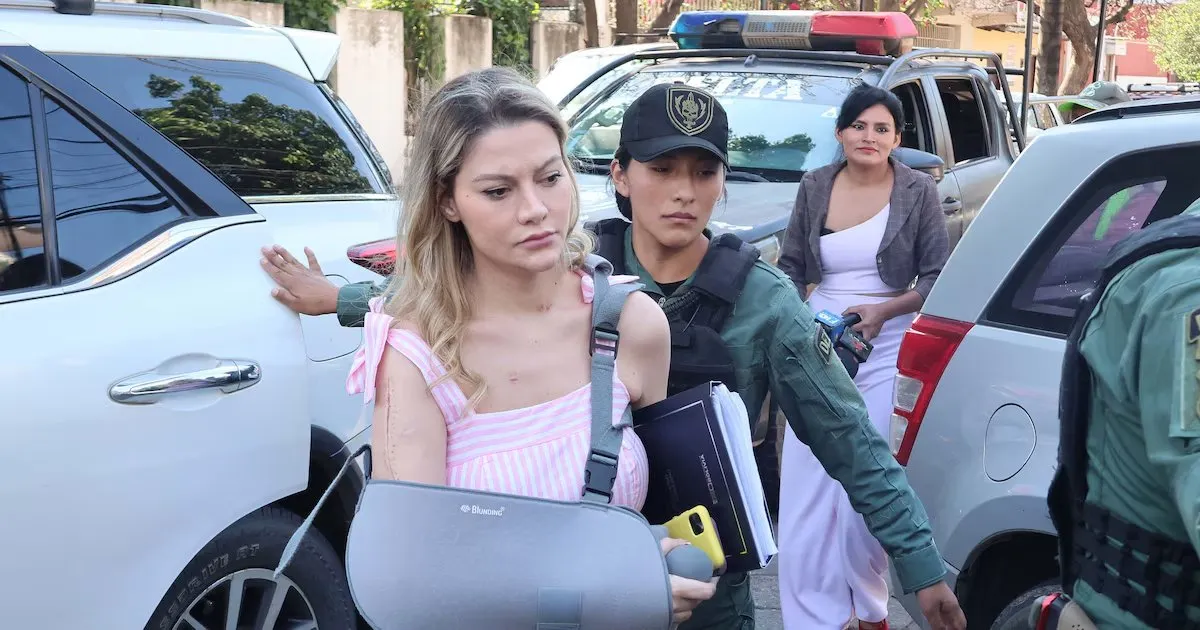
Yet what the technology giant framed as routine server failure has been dragged into a criminal and political tempest. Nadia Beller, a Bolivian journalist and political analyst, came forward with explosive claims: that Fernando Cerimedo, an Argentine digital strategist long embedded in the political apparatus of the Bolsonaro family, held private discussions with Meta representatives in the United States in the weeks preceding the disruptions. Beller alleged those contacts were designed to orchestrate or encourage algorithmic suppression against Lula’s digital operations.
Evaluating the affair requires untangling verified platform failures from uncorroborated testimony, a fraught criminal investigation, and international political networks that operate across South America and the United States.
The Anatomy of a Digital Blackout
The confirmed facts begin inside the server logs. During the immediate run-up to the first round, Lula’s official Facebook and Instagram profiles suffered severe reach suppression. Content posted by the campaign failed to appear in public recommendation feeds, account handles vanished from auto-complete search bars, and engagement figures dropped abruptly below historic baselines. Campaign technical staff documented the disruption in real time, filing emergency complaints before the electoral court.
Under Brazilian electoral law, social platforms operating in the country are bound by strict obligations guaranteeing equitable treatment among registered candidates. Algorithms cannot lawfully be tuned to penalize or elevate specific political figures during official campaign windows. Confronted by the TSE, Meta conceded that Lula’s accounts suffered anomalous distribution penalties but insisted the disruptions stemmed entirely from neutral software defects rather than targeted intervention.
Electoral authorities ordered Meta to deliver a full technical post-mortem and verify whether comparable errors affected other political accounts or everyday Brazilian users during the same window. The tribunal made clear that regardless of intent, algorithmic distortions during a contested vote threaten the regulatory balance established by electoral magistrates.
What remains unproven is whether the anomaly materially shaped the ballot. The certified first-round election results showed a narrow margin separating Lula and Flávio Bolsonaro, sending both candidates into a polarized runoff. Digital researchers analyzing the campaign have begun trying to quantify the reach and engagement losses Lula’s campaign sustained while the restrictions persisted. Yet isolating platform metrics from organic voter behavior, economic pressures, and offline campaigning is technically impossible without internal telemetry. There is no verified evidence establishing that Meta’s platform failures altered the ultimate allocation of votes.
Nadia Beller’s Allegations
The controversy gained political momentum when Beller went public with assertions that the disruptions were the calculated byproduct of backchannel lobbying. Beller, who previously maintained professional and personal ties with Cerimedo, claimed that Argentine and Brazilian operatives working on behalf of the Bolsonaro campaign secured private access to Meta officials on American soil.
Sorting Beller’s claims requires separating what she personally witnessed from hearsay. Beller has presented herself as an insider privy to the operational planning of regional conservative consultants. She claims to possess direct awareness of travels and strategy sessions involving Cerimedo and individuals close to the Bolsonaro political circle.
She has not produced primary documentation, meeting logs, audio recordings, or internal communications demonstrating that Meta personnel agreed to alter enforcement rules or modify code to disadvantage Lula. When pressed on the specifics of the alleged American meetings—who sat across the table, where the discussions took place, and what commitments were exchanged—Beller’s narrative shifts from direct observation to secondhand accounts and private confidences.
Meta has offered no confirmation that political meetings took place with Cerimedo or Bolsonaro envoys regarding platform enforcement in Brazil. Independent reporting has not turned up flight manifests, visitor logs, or digital messages corroborating that high-level discussions occurred between Cerimedo’s network and Meta executives concerning the 2026 race. The core claim—that Meta knowingly collaborated with right-wing consultants to hinder Lula—remains an unsubstantiated accusation.
The Operative in the Shadows
To understand why Beller’s allegations commanded immediate attention in Brasília, one must look at Fernando Cerimedo’s decade-long footprint across South American politics. The Argentine strategist is widely regarded as one of the pioneers of aggressive digital campaigning on the regional right.
Cerimedo built his reputation running digital operations during the rise of Argentine President Javier Milei, deploying networks of partisan channels, hyper-targeted messaging, and rapid-response digital teams that bypassed traditional media outlets. His work soon expanded into Brazil, where he developed direct ties with Jair Bolsonaro’s inner circle and the former president’s sons, including Flávio Bolsonaro. During Brazil’s contested 2022 presidential contest, Cerimedo became a central figure in propagating election-fraud narratives, using public broadcasts and online platforms to question the security of Brazil’s electronic voting machines—claims that Brazilian judicial authorities subsequently ruled were part of coordinated disinformation campaigns.
His firm has faced persistent accusations from political opponents and watchdog organizations concerning the deployment of click-farms, bot networks, and astroturfed digital movements. Cerimedo has consistently defended his operations as modern political communication, arguing that his campaigns merely harness grassroots conservative sentiment rather than engineer artificial engagement.
Alongside his Latin American work, Cerimedo cultivated relationships with conservative organizations and political operatives in the United States, frequently attending conferences and building ideological alliances with American figures. Those connections gave him access to political consulting networks across Washington and Florida, blurring the lines between domestic campaigning and transnational ideological lobbying.
Violence and Criminal Inquiries
The dispute moved into the criminal justice system following an attack on Beller. Law enforcement authorities opened an investigation after an attempted killing targeted the Bolivian analyst, an incident that transformed what had been an online political feud into a high-stakes prosecutorial matter.
Investigators examining the attack began reviewing Beller’s previous associations, focusing scrutiny on her relationship with Cerimedo. Police and prosecutors have alleged that Cerimedo may have been connected to the plot against Beller, viewing her public statements and private knowledge of his political dealings as a possible motive. Cerimedo’s legal defense has forcefully rejected the allegations, stating that the consultant had no involvement in the violence and framing the accusations as a politically motivated smear orchestrated by adversaries seeking to criminalize his campaign work.
No court judgment has been handed down establishing Cerimedo’s guilt, and the evidentiary basis connecting him to the physical attack remains the subject of ongoing judicial proceedings. Beller’s prior proximity to Cerimedo explains her access to his internal circle, but it also reflects an acrimonious personal and professional falling-out that defence lawyers have seized upon to question her credibility as an objective whistleblower.
The Question of Foreign Interference
In the wake of Beller’s statements, political commentators aligned with Brazil’s governing coalition raised allegations that the United States government or American intelligence bodies played a covert role in facilitating meetings or backing efforts to unseat Lula. That claim represents an entirely different tier of accusation, carrying grave diplomatic and geopolitical stakes.
There is no evidence supporting it. Official records, congressional testimonies, diplomatic correspondence, and intelligence reporting contain nothing linking United States federal agencies or officials to discussions regarding Lula’s accounts. Cerimedo’s ideological relationships with American conservative figures do not constitute state sponsorship, and meetings held on American territory between private political consultants and commercial technology firms are not evidence of foreign policy intervention.
Treating private lobbying in the United States as an official state operation conflates corporate access with government policy. Until verifiable documents or intelligence assessments show official involvement, claims of United States government complicity in the platform suppression remain entirely unsubstantiated.
Platforms, Power, and the Runoff
The crisis highlights the extraordinary leverage held by a single foreign corporation over Brazilian democratic life. In Brazil, political communication is dominated by Meta’s products. WhatsApp serves as the primary communications utility for the majority of the population, while Instagram and Facebook are the premier digital battlegrounds for political persuasion, candidate visibility, and campaign fundraising.
When algorithmic distribution falters on those networks, campaigns are effectively cut off from millions of citizens. Brazilian electoral authorities have spent years crafting regulations intended to preserve candidate parity and combat algorithmic manipulation, recognizing that private corporate decisions can alter democratic outcomes more rapidly than traditional media ever could.
What has been proven in the 2026 contest is narrow: Lula’s digital presence suffered genuine, documented technical suppression at an exceptional moment in the campaign; Meta acknowledged operational problems but denied partisan intent; the TSE intervened to demand parity; and Cerimedo is under criminal investigation regarding an attack on Beller while denying all wrongdoing.
What remains unproven is the political link: that Meta met with Bolsonaro operatives to plan the incident, that the company’s internal glitch was deliberate political sabotage, or that the suppression handed Flávio Bolsonaro his narrow first-round margin. To turn Beller’s whistleblower testimony into verified history would require internal Meta engineering tickets, unredacted corporate correspondence, corroborated travel itineraries, and financial trails that have not yet surfaced. As Brazilian voters prepare for the second round, the country’s electoral courts and law enforcement agencies remain focused on the server logs and witness statements that will decide whether the blackout was an engineering mishap or an unprecedented digital breach.