Fact-Check: Investigating the Origin of the 271,000 Figure and the Methodology Behind the Six Million Holocaust Estimate
A rigorous historical investigation reveals that the 271,000 figure measures specific administrative death certificates issued in designated concentration camps, whereas the six-million estimate is derived through comprehensive demographic reconstruction, transport records, and perpetrator documents.
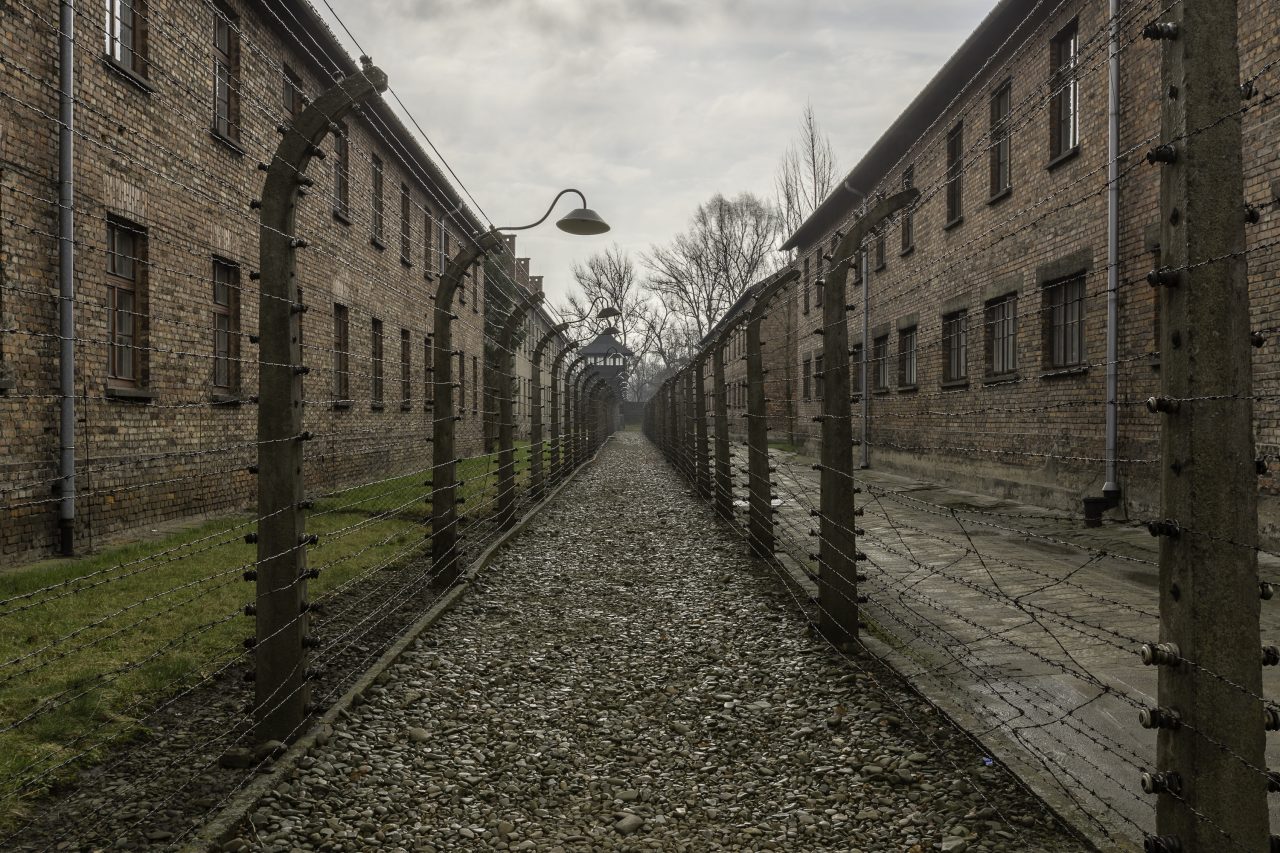
The number 271,301 has become one of the most widely circulated figures in arguments challenging the conventional estimate that approximately six million Jews were murdered during the Holocaust.
At first glance, the discrepancy appears enormous: if an official-looking document says 271,301 people died in Nazi concentration camps, how can historians say six million Jews were murdered?
The answer lies in a fundamental problem of category and methodology. The two figures are not competing counts of the same population.
The 271,301 figure comes from a genuine postwar German administrative record—but it records a limited subset of deaths for which death certificates were issued, not all people murdered by Nazi Germany. The six-million estimate, meanwhile, is not taken from one document or one list. It is a reconstruction using Nazi records, demographic statistics, deportation records, shooting reports, camp documentation and other evidence.
Understanding the distinction is important because there are legitimate uncertainties in reconstructing the Holocaust death toll. But those uncertainties cannot be resolved by treating 271,301 as if it were a comprehensive census of Nazi victims.
Where did 271,301 come from?
The document behind the number is genuine.
The Arolsen Archives, which preserve an enormous collection of documents concerning Nazi persecution, confirmed in 2024 that a frequently circulated document originated with the Special Registry Office in Bad Arolsen. It contains figures for death certificates issued retrospectively for prisoners from particular concentration camps. Arolsen Archives
This is important because the document is sometimes described online as an International Red Cross document proving that only 271,301 people died in Nazi camps.
That description is misleading.
The Special Registry Office was established in Bad Arolsen in 1949. Its job was to issue legally valid death certificates for people who died under circumstances associated with the former concentration-camp system. Certificates were generally issued when relatives applied and sufficient documentation existed to establish the death. The Arolsen Archives supplied archival material to assist the registry office. Arolsen Archives
In other words, the number answers a question roughly equivalent to:
How many deaths had been sufficiently documented and certified through this particular administrative process?
It does not answer:
How many people did Nazi Germany and its allies murder?
That distinction is decisive.
Why weren't all deaths recorded?
The Nazi camp system itself did not operate as a complete death-registration system.
Arolsen's own explanation is unusually clear about this.
Death registration was inconsistent according to nationality and prisoner status. German and Western European prisoners were more likely to have deaths formally registered, while the deaths of Jewish prisoners and prisoners from Central and Eastern Europe were increasingly not officially registered. Arolsen notes that Russian prisoners, for example, could go entirely uncertified. e-Guide
There was another much larger problem.
Many people murdered at the extermination centers were never registered as prisoners in the first place.
A person arriving at Auschwitz could be selected for immediate murder without entering the concentration-camp prisoner-registration system. Arolsen explicitly states that there are no official death records for many people murdered immediately after arriving at extermination camps. It also says that most prisoners who died during the final death marches were not registered. e-Guide
Some records were subsequently destroyed.
Arolsen notes that death books were destroyed in bombing and that the Germans deliberately destroyed documents near the end of the war to conceal their crimes. e-Guide
Consequently:
No death certificate ≠ no death.
And:
271,301 certificates ≠ 271,301 total victims.
Then how is the six-million figure calculated?
This is where the historical methodology becomes much more interesting.
There is no single Nazi document saying "6,000,000 Jews were killed."
There is also no surviving master list containing every victim.
The approximately six-million figure is a historical reconstruction.
The US Holocaust Memorial Museum says the calculation uses several types of evidence:
surviving Nazi German reports and records;
prewar and postwar demographic studies;
Jewish records created during and after the war;
resistance and underground documentation;
other archival material. Holocaust Encyclopedia
The resulting estimate is approximately six million—not exactly 6,000,000.
The current USHMM breakdown is approximately:
Method/location | Estimated Jewish victims |
|---|---|
Killing centers | ~2.7 million |
Mass shootings and related massacres | ~2 million |
Ghettos, labor camps and concentration camps | 800,000–1 million |
Other violence outside camps/ghettos | ≥250,000 |
Total | ≈6 million |
Notice something immediately important:
The six-million figure is not a count of people who died inside concentration camps.
That is one of the fundamental errors behind comparing it with 271,301.
A very large proportion of the Jewish victims were murdered outside the conventional concentration-camp registration system.
The killing centers alone account for millions
The five major Nazi killing centers identified in the USHMM reconstruction are:
Chełmno — at least 152,000
Bełżec — approximately 435,000
Sobibór — at least 167,000
Treblinka — approximately 925,000
Auschwitz-Birkenau — approximately 1,000,000
Together, approximately 2.7 million Jewish people were murdered at these sites. Holocaust Encyclopedia
These numbers cannot simply be compared against the 271,301 death certificates because the administrative systems being counted are different.
Auschwitz demonstrates the problem particularly well.
The Auschwitz-Birkenau State Museum and USHMM estimate approximately one million Jewish deaths at Auschwitz. auschwitz.org
Yet many of those murdered immediately after arrival were never registered as concentration-camp prisoners.
So a death-certificate database of registered prisoners naturally cannot produce a number remotely approaching one million Auschwitz Jewish victims.
Mass shootings are another enormous category
The Holocaust also did not primarily occur inside concentration camps.
German Einsatzgruppen and other German forces, together with collaborators, carried out mass shootings throughout occupied Eastern Europe.
The USHMM estimates approximately two million Jewish victims from mass shootings and associated massacres. These killings occurred across more than 1,500 towns, cities and villages. Holocaust Encyclopedia
Someone shot into a mass grave in Ukraine was not necessarily:
transported to a concentration camp,
assigned a prisoner number,
registered,
issued a death certificate.
Consequently, a concentration-camp death-certificate database cannot possibly capture the majority of these victims.
This is why the question "How many death certificates exist?" and the question "How many Jews were murdered?" are fundamentally different questions.
There are also Nazi documents recording mass murder
Another misconception is that the six-million figure depends principally upon survivor testimony.
It does not.
There are surviving German perpetrator documents recording deportations, shootings, population movements and other aspects of the extermination program.
One example is the Korherr Report, prepared in 1943 for Heinrich Himmler. It records the movement of Jews through the Nazi deportation system and provides statistics concerning millions of Jews. The document itself is an SS statistical report and explicitly distinguishes some categories—for example, it states that its evacuation figures did not include inmates of ghettos and concentration camps. German History in Documents and Images
That qualification is actually revealing.
Nazi statistical records weren't necessarily intended to provide historians with a final death toll. They were administrative documents created for specific bureaucratic purposes.
Consequently, historians have to understand what a particular Nazi document was designed to measure before using its numbers.
The demographic method provides another check
There is a second major approach: population reconstruction.
Europe had approximately nine million Jews before the war, depending on the geographical boundaries and date used.
Historians examine Jewish populations before and after the war country by country, while accounting for:
emigration;
refugees;
Soviet evacuations;
survivors;
postwar migration;
changing national borders;
people whose fate remained uncertain.
This is fundamentally different from counting death certificates.
It asks:
What happened to the Jewish population that existed before the Nazi destruction?
The demographic evidence doesn't magically produce an exact number either. Population movements during the war were enormous, and Eastern European records are particularly complicated.
That's one reason the accepted figure is approximately six million, rather than precisely 6,000,000.
What about the names?
This is another area where precision matters.
Yad Vashem currently says that approximately five million of the nearly six million murdered Jews are commemorated in its Names Database. But Yad Vashem explicitly warns that the database also contains people whose fate remains undetermined and some people who survived. @yadvashem
Therefore:
Five million database entries ≠ five million independently certified deaths.
The database combines different types of information, including Pages of Testimony and archival material.
That is why individual records need to be examined according to their underlying source.
There are also independent archival projects.
The German Bundesarchiv, for example, currently documents approximately 177,000 Jewish victims of Nazi persecution who lived within the historical German Reich. Its broader database also incorporates information on survivors and emigrants, demonstrating that it is not simply copying a six-million figure. Stasi-Unterlagen-Archiv
And Arolsen maintains documentation relating to approximately 17.5 million people affected by Nazi persecution. Its holdings include prisoner files, deportation lists, transport documents, death records and other archival material. Arolsen Archives
What can we honestly say about the limitations?
This is where skepticism is legitimate.
The historical record is not complete.
There is no comprehensive list of every Holocaust victim.
There is no surviving document recording every death.
There are substantial uncertainties concerning some countries, populations and individual victims.
Some Nazi records were destroyed.
Some victims were never registered.
Some databases contain uncertain cases.
Some demographic estimates necessarily involve inference.
And some individual deaths cannot be demonstrated with the same degree of documentary certainty as others.
A responsible historical account therefore should not pretend that every individual death is documented in exactly the same way.
Arolsen itself makes this point.
It says death-book entries do not exist for anywhere near all prisoners who died in concentration camps, and that the available records are particularly incomplete for some camps. It also warns that Nazi death certificates sometimes contained false or misleading causes of death.
Those are real limitations.
But they don't turn 271,301 into the actual Holocaust death toll.
The crucial distinction
The numbers can therefore be represented like this:
Number | What it actually represents |
|---|---|
271,301 | A figure associated with retrospectively issued death certificates for a limited population of concentration-camp prisoners |
~177,000 | Jewish victims documented in the German Bundesarchiv project concerning the historical German Reich |
~5 million | People represented in Yad Vashem's Names Database as among the nearly six million murdered, although the database also contains uncertain fates and some survivors |
~2.7 million | Estimated Jewish victims murdered at five major killing centers |
~2 million | Estimated Jewish victims of mass shootings and associated massacres |
~6 million | Historical reconstruction of total Jewish victims of the Holocaust |
The first number is therefore not the low end of the same scale.
It is a measurement of a different subset.
What the evidence can—and cannot—prove
The strongest conclusion is not that historians possess a perfectly documented list of six million individual deaths.
They don't.
The stronger and more defensible conclusion is that multiple independent categories of evidence converge on a death toll in the vicinity of six million.
The evidence includes perpetrator records, demographic reconstruction, deportation records, shooting reports, camp records, postwar investigations, Jewish community records and testimony. Holocaust Encyclopedia
At the same time, the absence of a single document saying "6,000,000" is real. Historians aren't claiming that such a document exists.
And the absence of a surviving Hitler-signed order explicitly stating "kill six million Jews" is also not the same thing as the absence of evidence for systematic mass murder. Historical events are often reconstructed from numerous administrative documents rather than one comprehensive order.
The key methodological rule is therefore simple:
A number cannot be interpreted without first establishing what population and what recording system produced it.
The 271,301 figure is real.
The underlying certificates are real.
The limitations of those certificates are real.
The six-million figure is an estimate rather than an exact census.
But 271,301 is not an alternative calculation of the approximately six million Jewish Holocaust victims, because it was never designed to count that population.
That is the central issue that gets lost when the two numbers are placed side by side.