Is the Bible the most misunderstood book in the world? What the evidence shows
Many quote the Bible; far fewer read it. Popular “verses” are not in it, its genres are read in one voice and its canon differs by church. Its misreadings have served power, and Africa, now home to more Christians than any other region, will shape what comes next.
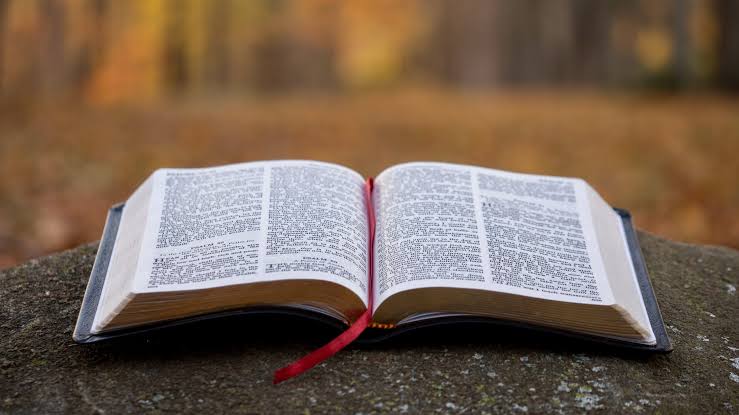
Calling any book “the most misunderstood in the world” is a claim no one can measure. There is no global census of misreadings, and every reader who says a text has been misunderstood is also saying they know what it really means. Still, the claim about the Bible is worth testing, because the evidence for it is unusually strong. Few books are quoted more often, translated into more languages or used to justify more things. Far fewer people read it regularly than cite it, and many verses that circulate under its name are not in it.
This essay takes the argument seriously without taking a side on faith. Believers and non-believers both get the Bible wrong, often in opposite directions. The question is not whether the Bible is true. It is whether people know what it says, how its parts were meant to be read, and who has decided which parts they hear. And the answer matters most in Africa, which is now home to more of the world’s Christians than any other region.
A book many people cite and fewer have read
The best long-run data come from the United States, where the Bible has had unusual public authority. In its 2010 religious knowledge survey of 3,412 adults, Pew Research Center found that 63% could name Genesis as the first book of the Bible. Only 55% knew that the Golden Rule, “Do unto others as you would have them do unto you”, is not one of the Ten Commandments. Fewer than half (45%) could name the four Gospels, and 39% identified Job as the figure known for staying faithful through suffering.
The results did not split neatly into believers and sceptics. On Pew’s seven Bible questions, Mormons and white evangelical Protestants scored best, but atheists and agnostics came next, alongside black Protestants and Jews, and ahead of white mainline Protestants and white Catholics. Knowing the Bible and believing it turn out to be separate things.
Sixteen years later the pattern holds. The American Bible Society’s State of the Bible 2026 survey, fielded by NORC at the University of Chicago among 2,649 adults in January, found that 25% of Americans use the Bible at least weekly outside church, 13% use it occasionally and 62% do not use it at all. Seventeen per cent said they had read the whole thing. One finding cuts against the Bible’s critics as much as its fans. Of respondents who agreed that the Bible “was written to control or manipulate other people”, 60% said they had read little or none of it.
In short, many of the people who praise the Bible and many who dismiss it are reacting to an idea of the book more than to its text.
Verses that are not there, and verses that say something else
The clearest sign of the gap is the stock of sayings that people think come from the Bible but do not. In a 2011 study for the American Bible Society, Barna Research found that 51% of American adults strongly agreed that the Bible teaches “God helps those who help themselves”. It does not. The modern English wording is usually traced to the English political writer Algernon Sidney, whose Discourses Concerning Government appeared in 1698. Benjamin Franklin popularised it in Poor Richard’s Almanack in 1736. Many Christian teachers argue that it runs against the biblical theme of God helping those who cannot help themselves.
“Spare the rod and spoil the child” is not a verse either. The rhyme comes from Samuel Butler’s 17th-century satirical poem Hudibras, in a passage mocking love. The biblical text closest to it, Proverbs 13:24, uses different words and belongs to a collection of wisdom sayings, not a legal code. That difference matters when the line is cited in arguments about corporal punishment.
Other verses are real but shortened until their meaning changes. “Money is the root of all evil” is a clipped version of 1 Timothy 6:10, which in the King James Version reads “the love of money is the root of all evil”. The verse is about desire, not currency. Translation can shift meaning too. The King James Version renders the sixth commandment in Exodus 20:13 as “Thou shalt not kill”, while most modern translations, including the New International Version and the English Standard Version, give “You shall not murder”. Which reading you start from shapes how the verse is used in debates about war, policing and the death penalty.
Some of the most familiar images are not in the text at all. Genesis 3 never says the forbidden fruit was an apple. Matthew 2 lists three gifts brought to the infant Jesus but never says how many magi brought them. Jonah 1:17 speaks of a “great fish”, not a whale. None of this is grave on its own. But together they show how much of what people “know” about the Bible comes from paintings, hymns, sermons and films rather than from the book.
A library read in one tone of voice
The deeper misunderstanding is not about single verses. It is about what kind of book the Bible is. It is really a library, written over many centuries in Hebrew, Aramaic and Greek. It holds law codes, royal chronicles, love poetry, proverbs, prophetic oracles, letters to particular congregations and apocalyptic visions. These are different genres, and each asks to be read differently. A psalm is not a contract, and a letter written to a church in first-century Corinth is not a memo to every reader in every age. Yet in popular use all of it is often quoted in the same flat voice, as if every line were a direct instruction to the reader.
Jeremiah 29:11 shows how this works. “For I know the plans I have for you,” it begins, promising “a future and a hope”. It is among the best-loved verses in the world. YouVersion, the Bible app with more than a billion installs, listed it among its top global verses for 2025, and it was the app’s verse of the year in Tanzania. In context, though, it sits inside a letter to Judeans deported to Babylon. The verse just before it tells them the exile will last seventy years. As a commentary for preachers published by Luther Seminary’s Working Preacher puts it, the hope was “delayed and multigenerational”, for later generations rather than those who first heard it, and not a promise of near-term success for any one reader. Reading the verse as a personal promise is a choice many believers make devotionally. But it is a different use from the one the text describes.
The same pattern runs through arguments that are far from academic. In late October an argument over Ephesians 5 and whether wives must “submit” to husbands became a trending discussion on X. Verse 22 is the one usually quoted. Verse 21, immediately before it, tells all the letter’s readers to submit “one to another”. Readers can and do disagree about how the two verses fit together. But the argument cannot be settled honestly without both of them.
Whose Bible? The canon is not one book
A further misunderstanding is that “the Bible” is a single fixed book. It is not. A typical Protestant Bible has 66 books, a Roman Catholic Bible 73 and an Eastern Orthodox Bible 78, according to the Museum of the Bible in Washington. The Ethiopian Orthodox Tewahedo Church, one of the oldest churches in the world, lists 81: 46 in its Old Testament and 35 in its New, according to the church’s own published canon. That list includes 1 Enoch and Jubilees, which other churches left out.
This is not a curiosity. The complete text of 1 Enoch survives only in Ge’ez, the classical language of Ethiopia, which is why scholars often call it “the Ethiopic Book of Enoch”, as the Encyclopaedia Iranica notes. Earlier versions survive only in fragments, including Aramaic pieces found among the Dead Sea Scrolls. The New Testament Letter of Jude (verses 14–15) quotes from it. Ethiopian scribes, in other words, preserved in full a text that at least one New Testament author knew and that most other churches did not keep. A reader who assumes the Bible is a Western book that came to Africa with missionaries has the history partly backwards.
Edited by power, and turned against it
The Bible has also been misread on purpose. In 1807 a London missionary society published Parts of the Holy Bible, selected for the use of the Negro Slaves, in the British West-India Islands. Anthony Schmidt, a curator at the Museum of the Bible, told NPR that about 90% of the Old Testament and 50% of the New Testament were missing, leaving 232 of the 1,189 chapters in a standard Protestant Bible. Gone were the Exodus story of escape from slavery and Galatians 3:28, “there is neither bond nor free”. Kept was Ephesians 6:5: “Servants, be obedient to them that are your masters.” Its editors understood the full text well enough to fear it.
The opposite also happened. Across Africa and its diaspora, readers turned the Bible against those who brought it. The “Ethiopianism” movement took its name from Psalm 68:31, “Ethiopia shall soon stretch out her hands unto God”. As the historian Saheed Adejumobi describes it, the verse was read as a promise of African self-rule. From the late 1880s it inspired independent African churches that broke away from mission control, from Nigeria to South Africa. It fed into John Chilembwe’s 1915 rising in Nyasaland, now Malawi, and helped prepare the ground for later independence movements.
The Gambian-born historian Lamin Sanneh, in Translating the Message (1989), argued that translating the Bible into African languages had effects missionaries could not control. It gave written form to languages, put the text directly in local hands and gave converts grounds to judge the missionaries by their own book. The argument is contested, and it does not erase the role of missions in colonial rule. But it complicates the familiar slogan that “when the missionaries came, they had the Bible and we had the land”. That line itself is regularly misattributed to Jomo Kenyatta or Desmond Tutu. According to the sourcing notes kept by the quotation archive Wikiquote, its earliest traced print appearances, in the 1960s, give no original source, and Tutu’s biographer Steven Gish records Tutu telling it as a joke rather than claiming it as his own.
Translation is still unfinished. According to the Wycliffe Global Alliance’s 2025 figures, the full Bible exists in 776 languages, and some portion of it in 4,007. Millions of people still read it, if at all, in a second language, often a former colonial one. That is a structural source of misunderstanding that no sermon can fix.
The centre has moved
Who reads the Bible has changed faster than how it is discussed. Pew Research Center estimated in June 2025 that sub-Saharan Africa was home to 697 million Christians in 2020, 30.7% of the world total, against 22.3% in Europe. In the early 1900s the region held about 1% of the world’s Christians. YouVersion reported that daily use of its app in sub-Saharan Africa rose 27% in 2025.
The scholar Philip Jenkins, in The New Faces of Christianity (2006), argued that many Christians in the global South read the Bible more literally and traditionally than many Western Christians do, partly because its world of famine, displacement, debt and occupation looks familiar. If that is right, African readers are not misreading the Bible by taking it at its word. They may be closer to some of its original settings than readers in rich countries. But a text read closely and literally is also easier to weaponise. Prosperity preaching, which presents single verses as promises of personal wealth, shows the risk. Whoever controls which verses are read, in which language and with what explanation, holds real influence over hundreds of millions of people. The people who pay when that influence is abused are usually the poorest members of the congregation.
The case against the claim
There are good reasons to doubt the title. The Quran, national constitutions, Darwin’s On the Origin of Species and Marx’s Capital are also regularly cited by people who have not read them. Most of the survey evidence comes from the United States, which may not be typical. And calling a book “misunderstood” assumes there is one right way to read it. Jewish, Catholic, Orthodox, Protestant, Pentecostal and academic readers disagree about the Bible in principled ways, and those disagreements are not all mistakes.
Data about the Bible can mislead too. In 2025 Britain’s Bible Society published “The Quiet Revival”, a report based on YouGov polling that suggested a sharp rise in young churchgoers and Bible reading in England and Wales. In March 2026 YouGov withdrew the survey after finding fraudulent respondents in the sample. As the Guardian reported, YouGov said the Bible Society had reported the data it supplied accurately. The episode is a reminder that claims about the Bible’s readers need the same scrutiny as claims about its text.
What reading it better would look like
The case for “most misunderstood” is not that people disagree about the Bible. They always will. It is that so much of what is said about it, for and against, is said by people working from proverbs, paintings and second-hand slogans rather than from the text and its context. Few other books combine this scale of circulation, this depth of authority and this range of genres, and are quoted in fragments every day by both sides of so many arguments.
That does not call for any particular belief. It calls for checking whether a verse exists, reading what comes before and after it, knowing what kind of writing it is and asking which Bible, in which language, is being quoted. As Christianity’s centre of gravity settles in Africa, those questions will be answered less in seminaries in Europe and the United States and more in congregations in Lagos, Kinshasa, Nairobi and Addis Ababa, where the only complete text of at least one ancient book was kept for centuries.