Ethiopia’s Christian Massacres Continue: Why Orthodox Communities in Oromia Are Being Killed
More than 60 Ethiopian Orthodox Christians were reportedly killed in two attacks in Oromia in October 2026, adding to a pattern of violence that has persisted for years. As families flee, churches are attacked and allegations of religious persecution grow, Ethiopia faces an urgent question: why have repeated warnings failed to protect vulnerable communities?
Another massacre, another unanswered question
For families in Ethiopia’s Arsi Zone, the danger is no longer something they hear about happening in distant parts of the country. It has become a recurring reality in their communities, where armed attacks have taken lives, destroyed homes and forced residents to abandon places they have inhabited for generations.
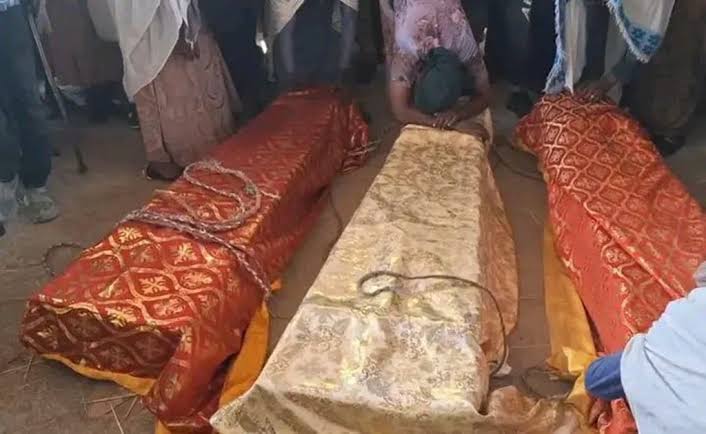
The latest killings have brought renewed international attention to the violence against Ethiopian Orthodox Christians in the Oromia region. According to the Ethiopian Orthodox Tewahedo Church, at least 60 Christians were killed in two separate attacks in October 2026.
Fourteen people were reportedly killed in Merti district on October 20, followed by another 46 in Shirka district on October 24. More than 20 people were seriously injured, while approximately 20 homes were burned.
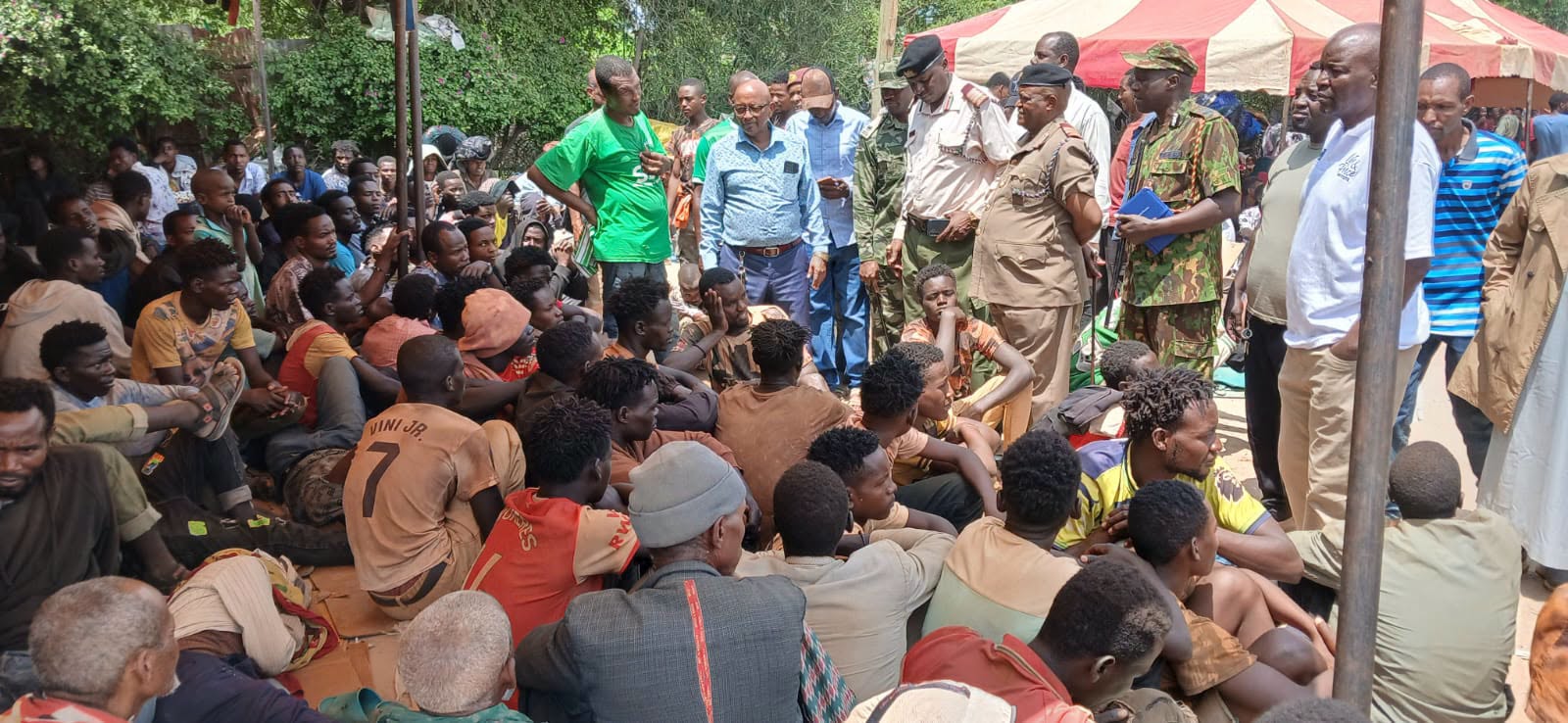
The victims included children and elderly people. Residents described armed attackers surrounding communities and launching assaults that left families with little opportunity to escape. Many survivors have since fled their homes.
These were not simply casualties reported in another episode of Ethiopia's wider insecurity. They were people living in communities where repeated warnings about the deteriorating security situation had already been raised.
The latest attacks have therefore revived a difficult question: how many more civilians must die before the authorities establish lasting protection for these communities?
A pattern of violence stretching back years
The October killings did not emerge in isolation.
Violence against civilians in parts of Arsi has been documented for years, with attacks becoming increasingly concerning from 2023 onwards. The Ethiopian Human Rights Commission (EHRC), in a March 2026 statement, confirmed renewed attacks since October 2025 across Shirka, Guna, Merti, Aseko and Onkolo Wabe districts.
The commission documented killings, injuries, abductions, property destruction and displacement. It also confirmed attacks attributed to the Oromo Liberation Army (OLA) in Shirka and Robe districts on February 26, 2026.
The scale of the wider pattern is also reflected in conflict-monitoring data. According to the Armed Conflict Location & Event Data (ACLED) project, there had been 193 recorded incidents of civilian targeting in the Arsi area since February 2023. Approximately 33 per cent involved violence targeting Orthodox Christian residents. ACLED recorded 25 incidents targeting Orthodox Christian civilians in Arsi during 2026 alone, with half occurring in Shirka.
The figures reveal something important: the October killings are part of a wider security crisis, not an isolated episode.
In June 2026, another wave of attacks in the Aseko area reportedly killed approximately 37 to 40 people and displaced hundreds. The World Council of Churches subsequently referred to these earlier killings when expressing concern about the continuing insecurity affecting Orthodox Christian communities.
The repeated appearance of the same districts in reports of violence raises serious questions about the effectiveness of security deployments, early-warning mechanisms and the government's ability to prevent further attacks.
Are Ethiopian Orthodox Christians being targeted because of their faith?
This is among the most sensitive and consequential questions surrounding the violence.
The Ethiopian Orthodox Tewahedo Church has repeatedly raised concerns about attacks against its followers. Reports from affected communities describe civilians being targeted in their homes, religious sites being attacked and church property being destroyed.
ACLED has documented a pattern of violence specifically targeting Orthodox Christian residents. Its analysis also recorded damage to religious institutions during the October 24 attack, including vandalism at Raphael Church and the looting of sacred objects and parish relics from Digelu Medhane Alem Church.
These incidents strengthen concerns that religious identity is being used as a factor in the violence.
However, the situation cannot responsibly be reduced to a simple conflict between Christians and Muslims. Oromia is religiously diverse, and the region's insecurity is intertwined with ethnic tensions, armed insurgency, political grievances and competition over local power.
There have also been attacks against Muslim communities. Residents have described violence as both ethnic and religious in character.
Recognising this complexity does not diminish the suffering of Orthodox Christians. It makes it more important to investigate each attack independently, establish who was responsible and determine whether religious or ethnic identity influenced the selection of victims.
Religious persecution should neither be dismissed nor declared conclusively in every incident without evidence.
What is already clear is that communities identifying as Orthodox Christian have repeatedly suffered targeted violence, and their right to life and freedom of worship requires protection.
The Oromo Liberation Army and the question of accountability
The Oromo Liberation Army has repeatedly featured in allegations surrounding attacks in parts of Oromia.
The Ethiopian Human Rights Commission attributed several earlier attacks in Arsi to the group, including incidents involving killings, abductions and displacement. The regional government has also blamed armed groups, including the OLA, for previous attacks against Orthodox Christian communities.
In the October killings, however, responsibility remains disputed.
The Oromia regional government blamed a newly formed alliance of armed groups, which includes the OLA, alleging that the attacks were intended to provoke religious conflict. It did not provide publicly verified evidence establishing that responsibility.
A source linked to the rebel alliance, meanwhile, accused the regional government of carrying out the killings. The OLA did not immediately respond to Reuters' request for comment.
These competing accusations demonstrate why independent investigations are essential.
The government has a responsibility to investigate the killings transparently, publish credible findings and prosecute those responsible. Political accusations cannot substitute for evidence, particularly when the consequences include further distrust between communities.
Equally, armed groups cannot escape responsibility for attacks against civilians by framing their activities as part of a wider political struggle. No insurgency, political grievance or ethnic cause justifies deliberately killing innocent people.
The government's responsibility cannot be avoided
Ethiopia's security challenges are substantial. Federal forces are engaged in multiple conflict environments, while armed groups operate across different regions. The state also faces the difficult task of restoring security in areas where government authority is contested.
But these challenges do not remove the government's fundamental obligation to protect civilians.
The Ethiopian Human Rights Commission had already called on federal and Oromia regional authorities in March to deploy adequate security forces, provide emergency assistance to displaced residents and establish conditions for their safe return.
The repeated attacks suggest that previous interventions have not delivered lasting security in the affected districts.
The Ethiopian Orthodox Church has also said it repeatedly raised concerns with authorities at different levels without obtaining a lasting solution. Its demands following the October killings included stronger security arrangements and protection for vulnerable communities.
This is where the issue moves beyond condemnation.
Government officials can promise investigations after every massacre. They can announce security operations and blame armed groups. But the real measure of government action is whether families can sleep safely in their homes, children can attend school, farmers can work their land and worshippers can enter churches without fear.
A government does not fulfil its responsibility simply by promising to punish attackers after civilians have been killed. It must demonstrate that it can prevent the next attack.
Why the international community should pay attention
The violence in Arsi deserves greater international scrutiny, not because the victims belong to one religious community alone, but because repeated attacks against civilians threaten the foundations of religious coexistence in one of Africa's most diverse countries.
The World Council of Churches expressed solidarity with the Ethiopian Orthodox Church following the October attacks and called for stronger civilian protection, impartial investigations and accountability.
International attention matters because Ethiopia's internal conflicts increasingly have consequences beyond individual communities. Persistent displacement, religious tensions and the erosion of trust in public institutions can deepen instability throughout the country and the wider Horn of Africa.
There is also a danger that repeated attacks become normalised. When each incident produces statements of condemnation but little visible improvement in civilian protection, communities can begin to believe that their suffering has become politically insignificant.
The international community should press for independent investigations, access for human rights monitors, protection for displaced populations and transparent reporting of the findings. Such scrutiny should apply to all parties accused of abuses, including state forces and non-state armed groups.
Ethiopia cannot afford another cycle of religious violence
Ethiopia has a long history of coexistence between Orthodox Christians, Muslims, Protestants and other religious communities. That history should not be romanticised: the country has experienced religious tensions and episodes of communal violence. Nevertheless, coexistence remains an important part of its social fabric.
The greatest danger now is that armed violence and political manipulation turn local security crises into broader religious antagonism.
When Orthodox Christians are repeatedly killed, churches are attacked and families are displaced, silence is not neutrality. But neither should the suffering of one community become an excuse for collective blame against another.
The answer must be justice, not retaliation; accountability, not propaganda; and civilian protection, not political promises.
For the families who lost relatives in Merti and Shirka, these principles are not abstract diplomatic language. They are the difference between returning home and remaining displaced, between rebuilding a community and watching it disappear.
More than 60 lives were reportedly lost in the October attacks. Earlier warnings, investigations and appeals had already established that the danger was growing.
Ethiopia's authorities now face a responsibility that cannot be postponed until the next massacre: protect the communities at risk, establish the truth about those responsible and ensure that religious identity never becomes a death sentence.
The question is no longer whether Ethiopia has been warned. It is whether the country will finally act before more families are forced to bury their loved ones.