Congo’s referendum law blocks amendment during the war but leaves room for a new constitution
Félix Tshisekedi has signed a referendum law, read with the court ruling that shaped it. Under Article 219, the state of siege that MPs voted to renew the same day bars any revision of the 2006 constitution, but a 250,000-signature petition and a 30-day constituent assembly could produce a new one, while much of the east cannot vote.
On 9 November Félix Tshisekedi signed Law 26/045, which sets out how the Democratic Republic of Congo may hold a referendum. It replaces the law of 22 June 2005 under which Congolese voters approved the present constitution. His deputy spokesman, Roger Kalenga, read the promulgation order on state television the next evening. Most coverage, at home and abroad, has asked one question: does this open the way to a third term for a president whose second and, under the 2006 constitution, final term ends after elections due in 2028?
The law does not answer that question directly. What it does is narrower, and easier to see if it is read alongside the Constitutional Court ruling that shaped it and a vote in parliament the same day. Taken together, they block the conventional route to changing the constitution for as long as the war in the east continues, and they leave one route open: replacing the constitution with a new one. That route is short and runs mostly through institutions that the governing coalition controls. It also has to pass through a country where large areas cannot vote freely.
What the court allowed
Parliament first passed the bill in June. Mr Tshisekedi sent it to the Constitutional Court before promulgation, and on 28 July the court, presided over by Dieudonné Kamuleta, declared it constitutional subject to interpretive reservations on 13 articles (3, 4, 5, 7, 8, 9, 10, 12, 14, 19, 21, 23 and 43). It ordered that its ruling be published in the Official Journal with the law, so the reservations bind everyone who applies it. The ruling cannot be appealed.
According to detailed accounts of the ruling in Congolese outlets Mediacongo and Ouragan, the court struck out the bill’s open-ended reference to “matters of fundamental importance for the life of the nation”. In its place it allowed a closed list of four subjects that may go to a referendum: moving the capital; ceding, exchanging or adding territory; revising the constitution; and adopting a new constitution on the initiative of the people.
The court also set out the procedure. In the event of a “major dysfunction” of institutions, or on any of the four subjects, the president must first appoint a national multidisciplinary commission by ordinance, which has 30 days to report. For a new constitution, that commission can be set up only after a petition with 250,000 signatures has been filed. A constituent assembly, convened by presidential ordinance and chaired by the president of the National Assembly with the president of the Senate as deputy, then has at most 30 days to adopt a “draft constitution” by a three-fifths majority, after which it is dissolved. The draft then goes to voters, and a simple majority of votes cast decides. If voters reject it, the court said, the current constitution remains fully in force.
Parliament then reworded the 13 articles. The National Assembly passed the revised text on 23 October by 346 votes to none with one abstention; the Senate followed on 31 October by 78 votes to none, while the parliamentary opposition boycotted the debate. The Assembly said the changes were made “to take account of” the court’s observations. Reports on the promulgated text describe the same core: in cases of “absolute necessity”, the country may “adopt a new constitution” or amend existing provisions by referendum.
Why amendment is blocked, for now
Of the four subjects, two matter politically: revising the constitution and replacing it. Revision is constrained by two articles of the 2006 constitution. Article 220 puts certain provisions beyond revision, among them the number and length of presidential terms. Article 219 says that no revision may take place “during a state of war, a state of emergency or a state of siege”, during a presidential interim, or when the two chambers cannot meet freely.
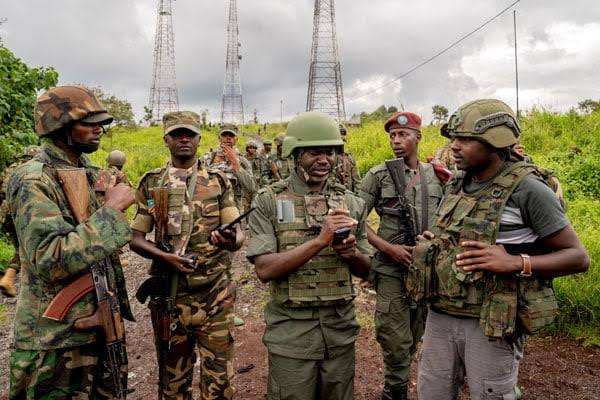
North Kivu and Ituri have been under a state of siege since 6 May 2021, renewed in 15-day instalments ever since. On 9 November, the same day Mr Tshisekedi signed the referendum law, the National Assembly voted for another renewal, 331 to six with two abstentions. Guillaume Ngefa, the justice minister, told deputies that security conditions did not yet allow it to be lifted and cited the emergence of a new rebel movement in North Kivu. The bill now goes to the Senate.
So long as the state of siege lasts, Article 219 blocks a revision even before Article 220 comes into play. Mediacongo made this point when the ruling came out. Kinshasa is in a bind of its own making: if it lifts the state of siege, it concedes that the emergency it has cited for five years is over.
The open door
A new constitution is different. Articles 219 and 220 regulate revision of the 2006 text. They say nothing about replacing it. The court described the people’s power to initiate a new constitution as “sovereign, inalienable and unconditional”, and the presidential camp defends the law on the basis of Article 5, which vests sovereignty in the people. Critics in the opposition and the Catholic bishops’ conference (CENCO) argue that this is exactly the gap: a new constitution would not have to keep the old one’s term limits, and could restart the count. Whether it would is unknown, because no draft exists.
The procedure is short. A petition of 250,000 signatures is equivalent to about 0.6% of the 43.96m voters on the roll validated by the electoral commission (CENI) for the 2023 elections (our calculation). After that come 30 days for the commission and 30 days for the constituent assembly. The assembly is chaired by the National Assembly’s president. Parliament has just passed this law with no votes against, and published accounts of the ruling do not say who would sit in the assembly. CENI would then have three months to explain the text to the public, in French, the four national languages and, at the court’s insistence, abroad. The court did tighten the rules elsewhere. It limited the president’s power to call a referendum on any question he chose, barred the use of state property and staff in campaigns by “anyone”, and widened the right to challenge results to 100,000 citizens by petition, among others. Its rulings have been ignored before, however. Mediacongo recalled that several reservations the court attached to the 2018 electoral law were not respected in practice.
Mr Tshisekedi says he has not sought a third term. At a press conference in May he said, according to AFP and RFI, that “if people want me to have a third term, I will accept”. The law does not show what he intends. It shows that any change to the constitution now has a cleared legal route, and that the route goes through replacement, not amendment.
Who would vote, and who could not
The provinces where Article 219 applies are also the ones least able to take part in a referendum. Goma and Bukavu, and much of North and South Kivu, are held by the Rwanda-backed rebels formerly known as AFC/M23, who were relaunched in October as the Front for the Refoundation of the Nation (FRN) under the former president Joseph Kabila. Fighting continues despite a peace accord signed in Washington between Congo and Rwanda and a framework agreement signed in Doha between Kinshasa and the M23 in November 2025.
The rebels have already tied the peace talks to the constitution. After meeting James Swan, head of the UN mission MONUSCO, in Goma on 3 November, the FRN threatened to leave the Doha process if Kinshasa pushed ahead with a referendum. “All the commitments agreed on in the framework of the Doha process are based on the current Constitution,” Bertrand Bisimwa, an FRN vice-president, said, according to Anadolu Agency. That is a negotiating position from an armed group that the United States and European governments in the International Contact Group for the Great Lakes Region have condemned. It still means that any move towards a new constitution would affect talks that are already stalled.
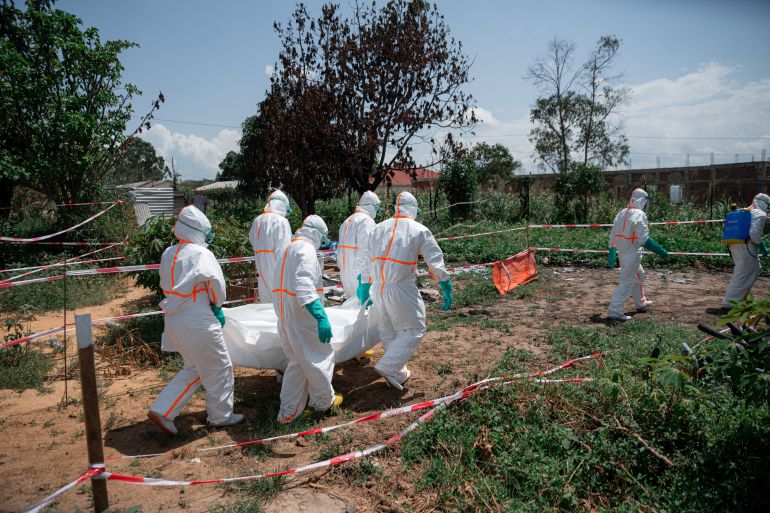
Public health is a second constraint. Government data released on 10 November put the Ebola outbreak at 11,042 confirmed cases and at least 5,387 deaths across eight of the 26 provinces. It is the largest outbreak in the country’s history, caused by the Bundibugyo strain, for which no specific vaccine or treatment has been developed, Reuters and Al Jazeera reported. A national campaign with mass gatherings, and a vote, would take place under those conditions.
The cost of a vote that leaves out the east would fall on people who are already bearing the most. Residents of rebel-held towns would be governed under a constitution they could not vote on. People displaced from the Kivus and Ituri would be hard to register and reach. And a vote held without them would strengthen the FRN’s claim, which it has every incentive to make, that Kinshasa does not speak for the east. In the past, disputes over the electoral calendar have turned deadly. In January 2015 protests over an electoral-law change seen as delaying Mr Kabila’s exit led to deaths in Kinshasa, and the 2016–18 delay to elections deepened the crisis.
The case for the law
The presidential camp makes a real argument. Its supporters say the 2005 law was written for a single vote and that, for 20 years, the 2006 constitution’s referendum provisions had no working procedure. A country should have a law for exercising a sovereignty that its constitution grants to the people. The court’s reservations do add real safeguards: a closed list of subjects, a petition requirement for a new constitution, deadlines, the inclusion of voters abroad and wider rights to challenge results. Mr Tshisekedi remains popular. A survey by the Congolese research institute Ebuteli, published in June, found more than 80% of respondents favourable to him, even though 60% said the country was heading in the wrong direction, RFI reported. The survey did not ask about a referendum or a third term. The opposition coalition known as C64, which includes Moïse Katumbi, Martin Fayulu, Delly Sesanga, Augustin Matata Ponyo and Jean-Marc Kabund, is united on the constitution, but Ebuteli has described the opposition as weakened and fragmented since the 2023 elections, and its ability to mobilise people is uncertain.
None of this addresses the timing. The text adopted in July allowed a procedure built around a “major dysfunction” of institutions, and the promulgated law refers to “absolute necessity”. The government has not yet said what either would be, and five years of a state of siege show how easily an exception becomes routine.
What to watch
Three things will show whether the law stays on the books unused or becomes the first step towards a new constitution. The first is a petition: who organises it, and whether CENI or Parliament checks the 250,000 signatures in public. The second is the state of siege. The Senate vote on this renewal, and each one after it, is also a decision on whether Article 219 still applies. The third is Doha: whether the FRN acts on its threat, and whether Washington and Doha, which brokered the two peace tracks, raise the question with Kinshasa.
The national dialogue Mr Tshisekedi has promised is the obvious place to settle the matter, which is why the opposition objected so strongly when the law was pushed through first. With the state of siege still in force, the constitution cannot be amended. It can, however, be replaced, and while the war lasts much of the east would have no real vote on the replacement.