DR Congo's Bundibugyo Ebola outbreak passes 10,600 cases as first strain-specific vaccines head to trial
The outbreak in Ituri and North Kivu is now the largest Ebola epidemic ever recorded in the Democratic Republic of the Congo, with nearly half of confirmed patients dying. New vaccines designed for the Bundibugyo strain are about to be tested, but WHO warns that results are months away and the response is still struggling to find cases early.
The Ebola outbreak in the Democratic Republic of the Congo has become the largest the country has ever recorded. As of 3 November, the World Health Organization counted 10,668 confirmed cases of Bundibugyo virus disease, including 5,198 deaths, across 67 health zones in eight provinces. Fifty-one of those zones reported new cases in the previous three weeks.
WHO describes it as "the largest Ebola disease outbreak ever recorded in the Democratic Republic of the Congo irrespective of virus species." The previous benchmark, the 2018 to 2020 epidemic in North Kivu and Ituri caused by the Zaire strain, ended with about 3,470 cases. The current outbreak, declared in May, has already passed three times that number and is still growing.
## Where the virus is spreading
Ituri remains the centre of the epidemic. The European Centre for Disease Prevention and Control, drawing on Congolese data to 3 November, put the province's toll at 7,485 cases and 3,532 deaths, with cases in 28 of its 36 health zones. North Kivu has 2,593 cases and 1,422 deaths. Haut-Uélé, Tshopo, Bas-Uélé, Sud-Kivu, Nord-Ubangi and Sud-Ubangi account for the rest.
The balance is shifting. WHO's regional office reported that North Kivu, where the case fatality ratio stands at about 55%, accounted for 60% of the cases reported on 1 November, even though Ituri still holds most cumulative infections. In the 21 days to 3 November, WHO recorded 1,463 new confirmed cases, 710 of them in Ituri and 640 in North Kivu. Beni, Bunia and Mandima reported the most recent cases and deaths.
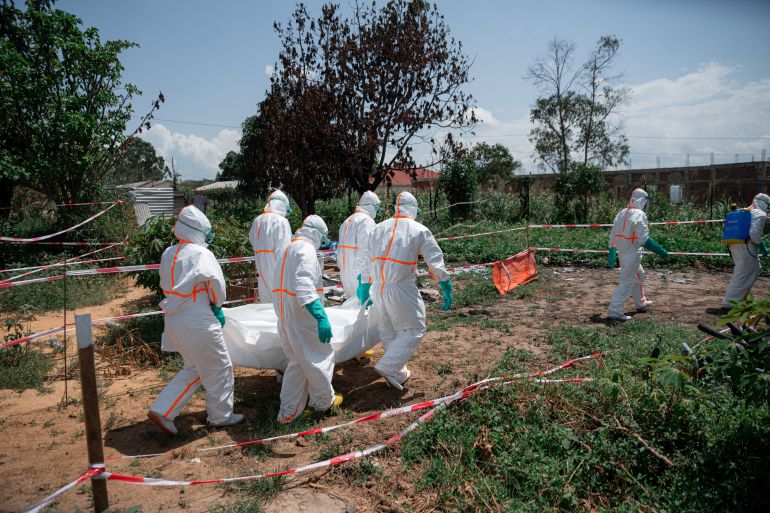
The overall crude fatality ratio is 48.7%. More revealing is where people are dying. Of 512 deaths reported between 21 October and 3 November, 335 occurred in communities rather than treatment centres, WHO said. That points to patients who were never isolated, often children, and to chains of transmission the response did not see in time.
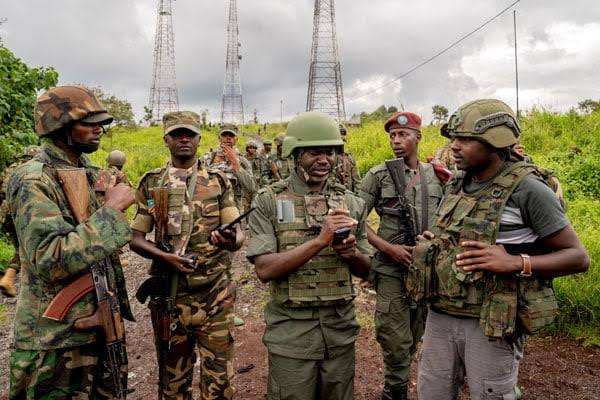
The operating environment helps explain why. WHO's regional situation report lists insecurity, health-worker strikes in Bas-Uélé and Tshopo, and the suspension of response activities in Bafwasende health zone as constraints on surveillance. Eastern Congo has been at war for years, and armed groups and displacement make contact tracing hard. About 84% of identified contacts were under follow-up as of 4 November, according to ECDC.
## A vaccine gap
Unlike the Zaire strain behind the West Africa epidemic and the 2018 Kivu outbreak, Bundibugyo virus has no licensed vaccine, and the treatments in use are still being tested. Ervebo, the vaccine credited with helping end earlier outbreaks, was developed against the Zaire strain.
That is why the Tumaini trial matters. Launched on 23 October with first participants enrolled in Bunia, it is a phase 2/3 study led by Congo's Institut National de Recherche Biomédicale with the University of Antwerp, WHO and other partners. It uses ring vaccination, offering vaccine to contacts of confirmed cases, and began by testing whether Ervebo offers any protection against Bundibugyo.
On 4 November WHO said its expert advisers had unanimously recommended adding two vaccines designed specifically for Bundibugyo: ChAdOx1 BDBV, developed by the University of Oxford with the Serum Institute of India, and Moderna's mRNA-1469. WHO said it is the first time strain-specific vaccines will be evaluated during a Bundibugyo outbreak. Oxford said about 620,000 doses of its candidate have already been manufactured, and that it expects to enter the trial in the coming weeks, subject to regulatory approval. WHO expects vaccine trial results in early 2027.
Treatment research is moving in parallel. The PARTNERS trial, launched in July, is testing the monoclonal antibody MBP134, the antiviral remdesivir and a combination of the two, with maftivimab due to be added. A separate post-exposure study is testing an oral antiviral.
WHO Director-General Tedros Adhanom Ghebreyesus has cautioned against treating vaccines as the answer on their own. "Vaccines are powerful tools, but they are not substitutes for the proven measures that can save lives now: early care, contact tracing, isolation, safe and dignified burials and trusted engagement with communities," he told reporters, according to Africanews.
## The regional risk
So far the outbreak has largely stayed inside Congo's borders. Kenya reported nine confirmed cases and two deaths, all linked to one imported case, with no new case since 20 October. Nigeria reported one case, a traveller with a history of travel to Uganda who was medically evacuated to Switzerland; no secondary case has been found. WHO has declared the outbreak a public health emergency of international concern but advises against travel or trade restrictions.
The next phase depends on whether the response can get ahead of transmission in North Kivu, which borders Uganda and Rwanda and includes the trading town of Beni, one of the current hotspots. A sustained rise there would widen the area under threat at the moment when vaccines are still being tested rather than deployed. For now, the outbreak's course rests on the slower, older tools that Tedros named: finding patients early, tracing their contacts and burying the dead safely.