DR Congo's military court sentences 66 soldiers to death as Kinshasa tries to stop retreats
A court sitting in Walikale convicted almost an entire group of soldiers from the army's 3415th regiment of mutiny, disobedience and cowardice. It is the second mass death sentence against Congolese troops in five weeks, and it points to deeper strains inside an army still fighting the AFC/M23.
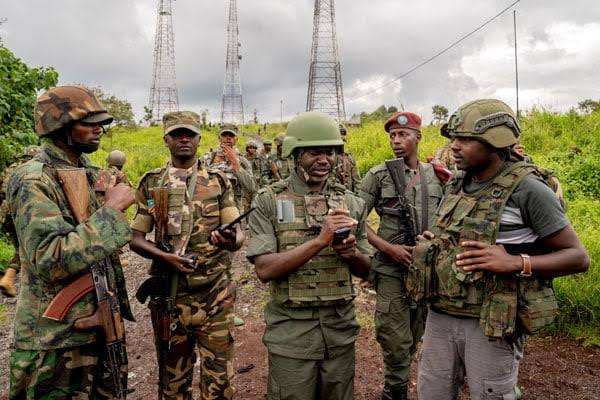
A Congolese military court has sentenced 66 soldiers to death in a single verdict, five weeks after another court handed the same sentence to 27 members of the Republican Guard.
The Goma garrison military court, sitting in Walikale-Centre in North Kivu, delivered the ruling late on Friday 6 November after twelve days of hearings, according to a statement from the army's 34th military region reported by the state news agency ACP and the UN-backed Radio Okapi. All the defendants belonged to the 3415th regiment of the Armed Forces of the Democratic Republic of Congo (FARDC). They were convicted of military revolt, refusal to obey orders and cowardice in the face of the enemy; Radio Okapi's account also lists the waste of war munitions among the charges examined.
One sergeant received ten years' imprisonment, with what the army described as substantial mitigating circumstances. Four soldiers were acquitted, among them the captain who headed the regiment's intelligence unit. Prosecutors had sought the death penalty for 70 of the 71 defendants.
## What the soldiers were accused of
The army says the soldiers were arrested on 20 October in the village of Ngora over incidents in Ntoto, in the Wanianga sector of Walikale territory. Neither the army statement nor the published court reporting describes in detail what happened at Ntoto. The regional military spokesman, Major Dieudonné Kasereka, framed the trial as part of an effort to strengthen discipline as operations against armed groups continue in the east.
The case was heard under the flagrante delicto procedure, a fast-track process for offences considered established at the time of arrest. Scoop Afrique reports that the trial opened on 26 October. The sentences are at first instance, and the soldiers can appeal.
The location of the hearing is itself telling. The Goma garrison court is sitting in Walikale because Goma, the provincial capital, has been held by the AFC/M23 rebel coalition since early 2025, along with Bukavu in South Kivu. Congo, the United Nations and Western governments accuse Rwanda of backing the M23; Kigali denies it.
## A pattern of mass trials
The Walikale verdict follows a similar case in South Kivu. On 2 October, the garrison court in Uvira sentenced 27 soldiers of the Republican Guard's 21st Simba battalion to death for abandoning strategic positions on the heights of Malimba and Masangu, above Uvira, on the night of 22 to 23 August. In that trial, which involved 112 soldiers, 54 received five-year sentences for violating instructions, ten got six months and 21 were acquitted. In May, another military court jailed 58 soldiers for three years for withdrawing from the front line against the AFC/M23, Anadolu reported.
Taken together, the trials show a government trying to stop units from giving ground by making the cost of retreat as high as possible. They also suggest the problem is not isolated. When whole regiments face charges of mutiny and cowardice, the question is less about individual courage than about pay, supply, command and the conditions in which soldiers are sent to fight. Scoop Afrique's commentary on the verdict makes the same point, noting that troops in the east often lack resources.
## The death penalty question
Congo observed a moratorium on executions from the early 2000s but never abolished capital punishment. In March 2024 the justice ministry issued a circular, reported by Reuters, lifting the moratorium for crimes including treason, espionage, war crimes and military offences such as desertion, citing betrayal within the army during recurring armed conflicts. Several human rights organisations raised concerns at the time.
Mass death sentences carry risks for Kinshasa beyond the human-rights debate. Fast-track trials of dozens of defendants raise questions about how individual responsibility was established, and the verdicts are likely to draw scrutiny from partners and rights groups that oppose capital punishment. Inside the army, the message of deterrence may also deepen resentment among troops who believe they are being punished for failures of command.
## What comes next
The convicted soldiers' appeals will test whether higher military courts uphold sentences of this scale. Further trials are possible: ACP reports that the group arrested in Walikale grew from 54 to 70 as more soldiers were detained. On the battlefield, fighting with the AFC/M23 and allied groups continues in North and South Kivu while each side accuses the other of violating ceasefire commitments, which means the pressure on frontline units, and on the courts that judge them, is unlikely to ease soon.