Daylight Saving Time 2026: Why Changing the Clocks Is a Billion-Dollar Business Question
As Americans prepare to turn their clocks back on November 1, the debate over daylight saving time is about far more than an extra hour of sleep. From consumer spending and worker productivity to energy use and retail sales, changing the clock carries economic consequences that businesses have spent decades trying to understand.
For most Americans, daylight saving time ends with a deceptively simple ritual: change the clocks, enjoy an extra hour in bed and complain about how early darkness arrives.
For businesses, however, moving the clock by one hour can alter when people shop, how much daylight workers have after leaving the office, patterns of energy consumption and even employee productivity.
That makes daylight saving time not merely a question of convenience, but an unusual piece of economic policy—one capable of shifting human behaviour without changing wages, prices or taxes.
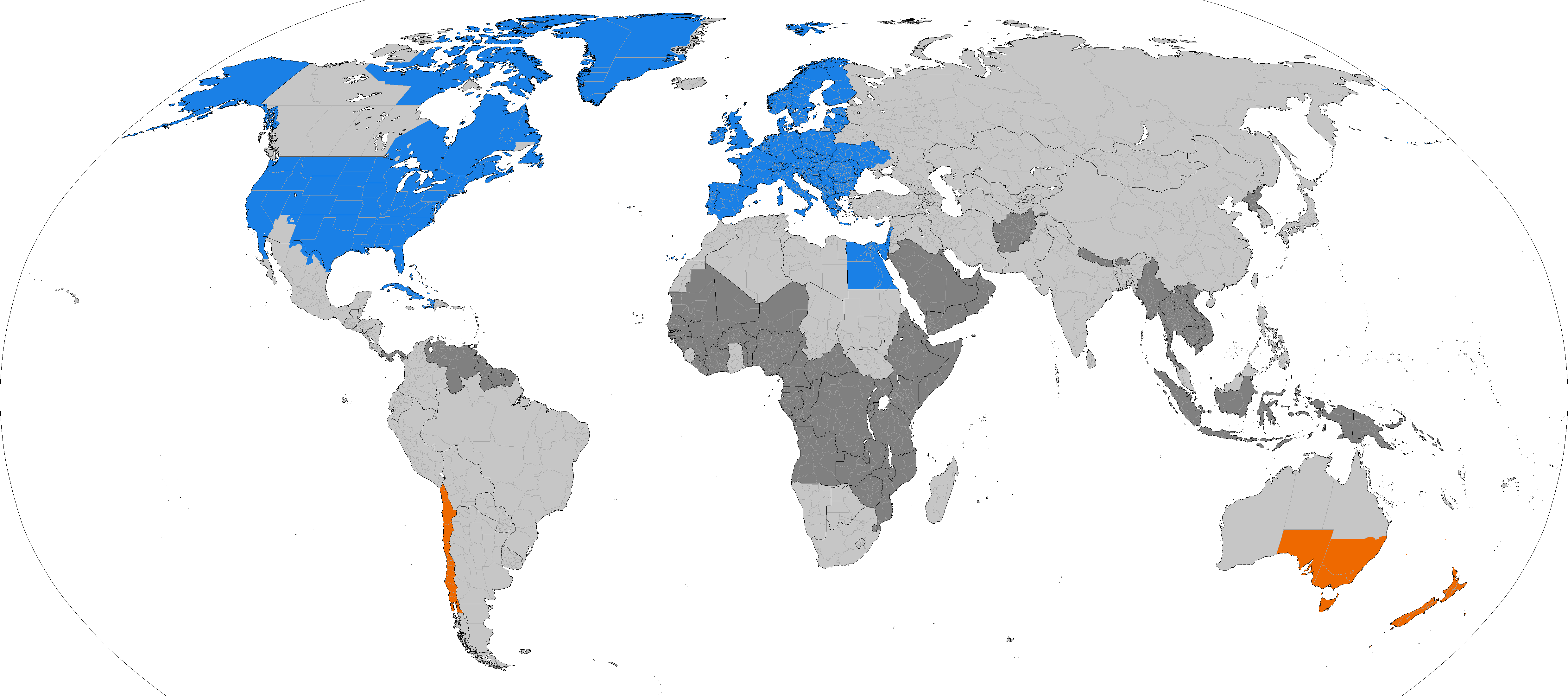
On Sunday, November 1, 2026, most of the United States will turn its clocks back one hour at 2 a.m., ending daylight saving time for the year. Hawaii and most of Arizona are among the places that do not observe the twice-yearly change.
And every time the clocks change, an old argument returns: is daylight saving time actually worth it?
The Business Case for an Extra Hour of Evening Sunlight
The strongest economic argument for daylight saving time may have less to do with electricity than with shopping.
Giving people more daylight after work potentially gives them more time—and perhaps more motivation—to visit shops, buy fuel, play golf, eat out or spend money on recreation.
Research from the JPMorgan Chase Institute offers a particularly interesting glimpse into this effect.
Using hundreds of millions of anonymized credit- and debit-card transactions, researchers compared Los Angeles, which observes daylight saving time, with Phoenix, which does not.
In Los Angeles, daily card spending per person increased by 0.9% following the beginning of daylight saving time.
The more striking result came when daylight saving time ended. Daily card spending per person fell by 3.5% relative to Phoenix.
More than two-thirds of that decline was associated with fewer transactions rather than consumers simply spending less during each purchase. Grocery spending showed an especially large decline, while fuel, discount stores and other retail categories also recorded significant reductions.
The findings offer an intuitive explanation for why some businesses like longer evenings.
When it gets dark before people leave work, consumers may simply go home.
Retailers Have a Stake in the Clock
That helps explain why the politics surrounding daylight saving time have attracted industries that seemingly have little connection to timekeeping.
Convenience retailers have publicly argued that longer evening daylight benefits commerce. The National Association of Convenience Stores told a congressional hearing in 2022 that additional evening daylight was good for the industry.
Outdoor recreation businesses have an obvious interest as well. An additional hour of usable evening daylight can mean another hour in which customers can play golf, shop, exercise or participate in other activities.
But what benefits one part of the economy does not necessarily benefit another.
Restaurants, healthcare providers and professional services appear less sensitive to changes in daylight than retailers selling goods, according to the JPMorgan Chase research.
That makes the economics of daylight saving time unusually uneven.
Then There Is the Productivity Problem
There is another side to the ledger: workers.
Moving clocks forward in spring effectively takes an hour away from the night when the transition occurs. For people already sleeping too little, that disruption can matter.
A recent review of research on daylight saving time concluded that the economic effects of clock changes appear primarily negative, highlighting reduced productivity and increased probability of workplace accidents among the potential costs. The authors also cautioned that considerably more research is needed on some of the economic effects.
Research discussed by the London School of Economics similarly suggests that the disruption can affect sleep, wellbeing and productivity. One cost-benefit analysis estimated that eliminating daylight saving time could produce welfare gains equivalent to roughly €754 per person annually, although that estimate should be understood as one research finding rather than a universally accepted price tag for changing the clocks.
More broadly, inadequate sleep already carries enormous economic costs. The American Academy of Sleep Medicine cites estimates suggesting insufficient sleep costs the U.S. economy as much as $411 billion annually through effects including absenteeism and poorer workplace performance. That figure concerns insufficient sleep generally, not daylight saving time specifically, but it demonstrates why even relatively small disturbances to sleep attract attention from economists and employers.
What Happened to the Energy-Saving Argument?
Daylight saving time was historically promoted partly as an energy-saving measure.
The theory is straightforward: shift daylight into the evening and households need less artificial lighting.
Modern economies complicate that calculation.
Lighting represents only part of household energy consumption. Air conditioning, heating, computers, televisions and other appliances have transformed when and how electricity is consumed.
The JPMorgan Chase Institute noted that academic research has not strongly supported the original energy-saving rationale, with lower lighting costs potentially offset by other forms of energy consumption.
The United States nevertheless expanded daylight saving time through the Energy Policy Act of 2005. Since 2007, DST has begun on the second Sunday of March and ended on the first Sunday of November. It now covers roughly 65% of the year.
That means Americans spend considerably more of the year on “daylight saving” time than on standard time.
A One-Hour Change With Winners and Losers
The enduring daylight saving debate illustrates something economists encounter repeatedly: seemingly small policy choices can redistribute economic activity.
More evening sunlight can benefit retailers and recreation businesses.
Darkness arriving earlier can change shopping behaviour.
Clock transitions can interfere with sleep and workplace performance.
And whatever energy savings daylight saving time once promised are much less straightforward in an economy dominated by climate control, electronics and services.
Even the scientific picture is not entirely one-sided. A 2026 systematic review examining 157 studies across 36 countries found both adverse and beneficial patterns associated with daylight saving transitions and concluded that the evidence remains heterogeneous.
That uncertainty helps explain why a practice involving nothing more than moving the hands of a clock continues to produce arguments involving doctors, economists, retailers, politicians and businesses.
When Americans turn their clocks back on November 1, they will technically gain an hour.
The more interesting question is what that hour is worth—and who ultimately pays for it.