Do Consumer Boycotts Actually Work? From Israel’s 1950s Volkswagen Boycott to Modern Boycott Campaigns
An evidence-based examination of how individual purchasing choices translate into economic and political pressure, reviewing historical cases from 1950s Volkswagen boycotts to contemporary international campaigns.
Consumer boycotts attempt to translate individual purchasing decisions into economic and political pressure by reducing demand for a company's products or services. When organized effectively, they can influence revenue, market share, and brand value. However, the direct economic impact of a boycott is frequently smaller than expected. Instead, media attention, reputational damage, and investor pressure often amplify a boycott far beyond the direct loss of sales. Companies respond to organized boycotts through public statements, policy changes, supply chain adjustments, or withdrawals from markets, while governments can become involved through legislation or diplomatic consequences.
Distinguishing between spontaneous consumer consumption choices and coordinated political campaigns is critical for understanding success and failure. Scale, duration, organization, and geographic concentration dictate whether a campaign achieves its goals. Historical precedents offer clear frameworks for analysis. During the 1950s and early 1960s, a historical boycott of German products was organized and promoted in Israel, targeting companies including Volkswagen due to Germany's past. While political rhetoric was intense, historical analysis distinguishes between public sentiment and measurable consumer behavior. Volkswagen eventually entered and expanded in the Israeli market as attitudes changed over time, demonstrating that economic integration can resume when political or social contexts shift.
Comparing the Volkswagen and German-goods case with other major documented examples reveals varied outcomes. The Montgomery Bus Boycott, South Africa apartheid boycotts, the Nestlé boycott, the Nike boycott, Shell boycotts, Soviet and Cold War consumer campaigns, and Arab League boycotts all demonstrate different trajectories. For each case, outcomes depended on who organized the effort, what was demanded, participation size, duration, economic damage incurred, and whether companies or governments changed policy. Other social and political factors frequently contributed to success.
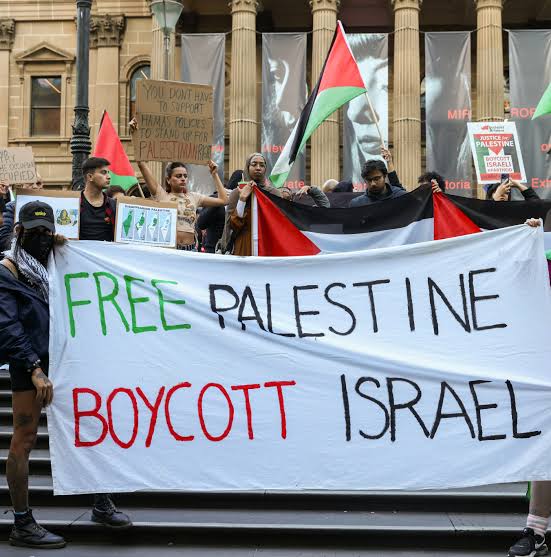
Modern campaigns encouraging consumers to boycott Israeli products or companies associated with Israel, such as BDS initiatives, involve international coordination targeting specific products and companies. Evidence of changes in sales, market share, investment, or corporate behavior varies widely. Certain companies have changed policies following sustained pressure, while other campaigns have had little measurable effect. Analysts must distinguish between Israeli companies, companies operating in Israel, companies supplying the Israeli government, and companies merely alleged to have connections with Israel.
Determining whether a boycott actually works requires examining multiple impact metrics. Economic impact includes lost sales, market share, revenue, stock performance, and supply chain effects. Corporate impact covers policy changes, public statements, market withdrawals, and changed suppliers or government contracts. Political impact involves government pressure, legislative changes, diplomatic consequences, and shifting public opinion. Reputational impact encompasses media coverage, brand perception, investor concerns, and employee activism. Crucially, correlation does not prove causation, as companies often change policies because of regulation, war, recession, or competition rather than a boycott.
Characteristics associated with successful campaigns include large participation, high-frequency purchases, easily replaceable products, a small number of target companies, strong consumer identification with the issue, clear demands, sustained participation, effective organization, media visibility, target brand vulnerability, investor pressure, government involvement, and the availability of alternatives. Conversely, boycotts fail when these conditions are absent.
Examining whether the mechanism of economic pressure used by Israelis against German products in the 1950s can be applied today against Israeli products involves comparing campaign structures. Effectiveness depends heavily on the identity of the target, moral justification, and the economic and organizational structure of the campaign, rather than moral equivalence between distinct historical situations.
Legal and ethical considerations involve freedom of consumer choice, political boycotts, corporate discrimination concerns, and anti-boycott laws in different countries. Maintaining a distinction between boycotting products and targeting individuals or ethnic or religious groups keeps campaigns focused on governments, companies, and policies.
Ultimately, consumer boycotts are likely to work under specific structural conditions involving clear demands and vulnerable targets, while remaining unlikely to work when products are difficult to replace or organization lacks scale. Direct economic pressure is often modest, but reputational and political effects can matter more than lost sales.