The Witch by Freida McFadden Review: A Creepy, Addictive Thriller That Works Best in the Past
Freida McFadden's new psychological thriller The Witch has emerged as a major October 2026 bestseller, driven by massive reader interest and digital word-of-mouth momentum.
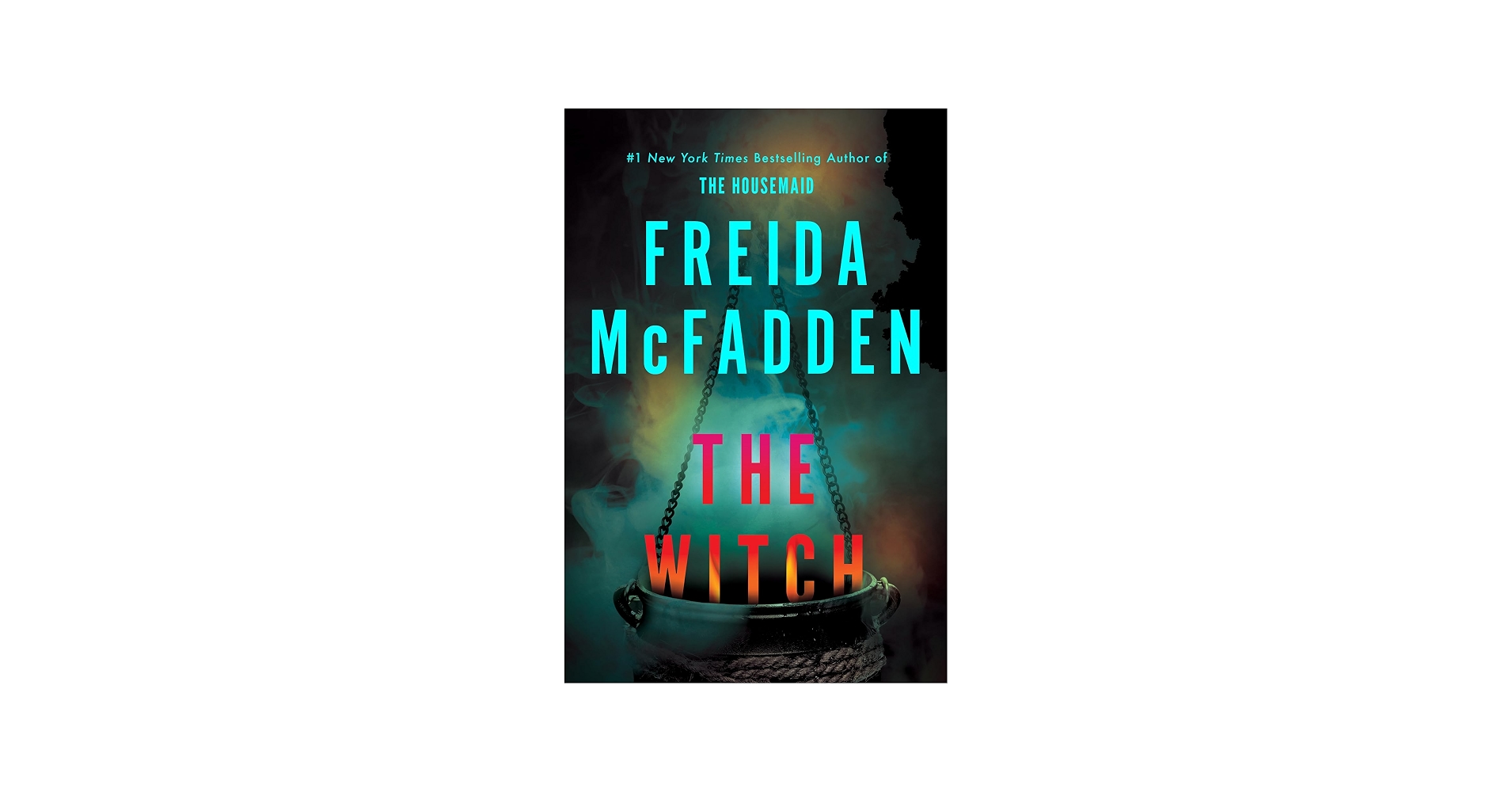
Freida McFadden trades domestic suspense for haunted houses, witchcraft and the Salem era in The Witch. The result is an atmospheric thriller with an engaging historical storyline, plenty of twists and a few weaknesses that keep it from being her strongest book.
Freida McFadden has built her reputation on books that are difficult to put down.
Her thrillers are rarely interested in asking readers to sit patiently with a story. They move quickly, plant secrets early and keep turning the page toward the next revelation. The Witch, published October 6, 2026, follows that tradition—but takes McFadden somewhere considerably darker and more atmospheric.
This time, there is a haunted house.
There is a woman accused of witchcraft.
There is a clock that stops at exactly 3:41 every morning.
And there are two stories separated by more than three centuries.
The result is a book that feels different from much of McFadden's familiar domestic-thriller territory. It is not quite horror, despite its supernatural ingredients. It is better described as a supernatural mystery thriller with gothic atmosphere, historical fiction and the author's trademark appetite for twists.
And while it is not flawless, The Witch is an entertaining October read.
The Story
The novel follows Julia Barlow, a young woman who has lost both her job and her apartment.
With few options left, she travels to Pemberton, her family's seventeenth-century estate in rural Massachusetts, ostensibly to check on her elderly grandmother.
The house quickly becomes the real problem.
The grandfather clock stops at 3:41 every night. Lights flicker. A voice cries for help outside Julia's bedroom. And the more Julia investigates, the more she discovers about the house's disturbing history.
That history leads back to 1692, when Caroline Eldridge was accused of witchcraft.
McFadden tells the story through alternating timelines, moving between Julia in the present and Caroline in the past. The two narratives gradually begin to connect, turning what initially appears to be a haunted-house mystery into a story about family secrets, injustice and the consequences of buried history.
That dual structure is one of the book's strongest ideas.
The Historical Story Is the Best Part
The biggest surprise of The Witch is that its historical storyline is arguably more compelling than its modern one.
Caroline's chapters have higher stakes. Her situation is immediately dangerous, and the historical setting gives the story a sense of vulnerability that the present-day sections sometimes lack.
The fear is also different.
Caroline is living in a world where accusations of witchcraft can have fatal consequences. Suspicion becomes a weapon, and ordinary disagreements can suddenly become matters of survival.
That gives the historical chapters an emotional weight that the haunted-house elements alone could not provide.
Even reader reactions on Goodreads repeatedly point to Caroline's storyline as a highlight. Several reviewers describe the historical sections as their favorite part of the book, while some felt the modern-day storyline was less compelling.
It is an effective choice by McFadden because the book becomes more than a supernatural mystery.
It becomes a story about what happens when powerful people decide what another person is allowed to be.
The Haunted House Works—But Don't Expect Horror
The atmosphere is probably the book's biggest strength.
Pemberton feels old, isolated and increasingly uncomfortable. The strange noises, flickering lights, stopped clock and unexplained voice create the kind of setting that works particularly well in October.
But calling The Witch a horror novel would be misleading.
The book is creepy.
It is occasionally unsettling.
But it is not particularly frightening.
That distinction matters because readers expecting a full supernatural horror experience may come away disappointed.
One Goodreads reviewer described it as eerie rather than genuinely scary, while other readers appreciated the haunted-house atmosphere without considering the book outright horror.
The supernatural elements are ultimately there to create mystery and tension rather than to overwhelm the reader with terror.
That makes The Witch a better choice for someone who wants a spooky thriller than someone looking for genuine horror.
McFadden's Twists Are Still the Engine
The book would not feel like a Freida McFadden novel without its twists.
And The Witch has plenty of them.
McFadden understands the basic mechanics of commercial thriller writing extremely well: give the reader a question, provide an apparent answer, introduce another question and keep moving.
That makes the book easy to binge.
Some readers will predict parts of the story. Others will be caught off guard. The important thing is that the novel maintains enough uncertainty to keep the central mystery alive.
That is where McFadden remains particularly effective.
She does not necessarily need every twist to be completely unpredictable. She needs the reader to want to find out whether their prediction is correct.
For much of The Witch, she succeeds.
Where the Book Falls Short
The modern-day storyline is where the novel becomes less convincing.
Julia's story has the ingredients of a strong thriller, but some of the characters and conflicts feel less developed than the historical material.
Kirkus Reviews was particularly critical here, describing the present-day plot and characterization as weaker while praising the tension and twists in Caroline's historical storyline.
That criticism is fair.
The historical narrative has a clear emotional center. Caroline's situation immediately matters.
Julia's storyline sometimes feels more like a mechanism for discovering the house's secrets.
That difference makes the transitions between timelines uneven.
Just when the historical story becomes gripping, the book returns to the present, and the momentum can drop.
For some readers, that will be frustrating.
For others, the two timelines will provide enough variety to keep the story moving.
Is This McFadden's Best Book?
Probably not.
But it may be one of her more interesting departures.
Readers who come to McFadden primarily for the psychological manipulation and domestic suspense of books such as The Housemaid may find The Witch slower and more atmospheric.
That is not necessarily a weakness.
In fact, the change gives the book some freshness.
McFadden is clearly experimenting with a different mood here. The old house, historical setting and witchcraft accusations give the novel a gothic quality that separates it from her more familiar formula.
And the experiment mostly works.
The Goodreads response reflects that balance. The book currently holds a 4.05/5 average from more than 133,000 ratings, with the majority of ratings falling into the four- and five-star categories.
At the same time, some readers have criticized the slower pace, the weaker modern timeline and an ending that did not live up to the buildup.
So the response is not universally glowing.
But it is overwhelmingly engaged.
And for a thriller, that matters.
The Verdict
The Witch is not a terrifying horror novel, and it is not McFadden's most perfectly constructed thriller.
What it is, however, is a very readable supernatural mystery with an excellent historical storyline and an atmosphere perfectly suited to October.
The book is strongest when it explores Caroline's experience in 1692. Those chapters carry the greatest emotional weight and give the story something beyond the usual haunted-house formula.
The present-day storyline is less convincing, and some of the characters feel thinner than they should. Readers looking for relentless twists from beginning to end may also find the book slower than McFadden's other work.
But once the two timelines begin to converge, the story becomes difficult to leave unfinished.
Our verdict: 4/5
Who should read it?
Read The Witch if you enjoy:
Supernatural mysteries
Haunted houses
Historical fiction
Salem witch-trial stories
Dual timelines
Family secrets
Fast, accessible thrillers
Twist-driven plots
Atmospheric October reads
Skip it if you are looking for genuinely terrifying horror or a deeply complex literary thriller.
Final Word
The most interesting thing about The Witch is not whether the supernatural elements are real.
It is how effectively McFadden uses them to connect two women separated by more than 300 years.
One is trying to understand what is happening inside a strange old house.
The other is fighting to survive a society that has already decided what she is.
The historical story gives The Witch its heart.
The mystery gives it momentum.
And McFadden's twists make sure you keep reading.
It may not be her scariest book.
It may not even be her best.
But for readers looking for an addictive, atmospheric thriller this October, The Witch casts a pretty effective spell.
Rating: 4/5