The Hollow is Harry Bosch’s most personal novel—and his most crowded
Michael Connelly’s new book returns the retired detective to MacLaren Children’s Center and the unsolved death of a boyhood friend. The childhood chapters are the true achievement; once the present-day investigation swells into a federal case, the novel is less sure of its own scale.
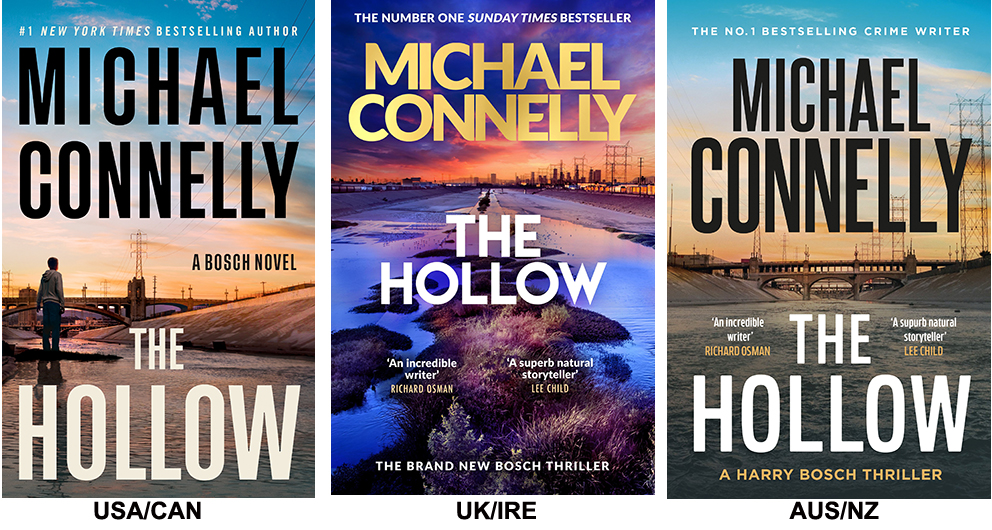
Michael Connelly has spent more than three decades sending Harry Bosch after other people’s unfinished business. In The Hollow, published in the United States by Little, Brown and Company on 27 October, the unfinished business is Bosch’s own. The novel opens at a grave and then, more urgently, at a children’s institution that the city would prefer to turn into a park. The question is whether Connelly can finally make good on the childhood that has always haunted this series—or whether a late Bosch book, asked to carry too many other plots, will lose the boy in the noise.
Readers were ready for the trip. The novel entered the New York Times Hardcover Fiction list dated 15 November at No. 2, a new entry behind Sarah J. Maas, and appeared at the same rank on the Publishers Weekly hardcover list circulated that week. Those rankings confirm appetite. They do not settle the literary question.
Connelly, a former Los Angeles Times crime reporter, has made Bosch the most durable American police detective of the past generation, beginning with The Black Echo in 1992. The Hollow is a Bosch-led novel, not a billed crossover, though the supporting cast is thicker than the jacket copy suggested. Mickey Haller appears as the legal catalyst. Renée Ballard, omitted from the official synopses, runs the cold-case unit that gives Bosch a working door into the department. The author’s note is unusually plain about the book’s real-world anchors. MacLaren Hall existed from 1961 to 2003; Los Angeles County’s settlement with former residents, given in the novel as $4 billion over five years, is drawn from life; the site in El Monte is being remade as a park. The 1981 Wonderland Avenue killings, which Bosch enters as a young detective in a flashback chapter, were real: Eddie Nash later acknowledged ordering them, and the actual killers were never convicted. The dedication is terse: “To those who survived MacLaren.”
A payment he will not take
The novel’s present-day engine is a refusal. Haller, now doing public-interest work, brings word that Bosch, classified in the settlement as a survivor of physical rather than sexual abuse, is in line for $400,000, less a legal fee, paid over five years. Bosch does not want the check. “I didn’t do it for the money,” he tells his half-brother. “I did it for Charlie Lamb.” Lamb—Chops to the boys—was a Black thirteen-year-old from Watts who arrived at MacLaren in 1963, befriended Harry, and was found dead in 1965 in the punishment crawl space the children called the hollow. The sheriff’s file, when Bosch later pulled it as a young homicide detective, recorded a homicide without suspects. The institution had already performed the moral trick that still angers him: it moved the body, narrowed the paperwork, and treated the dead boy as if no one involved had been fully human.
Bosch donates the settlement to a real charity, Hope in a Suitcase, in Lamb’s name, and uses the legal discovery as a way back into the file. In parallel, and with Ballard’s volunteer-heavy unit, he returns to a 2001 murder he has never let go: Jennifer Talbot, beaten in an apartment she had taken after leaving her husband, the scene dressed to look like a break-in. On the twenty-fifth anniversary, Bosch meets Gregory Talbot at the grave with a vase of tulips that is not only a gesture. “Nobody bats a thousand in homicide work, Talbot,” he says. “But this one I did solve. I just didn’t make the arrest. There’s a difference.” That difference—knowing and proving, caring and closing—is the novel’s first argument, and the Talbot thread, far from a disposable prologue, becomes a fully worked case about evidence, privacy, and what a retired detective is still allowed to do.
The boy with the radio
The book’s best pages are not the present-tense manhunts. They are the short chapters dated 1963, 1964, 1965 and 1966, in which Harry is a ward with a transistor radio, a left-handed catcher’s mitt, and a gift for walking a new boy past the segregated cafeteria tables. Connelly writes the institution as a small authoritarianism: probation officers, a director with a European past, a hollow under the stairs, punishments that leave no useful record. He also writes the tenderness that makes the later violence matter—the radio tuned to Vin Scully, a stare that makes a bully blink, a “golden ticket” off the campus that is really a grocery-store paycheck. When young Harry is sent back and learns that Chops is already dead, the novel earns its title without speechifying. He sits against a rec-field wall and feels, simply, hollow.
The present-day investigation of that death is classic Connelly: thin murder books, a sheriff’s detective who will not photocopy a file but will leave the photographs in reach, a surviving staff enforcer now lost to dementia, a hypnosis session that is both clever and a little too convenient as a delivery system for old facts. Then the book enlarges, and enlarges again. The trail from MacLaren leads Bosch toward a man who got out, changed his name, and built a later life of serious crime. It also leads back to Wonderland, a massacre Bosch walked into on a holiday weekend in 1981 and has never expelled from his head. And it leads, in the novel’s long middle, into a federal investigation whose present-day stakes have little to do with a boy killed in 1965. Publishers Weekly, reviewing the book before publication, called it “intriguing if overstuffed.” After a cover-to-cover reading, the second adjective is the one that sticks. The origin story and the Talbot case could have made a lean, devastating Bosch novel. The third campaign, however professionally engineered, asks a tired man with a new knee and a cane to carry a different genre.
That overcrowding is not only a structural complaint. It is a thematic risk. The book’s deepest argument is that institutions bargain away the dead: a youth hall that filed a homicide as if no one were involved; prosecutors who, in Bosch’s memory, once accepted a paltry sentence from the man who ordered Wonderland; federal officers who may value a present-day prize more than an old murder. Connelly is at his most Bosch-like when he lets the detective refuse that arithmetic. He is less persuasive when the plot itself seems to prefer the larger prize—when task-force rooms and interagency grudges crowd out the boy under the stairs.
What the settlement cannot buy
The Hollow is not social policy disguised as fiction, and it should not be read as a documentary on the MacLaren litigation. It is, however, one of the few mainstream crime novels to take that California settlement seriously as a moral event rather than a news hook. Bosch’s classification—physical abuse, not sexual—and his unease about what he cannot remember are treated with more tact than the genre usually manages. A conversation with Carmen Hinojos, the retired department psychologist who is now his partner, faces the possibility that memory has protected him as much as it has obligated him. The novel is wise enough not to force a recovered-memory spectacle onto its hero. It is less wise, at times, in how much coincidence it asks the reader to accept: the same detective who was first through the door at Wonderland finds himself, decades later, in the same orbit again. Connelly knows the strain is there. He does not fully dissolve it.
As late-career Bosch, the book is often affecting in the small things: the cane, the vertigo, the hawks and the owl on the hillside, the daughter now a detective, the fear of becoming the old man other cops usher aside. Ballard’s understaffed unit gives a credible picture of how cold cases are actually worked when a department will not staff them. A later courtroom fight over the Talbot recording—whether a device meant for a grave can travel, without a warrant, into a private car—is some of the sharpest legal writing Connelly has done in years. These are not the sounds of a series on autopilot.
They are, however, the sounds of a writer who did not want to choose. Booklist, in a starred review, said fans would “rejoice at this knockout return.” Kirkus, more elegiac, found it “downright inspiring” that the older Bosch behaves more like himself. Both notices catch something real. Neither should flatten the book into an unalloyed triumph. The Hollow is moving and overextended, morally serious and narratively greedy. It is the book in which Connelly finally walks Bosch back into MacLaren and lets the reader stay long enough to feel why the place never left him. It is also the book in which that return must share space with almost everything else the series can still do.
For readers who have followed Bosch, The Hollow is essential and imperfect: the childhood chapters alone justify the sitting. Newcomers can follow the plot without a briefing, though they will miss some of the series’ weathered texture. Anyone who wants a crime novel that engages institutional child abuse and the limits of later compensation will find a genuine argument here, not a costume. Anyone who wants only the lean murder book of Bosch’s prime may wish Connelly had trusted the hollow, and the boy who died in it, to be enough.
The Hollow: A Harry Bosch Novel, Michael Connelly. Little, Brown and Company, hardcover; published 27 October 2026; 352 pages; $32. Ebook ISBN 9780316563888. This review is based on a complete reading of the publisher’s ebook.