Senegal’s 2027 budget reaches committee despite withdrawal dispute
Finance Minister Cheikh Diba defended the 2027 bill before lawmakers on Saturday after the finance committee sought its withdrawal. The hearing keeps the budget process moving, but leaves unresolved a dispute over fiscal assumptions, transparency and the political backing needed for a proposed IMF programme.
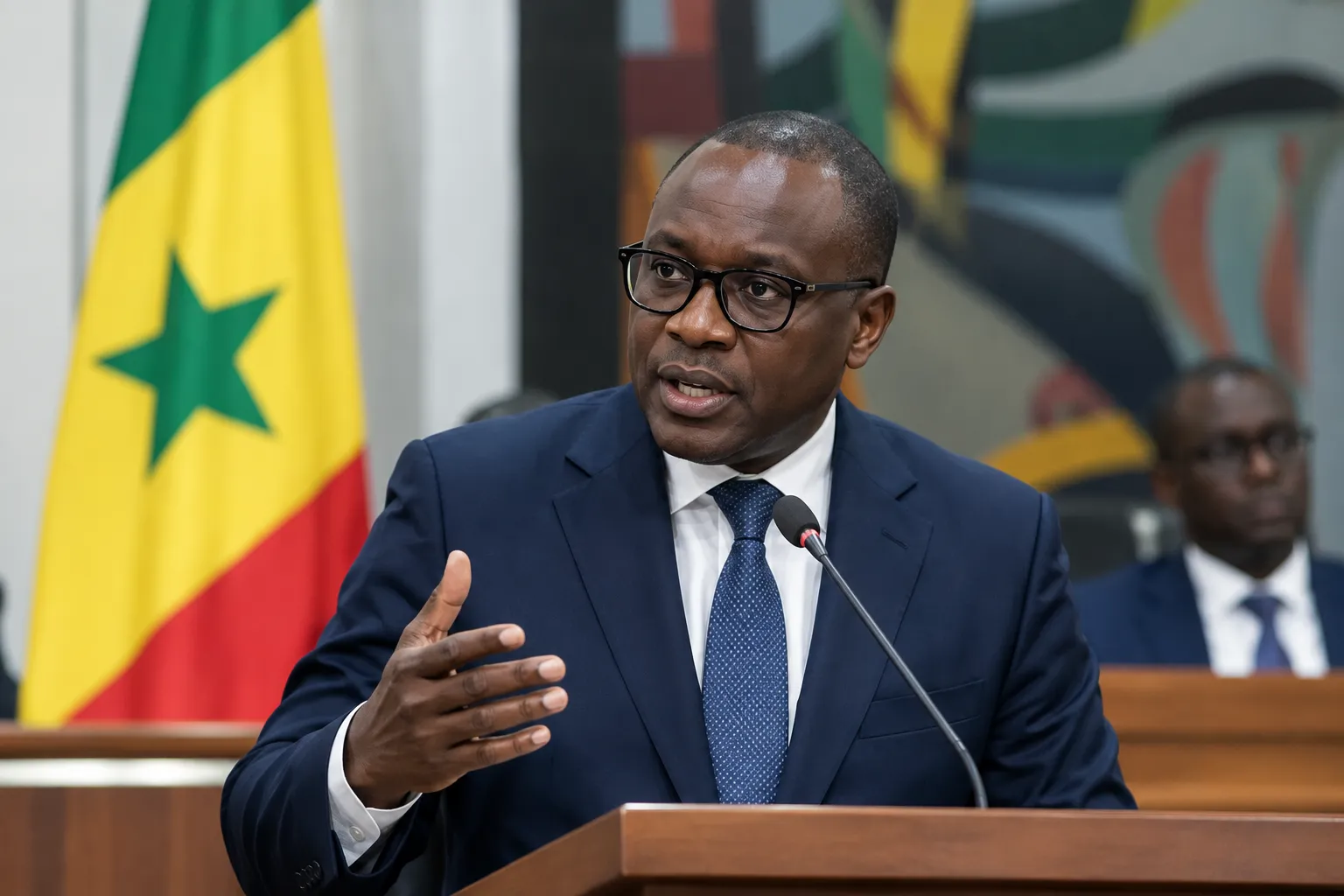
Senegal’s finance minister presented the 2027 budget bill to parliament’s finance committee on Saturday, 7 November, despite the committee chair’s request that the government withdraw it. The hearing marks a procedural advance, not a settlement of the conflict that followed lawmakers’ rejection of the 2026 supplementary budget.
Cheikh Diba defended the bill as a difficult but necessary fiscal adjustment, according to Dakaractu and Seneweb accounts of his presentation. The development updates the standoff reported by Reuters on 5 November: the executive has maintained its text, and the committee is examining it while contesting the financial baseline on which it was built.
A dispute over the starting numbers
The National Assembly rejected the proposed 2026 supplementary budget on 3 November, according to Le Soleil’s reporting on the committee’s statement. Committee chair Alphonse Mané Sambou then asked the government to withdraw the initial 2027 bill, arguing that its revenue, spending, deficit and financing assumptions relied on the rejected revision.
The finance ministry disputed that conclusion. In a statement reported by Le Soleil and public broadcaster RTS, it said rejection of an amending budget does not automatically require withdrawal of the following year’s initial budget. It invoked the sequence of the 2025 budget process as a precedent and accused the committee of obstruction.
Sambou rejected that characterisation, describing his approach as institutional dialogue intended to facilitate adoption. He acknowledged that the request was not binding and that the government could retain its bill. He also said the assembly remained obliged to examine it within the constitutional timetable, explaining why a withdrawal request and committee hearings could proceed at the same time.
Those are opposing institutional interpretations, not a court ruling that either side’s position is legally conclusive. At Saturday’s hearing, Dakaractu reported that Diba again defended keeping the bill and said the government had introduced errata to address the anomaly identified. The report does not establish that lawmakers accepted those corrections or approved the budget.
The fiscal adjustment behind the procedural fight
The rejected 2026 revision put the deficit at 7.6 per cent of GDP, up from 5.4 per cent, and cut projected growth to 2.7 per cent from roughly 5 per cent, Reuters reported. Energy subsidies had risen to 790.3 billion CFA francs. These are figures in the rejected proposal, not an enacted supplementary budget.
In Saturday’s presentation, Diba said the 2027 bill aimed to reduce the deficit to 4.7 per cent of GDP and projected growth of 1.5 per cent, according to both Senegalese outlets. Seneweb reported a proposed 480 billion CFA francs for settling private-sector arrears and an increase in family-security grants from 70 billion to 140 billion CFA francs.
Those allocations remain proposals. Their political importance is that deficit reduction is being presented alongside promises to support households and repay businesses owed money by the state. A budget can improve its headline balance while still prompting disputes over which spending is reduced, which taxes are collected and how quickly creditors are paid.
Debt credibility and political authority
The confrontation extends beyond accounting. Reuters describes a split between President Bassirou Diomaye Faye and his former prime minister Ousmane Sonko, whose PASTEF party holds the National Assembly majority. That gives the parliamentary camp leverage over legislation needed for the government’s financing strategy. The dispute is therefore within the political movement that brought the current leadership to power, not simply a conventional government–opposition contest.
Senegal’s credibility problem predates this week’s vote. An IMF statement in August 2025 said a debt reconciliation had revised end-2023 central-government debt from 74.4 per cent to 111 per cent of GDP and put the end-2024 figure at 118.8 per cent. These are dated historical estimates with a specified central-government perimeter, not a current 2026 debt ratio.
On 1 September 2026, IMF staff announced agreement on policies underpinning a proposed three-year Extended Credit Facility arrangement worth about $2.2 billion. The statement made clear that management and Executive Board approval, corrective action on misreporting and financing assurances were still required. A staff-level agreement is not approved financing or cash already disbursed.
A hearing is not yet a compromise
Saturday’s committee appearance shows that the withdrawal demand has not stopped scrutiny of the bill. It does not establish a parliamentary majority for its assumptions or its spending choices. Reuters’ warning that prolonged conflict could delay the IMF programme remains a risk, not an announced Fund decision to suspend or cancel it.
The next meaningful test is whether the government can reconcile a credible fiscal baseline with lawmakers’ demands for transparency and the votes needed to enact it. Keeping a bill on the parliamentary calendar preserves a route to agreement; rebuilding confidence requires agreement on what the numbers mean and who bears the adjustment.