Guinea-Bissau Rejects US-Funded Hepatitis B Vaccine Trial: Who Decides What Is Ethical for Africa?
Guinea-Bissau has stopped a controversial US-funded study that proposed delaying hepatitis B vaccination for thousands of newborns. The decision, followed by a police seizure of vaccine stocks, has exposed deeper tensions over medical ethics, African sovereignty, scientific independence and the influence of American vaccine politics on international research.
A small country draws a line over medical research
Guinea-Bissau, a small West African country with limited economic resources but a substantial public-health burden, has become the centre of an international dispute over the ethics of medical research.
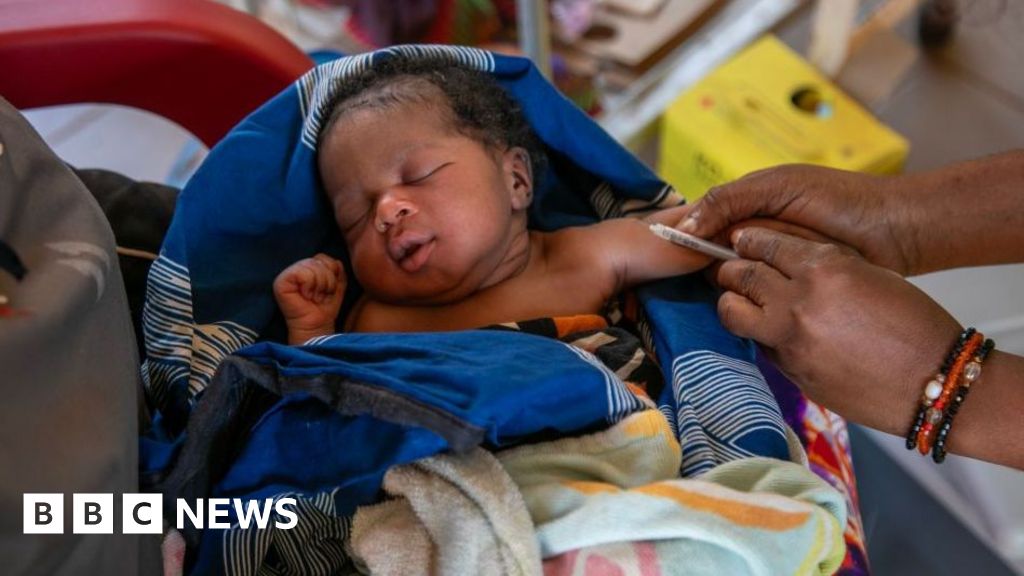
In October 2026, the government formally rejected a controversial hepatitis B vaccine study backed by US funding and designed by Danish researchers. The proposed research would have involved approximately 14,000 newborns, dividing them into two groups: one receiving the hepatitis B vaccine immediately after birth and another receiving it at six weeks.
The study never began. Its rejection was followed by a judicial police operation on October 19, during which authorities searched the facilities of the Bandim Health Project in the capital, Bissau, and seized or sealed vaccine stocks intended for the research.
The decision brought an end to months of uncertainty surrounding a project that had attracted criticism from the World Health Organization (WHO), African public-health officials and international medical researchers.
But the controversy raises questions that extend beyond one clinical trial. It concerns who has the authority to determine acceptable medical risks, how international research funding influences scientific priorities, and whether African governments can exercise meaningful control over research conducted on their populations.
What was the controversial study trying to establish?
The proposed study was designed to investigate what researchers describe as the nonspecific effects of vaccines.
Unlike conventional vaccine trials, which primarily investigate whether a vaccine prevents a particular infection or produces adverse reactions, this research sought to examine broader health outcomes, including mortality, illness and neurodevelopment.
The researchers intended to compare newborns receiving the hepatitis B birth dose with those receiving it six weeks later. The study was expected to follow participants over several years, with an initial cohort receiving more intensive long-term monitoring.
The project was led by researchers associated with the Bandim Health Project and the University of Southern Denmark. It received approximately $1.6 million in funding from the US Centers for Disease Control and Prevention (CDC).
Its scientific premise was that vaccines might have broader effects on the immune system beyond their intended protection against specific diseases. The researchers argued that these effects deserved further investigation.
However, the design immediately attracted criticism because it delayed a recognised preventive intervention for thousands of infants.
The distinction matters. The study was not designed to establish whether the hepatitis B vaccine works against hepatitis B. Its stated objective was to investigate broader health outcomes associated with vaccination.
That distinction did little to resolve the central ethical question: whether researchers should deliberately delay a proven intervention when its immediate benefits are already recognised.
Why the WHO opposed the design
The hepatitis B birth dose is an established component of global immunisation policy.
The WHO recommends that all newborns receive their first hepatitis B vaccine dose as soon as possible after birth, preferably within 24 hours. The intervention is particularly important because transmission from an infected mother during childbirth can result in chronic infection.
The consequences can be severe. Approximately 90% of infants infected with hepatitis B during childbirth develop chronic infection, placing them at increased risk of cirrhosis and liver cancer later in life.
In February 2026, the WHO issued an unusually direct statement questioning the scientific justification and ethical safeguards of the Guinea-Bissau study.
The organisation argued that withholding or delaying a proven preventive intervention exposed newborns to foreseeable harm without sufficient scientific justification. It also questioned whether the study's design would generate reliable results.
The WHO's objection was not simply that the research involved children. Medical research involving newborns can be ethically justified under appropriate conditions. The concern was that the study placed one group at a disadvantage by delaying a preventive intervention without demonstrating that such a design was necessary.
The WHO also highlighted Guinea-Bissau's high hepatitis B burden and the absence of adequate safeguards, including appropriate maternal screening.
For a country where hepatitis B remains a substantial public-health challenge, the consequences of delayed protection were especially significant.
The American funding controversy
The funding source added another political dimension.
The CDC awarded approximately $1.6 million to the research team. The project was associated with the broader health-policy direction of the administration of US President Donald Trump and Health Secretary Robert F. Kennedy Jr.
Kennedy has repeatedly questioned established vaccine policies and promoted investigations into potential vaccine-related harms. His influence over US public-health policy has become a source of international controversy.
The Guinea-Bissau research therefore attracted attention beyond its scientific objectives.
Critics questioned whether the study was being used to generate evidence supporting broader political arguments about childhood vaccination in the United States.
That interpretation should be distinguished from the researchers' stated scientific objectives. The existence of American funding and political support does not, by itself, prove that the research was designed to advance a political agenda.
Nevertheless, the circumstances created a difficult perception problem. A wealthy country's public-health funding was supporting research that would expose newborns in a poorer country to a delayed preventive intervention, while the findings could potentially influence debates in the funding country.
This imbalance became central to the criticism.
The question of African research sovereignty
The controversy also reopened a longstanding debate about the relationship between international research institutions and African governments.
Medical research in Africa has historically depended heavily on external financing, international universities and foreign research organisations. These partnerships have supported important scientific discoveries, strengthened research capacity and contributed to improvements in public health.
However, they have also raised questions about unequal decision-making power.
Who determines which research questions deserve funding? Who evaluates the risks? Who controls the resulting data? And who ultimately benefits from the findings?
In the Guinea-Bissau case, the dispute became particularly sensitive because the study concerned newborns who could not consent for themselves.
Parental consent is essential in research involving infants, but it does not eliminate the obligation to protect participants from unnecessary risks. Nor does it replace the responsibility of national authorities to assess whether a study serves a legitimate public-health purpose.
The Africa Centres for Disease Control and Prevention (Africa CDC) supported scrutiny of the proposal, emphasising the importance of African institutions and governments in determining the conditions under which research is conducted on the continent.
The controversy therefore became a test of whether international scientific partnerships can operate without overriding local public-health priorities.
It also demonstrated that research sovereignty is not simply about rejecting foreign involvement. It is about ensuring that external funding operates within transparent national laws, independent ethical review and meaningful local participation.
Why the police seized the vaccine stocks
The October police operation added a legal dimension to the dispute.
On October 19, judicial police searched the Bandim Health Project's premises and sealed a refrigerator containing hepatitis B vaccine doses intended for the proposed study.
According to accounts from the research team, authorities were investigating the origin, acquisition, transportation, storage and traceability of the vaccines.
The operation followed the government's formal rejection of the project and its instructions for the relevant authorities to investigate the research materials.
The seizure should not be interpreted as proof that the vaccines themselves were unsafe or that the researchers had committed a criminal offence. The authorities' investigation concerned the handling and intended use of the vaccine stocks, and the researchers said they cooperated.
The distinction is important because the vaccine is an established medical intervention. The controversy concerned the research protocol and its ethical justification, not the general safety or legitimacy of hepatitis B vaccination.
The danger of turning an ethical dispute into a vaccine debate
One of the most consequential aspects of the controversy is the risk that it could undermine public confidence in vaccination.
Hepatitis B remains a serious global health problem. The birth dose is an important intervention because infection during childbirth can lead to lifelong consequences.
Guinea-Bissau has a particularly high burden of chronic hepatitis B among adults. The country had previously committed to introducing a universal birth-dose programme, with implementation planned for 2028.
That creates an important contradiction: while the government was working towards expanding early protection, the proposed research would have delayed that intervention for a large group of newborns.
Rejecting the study does not mean rejecting scientific investigation or opposing vaccine research. It means distinguishing between legitimate scientific questions and the ethical conditions under which those questions may be investigated.
The challenge now is to strengthen public confidence through reliable vaccination programmes, better access to maternal screening and transparent communication about vaccine safety.
A controversy involving research ethics should not become an argument against vaccination itself.
A wider lesson for international health research
Guinea-Bissau's decision carries implications beyond its borders.
International research partnerships are essential to addressing diseases that disproportionately affect lower-income countries. But funding cannot substitute for ethical legitimacy, and scientific ambition cannot justify exposing vulnerable populations to unnecessary risks.
The controversy also illustrates why research governance must be independent of political interests in both the funding country and the host country.
A responsible research partnership requires more than a signed agreement between universities and health authorities. It requires meaningful participation by local institutions, transparent ethical review, appropriate protection for participants and a clear explanation of how the research benefits the population involved.
The final responsibility rests with the institutions and governments that permit research to take place.
Guinea-Bissau's rejection of the proposed trial has made that principle visible.
The country remains economically vulnerable and heavily dependent on international cooperation. Yet its government asserted that foreign funding and international scientific expertise do not automatically confer the authority to conduct research on its newborn population.
That is the larger significance of this dispute.
The future of medical research in Africa will depend not on whether the continent accepts or rejects international partnerships, but on whether those partnerships treat African populations as equal participants in scientific decision-making.
Guinea-Bissau's decision has made one principle particularly clear: the pursuit of scientific knowledge must not come at the expense of the people it is supposed to serve.