Why Nigeria’s EFCC Went After Honda: The Seized Documents, 200 Applicants and Court Order Explained
A Lagos court has restrained Nigeria’s anti-graft agency from arresting or detaining Honda executives, dealers and more than 200 other applicants over an ongoing investigation. The dispute began after an EFCC visit to Honda’s premises in September during which original company documents were allegedly taken. But the central question remains unanswered: what exactly is the commission investigating?
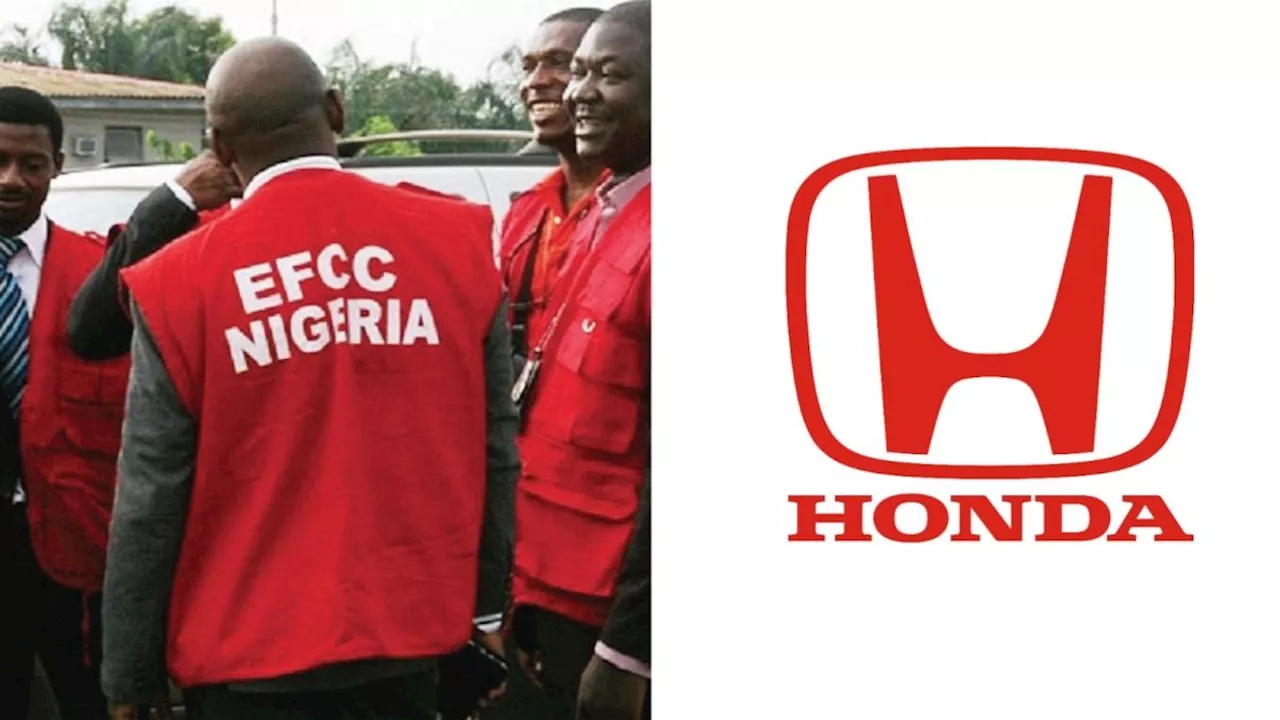
The dispute between Nigeria’s Economic and Financial Crimes Commission (EFCC) and two Honda-affiliated companies has taken an important turn after a Lagos State High Court intervened to protect the personal liberty of more than 200 individuals and businesses connected to the Japanese automotive brand.
The court restrained the anti-graft agency from arresting or detaining executives of Honda Manufacturing (Nigeria) Limited and Honda Automobile Western Africa Limited, alongside their dealers, distributors, business associates and other applicants, in connection with an ongoing investigation.
The order, granted by Justice Olukayode Ogunjobi on October 28, 2026, followed an application alleging repeated invitations for questioning, threats of arrest and the possibility of unlawful interference with the applicants’ fundamental rights.
But the court dispute has brought a second issue into focus: documents allegedly taken from Honda Manufacturing’s premises during an EFCC visit on September 24.
The applicants wanted the court to order the commission to return the original documents after making copies. The judge declined that request at the interim stage.
That distinction is important. The court has restricted certain enforcement actions against the applicants while their fundamental-rights case proceeds. It has not ordered the EFCC to abandon its investigation, ruled that the commission acted unlawfully or cleared Honda and the other applicants of any suspected wrongdoing.
And, perhaps most significantly, the precise allegation behind the investigation has not been publicly established in the reports available so far.
How the dispute began: The EFCC visit to Honda
The events leading to the court action reportedly began on September 24, 2026, when EFCC officials visited the premises of Honda Manufacturing (Nigeria) Limited.
According to the applicants’ court request, the commission took original company documents during that visit. The documents included original records relating to the company’s importation activities.
The reported seizure of those records became a central part of the subsequent legal dispute.
Importation records can be important in an investigation involving a business that brings goods or components into Nigeria. Depending on the nature of an inquiry, such records may help establish the origin, value, classification and movement of imported goods, as well as the commercial transactions associated with them.
However, the fact that importation records were reportedly taken does not establish what the EFCC suspects.
The public reports reviewed do not identify a specific alleged offence or explain what the commission believes the documents might demonstrate. There is no confirmed public evidence in those reports that the investigation concerns customs duties, tax evasion, foreign-exchange transactions, false declarations or any particular form of financial misconduct.
Those possibilities should not be confused with established allegations.
The commission's precise investigative objective remains one of the most important unanswered questions in the case.
Why more than 200 people and businesses became involved
The court action was not brought by Honda's two companies alone.
The applicants included Honda Manufacturing (Nigeria) Limited, Honda Automobile Western Africa Limited, company officers, dealers, distributors, business associates and numerous other individuals and commercial entities.
Reports identify more than 200 applicants in total.
Among the individuals named in coverage of the proceedings are two Japanese nationals, Tetsuya Kawai and Mita Daisuke, alongside Nigerian business figures including Olayemi Adebiyi, Olabade Badejo and Lanre Akinsola.
Companies identified in the reports include H3 Motors & Industries Limited, Movack Services Nigeria Limited, Tony Moore Nigeria Enterprises and Hardé Global Motorcycle Venture, among others.
The inclusion of dealers and distributors suggests that the investigation has a reach beyond the two Honda companies and into parts of their wider commercial network.
Nevertheless, the precise role of each applicant has not been fully established in the public reports. It would therefore be inaccurate to assume that every person or business named is suspected of the same conduct, or that all have been accused of committing an offence.
What is clear is that the group considered the EFCC's investigative actions serious enough to seek protection collectively through the courts.
What the applicants told the court
The companies and other applicants approached the Lagos State High Court through a fundamental human-rights enforcement action.
Their case was that the EFCC's conduct in the course of its investigation threatened their constitutional rights, particularly personal liberty, freedom of movement and privacy.
They raised concerns about repeated invitations for questioning, the possibility of further invitations, threats of arrest and the prospect of detention.
Their requests went beyond protection from immediate arrest.
They asked the court to restrain the EFCC, its officers, agents and representatives from arresting or detaining them in connection with the investigation. They also sought protection against being compelled to repeatedly report to the commission for questioning and against further invitations directed at certain company executives, dealers and distributors.
Another part of the application sought protection for individual applicants who might be unable or unwilling to honour additional invitations, so that they would not be arrested or detained solely on that basis.
The applicants also asked the court to prevent the commission from taking steps that would restrict their liberty without complying with the Nigerian Constitution, the Administration of Criminal Justice Act 2015 and other applicable laws.
Their legal argument was grounded in the principle that the power to investigate suspected financial crimes does not remove the constitutional protections afforded to individuals and businesses.
Chief Bolaji Ayorinde, a Senior Advocate of Nigeria, led the applicants' legal team.
What the Lagos High Court ordered
On October 28, Justice Olukayode Ogunjobi granted the first prayer in the applicants' motion for an interim injunction.
The judge stated that the relief granted sufficiently covered the applicants' second to sixth prayers.
Consequently, the EFCC was restrained from arresting, detaining or otherwise depriving the applicants or their officers of their personal liberty in connection with the subject matter of the investigation, pending the hearing and determination of the substantive fundamental-rights application.
The order provided temporary judicial protection while the larger dispute remained before the court.
The judge also emphasised the need for an expedited hearing, given that the case concerned alleged or threatened violations of fundamental human rights.
The legal basis of the application included Sections 34, 35, 37, 40, 43 and 46 of Nigeria's 1999 Constitution, as amended, alongside relevant provisions of the African Charter on Human and Peoples' Rights (Ratification and Enforcement) Act.
These constitutional provisions address matters including dignity, personal liberty, privacy, freedom of association, property rights and access to the courts for the enforcement of fundamental rights.
The ruling, however, was an interim measure. It was not a final judgment on the applicants' allegations or the legality of the EFCC's entire investigation.
Why the court refused to order the return of Honda's documents
One of the most revealing aspects of the proceedings was the applicants' request for the return of the original documents reportedly taken from Honda Manufacturing's premises.
They asked the court to direct the EFCC to make photocopies, retain those copies for investigative purposes and return the original records to the company.
The court declined to grant this particular request at the interim stage.
This means the applicants obtained protection against arrest and detention in connection with the investigation, but did not secure the immediate return of the documents.
The distinction matters because the documents appear to be part of the unresolved investigative dispute.
The court's refusal to order their return should not be interpreted as a finding that the EFCC was entitled to seize or retain them indefinitely. Equally, it should not be presented as proof that the seizure was unlawful.
That issue remains separate from the interim protection of the applicants' personal liberty and may require further consideration as the case progresses.
Understanding the two Honda companies
The dispute involves two separate companies associated with Honda's operations in Nigeria.
Honda Manufacturing (Nigeria) Limited has a history in the country's motorcycle and power-products market. Honda's corporate history identifies the Nigerian manufacturing company as having been established in 1980.
Honda Automobile Western Africa Limited, on the other hand, was established in 2013 as Honda's automobile business in the region. It is associated with the importation and sale of Honda vehicles and parts in Nigeria.
The distinction is relevant because the two companies operate in different parts of the automotive business. Their inclusion in the same legal action does not, by itself, establish that the EFCC is investigating identical transactions or allegations involving both companies.
It also helps explain why the wider list of applicants includes motorcycle dealers, automobile businesses and other commercial associates.
However, the public information currently available does not provide a detailed account of the relationship between each applicant and the specific transactions under investigation.
What has the EFCC said about the investigation?
One of the biggest gaps in the public account is the absence of a clearly reported explanation from the EFCC identifying the specific allegation behind its investigation.
The court reports describe the investigation as ongoing, refer to the September 24 visit to Honda Manufacturing's premises and mention the original importation-related records allegedly taken by the commission.
But they do not establish what suspected offence prompted the inquiry, what information the EFCC was seeking or whether investigators believe any particular transaction involved wrongdoing.
That leaves several important questions unanswered.
Was the investigation focused on the importation of vehicles, motorcycles or parts? Did it concern the documentation accompanying imported goods? Were the dealers and distributors being questioned about their individual transactions, or were they being investigated as part of a broader commercial network?
At present, the available reporting does not provide sufficient evidence to answer those questions.
The absence of a publicly established allegation does not mean the investigation lacks a legitimate basis. Investigations can involve information that has not yet been made public. But it does mean that the public cannot responsibly draw conclusions about the suspected offence or the conduct of the companies and individuals involved.
The EFCC's account would be important in establishing the context of the investigation and explaining why such a large group of people and businesses became involved.
Does the court order stop the EFCC investigation?
No.
This is perhaps the most important distinction in understanding the case.
The Lagos State High Court did not terminate the EFCC investigation or declare that the commission had no authority to investigate the Honda companies.
It issued an interim injunction restricting arrest, detention and other interference with the personal liberty of the applicants in connection with the subject matter of the case, pending the determination of their substantive rights application.
The ruling does not establish that Honda or its associates are innocent of any possible wrongdoing. Neither does it establish that the EFCC has violated their rights.
Those questions remain unresolved.
The commission's investigative powers must be exercised within the limits of the law, but the existence of a fundamental-rights application does not automatically invalidate an investigation.
The substantive proceedings will provide an opportunity for the court to consider the applicants' claims and the legal issues surrounding the commission's actions.
The larger issue: Fighting financial crime without undermining the law
The dispute raises a broader question about the balance between law enforcement and the protection of commercial and individual rights in Nigeria.
The EFCC has a responsibility to investigate suspected economic and financial crimes. Its ability to examine business records, question relevant individuals and pursue evidence is an important part of that responsibility.
But the authority to investigate is not unlimited.
Businesses and individuals are also entitled to constitutional protection. Investigative powers must be exercised according to lawful procedures, and allegations of financial misconduct must be established through evidence rather than assumed from the existence of an investigation.
This balance is particularly important when an inquiry involves a large commercial network.
An investigation involving manufacturers, distributors, dealers, executives and associated businesses can have consequences beyond the individuals directly questioned. It can affect commercial relationships, business confidence and the willingness of companies to operate in an environment where the boundaries of investigative authority are unclear.
At the same time, commercial reputation cannot be used as a shield against legitimate scrutiny. A company operating in a major market must remain accountable to the laws governing its business.
The central issue, therefore, is not whether Honda should be investigated or whether the EFCC should be allowed to investigate powerful businesses. It is whether the investigation is being conducted lawfully, on a clear evidential basis and with proper regard for the rights of everyone involved.
What happens next?
The case is expected to return to the Lagos State High Court for further proceedings. Most reports identify November 13, 2026, as the next hearing date, although Vanguard reported November 23. The discrepancy should be checked against the court's official record.
The substantive case will be important because the interim order does not resolve the underlying dispute.
Several questions remain central to the next stage:
What specific suspected offence is the EFCC investigating?
What did investigators seek to establish through the documents reportedly taken on September 24?
Why did the investigation extend to more than 200 individuals and businesses?
What legal basis did the commission rely on when obtaining or retaining the original documents?
Did the commission's invitations and other investigative actions violate any of the applicants' fundamental rights?
Until these questions are answered, the public account of the dispute remains incomplete.
For now, the court has placed limits on the EFCC's ability to arrest or detain the applicants over the matter while the fundamental-rights case proceeds. The commission's investigation, however, remains unresolved.
The real story is not simply that a court has restrained Nigeria's anti-graft agency from arresting Honda executives. It is that an investigation involving one of the country's established automotive businesses has reached the courts without the public yet knowing what suspected financial offence lies at its centre.
The next stage must establish where the investigation stands, what the seized records contain and whether the competing claims of law enforcement and constitutional protection can be reconciled under Nigerian law.