Dangote's Price War Forces NNPC to Cut Petrol Prices: Is Competition Finally Delivering Relief to Nigerians?
Nigeria's petrol market is showing signs of a new competitive dynamic. Dangote Refinery has reduced its wholesale petrol price, while NNPC has reportedly trimmed prices at some of its filling stations. But with fuel still costing more than ₦1,300 per litre in many locations, the question is whether competition can deliver lasting relief to households or simply produce temporary reductions.
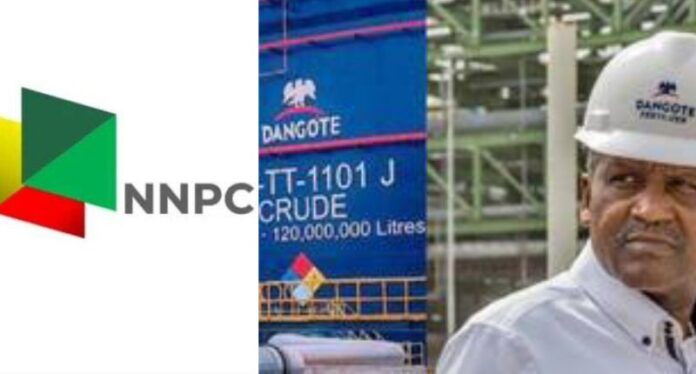
Nigeria's petrol market is entering another price adjustment, and this time the pressure is coming from competition between domestic suppliers.
The Dangote Petroleum Refinery has reduced its petrol gantry price, prompting expectations of lower prices across the country's filling stations. The Nigerian National Petroleum Company Limited (NNPC) has also reportedly reduced its retail price at some outlets, signalling that even the state-owned oil company must respond to changing market conditions.
The latest adjustment has renewed an important question for Nigerian consumers: can competition between domestic refiners, fuel importers and retailers finally make petrol more affordable?
The immediate reductions are relatively modest compared with the financial burden households have faced since the removal of Nigeria's petrol subsidy in May 2023. Yet the developments may reveal something more consequential about the country's changing petroleum market: the emergence of a domestic refining competitor capable of influencing prices across the supply chain.
Dangote's price reduction puts pressure on the market
On November 2, reports emerged that Dangote Refinery had reduced its petrol gantry price by ₦55 per litre, from ₦1,265 to ₦1,210. Some subsequent reports published on November 3 placed the revised price at ₦1,215, illustrating differences in the reported figures.
The reduction followed a decline in the European gasoline benchmark, known as EBOB, which is used as a reference in the refinery's pricing calculations.
The adjustment matters because wholesale prices influence what fuel marketers pay before petrol reaches filling stations. When the cost of acquiring fuel falls, retailers have more room to reduce their pump prices, provided the savings are passed on to consumers.
Independent Petroleum Marketers Association of Nigeria president Abubakar Maigandi said members would reduce their prices after receiving supplies at the new rate. This suggests that the effect of the wholesale reduction may take several days to become visible across the retail market.
NNPC has reportedly reduced its petrol price at some Lagos outlets from ₦1,365 to ₦1,355 per litre. Although a ₦10 reduction offers limited relief, it is significant in the context of a market where retailers are increasingly responding to changes in competing suppliers' prices.
The important distinction is that a reduction at the refinery gate does not automatically translate into an equivalent reduction at the pump. Distribution costs, transportation, retailer margins and the price of existing inventory all influence what motorists ultimately pay.
Why Dangote matters to Nigeria's fuel market
For decades, Nigeria's petroleum market was shaped by a structural contradiction: one of Africa's largest crude oil producers relied heavily on imported refined petroleum products to meet domestic demand.
The country's state-owned refineries struggled to operate consistently, leaving fuel supply exposed to international markets, foreign exchange pressures and import costs.
The Dangote Refinery represents a major change in that arrangement. With a stated capacity of 700,000 barrels per day, it has introduced a large domestic refining operation into a market historically dependent on imported petrol.
Its importance is not simply that Nigeria can refine more fuel at home. It is that domestic production introduces another major supplier into the market, creating the possibility of stronger competition over wholesale prices, supply arrangements and distribution.
When a major supplier reduces its prices, competing marketers face pressure to reconsider their own pricing. NNPC's reported adjustment illustrates how changes in one part of the market can influence decisions elsewhere.
However, competition should not be confused with a guarantee of permanently cheap fuel. The refinery still operates within a market influenced by international crude prices, exchange rates and the cost of securing sufficient crude oil.
In July 2026, Reuters reported that Dangote had begun pricing domestic fuel sales in US dollars, citing difficulties obtaining sufficient crude under Nigeria's naira-for-crude arrangement and rising global oil prices. The development demonstrated how international market conditions can still influence domestic petrol prices, even when the fuel is refined locally.
The end of subsidies changed the rules
The current competition cannot be understood without considering Nigeria's decision to remove petrol subsidies in May 2023.
For years, the government spent substantial public resources keeping pump prices below the full cost of supplying fuel. The arrangement became increasingly expensive and contributed to fiscal pressures, while also creating opportunities for smuggling and other forms of market abuse.
President Bola Tinubu's announcement that the subsidy regime would end fundamentally changed the economics of petrol distribution.
Instead of relying on a government-supported price, consumers became more directly exposed to the cost of importing or refining fuel, exchange-rate movements and distribution expenses.
The consequences were immediate. Petrol prices rose sharply, transport costs increased and the higher cost of moving goods placed additional pressure on household budgets.
The government has since faced the challenge of balancing fiscal reform with the economic hardship experienced by citizens.
In October 2026, the Federal Government announced that NNPC Retail would temporarily forgo its retail profit margin and sell petrol at cost for 30 days. Officials described the arrangement as a commercial decision rather than a restoration of the subsidy.
That initiative was separate from the latest wholesale price reductions. Its temporary nature also illustrates the limits of relying on short-term discounts to address a structural affordability problem.
The central challenge remains how to make the benefits of a market-based petroleum system visible to consumers without returning to the fiscal costs associated with the old subsidy regime.
Will Nigerians actually feel the reduction?
For motorists, the most important measure is not the price announced by a refinery but the amount paid at the filling station.
A ₦55 reduction in wholesale prices does not necessarily mean motorists will immediately save ₦55 per litre. Retailers may still be selling fuel purchased at higher prices, and transportation and operating costs can vary considerably between locations.
This creates a delay between wholesale price adjustments and retail price changes.
There is also a question of how much competition exists across the distribution network. If marketers have access to multiple suppliers and consumers can choose between competing filling stations, retailers have stronger incentives to pass on lower acquisition costs.
But where supply options are limited or distribution costs are high, the savings may not reach consumers as quickly or completely.
The differences in reported petrol prices between Lagos, Abuja and other parts of the country demonstrate why a single national pump price cannot capture the experience of every Nigerian motorist.
For households, the wider economic consequences matter even more. Petrol is not just a product purchased by vehicle owners. It affects the cost of transporting food, operating generators, delivering goods and providing services.
A sustained reduction in fuel prices could therefore help moderate some business and household expenses. However, the scale of that benefit will depend on how substantial and durable the price reductions become.
The risks behind the new competition
Dangote's growing position in the market introduces an important question about the future structure of Nigeria's petroleum industry.
A large domestic refinery can reduce dependence on imported products and improve supply security. But the emergence of a dominant domestic supplier also makes competition policy important.
A market cannot be considered genuinely competitive simply because a major producer occasionally reduces its prices. Consumers need alternative suppliers, transparent pricing, reliable distribution and effective oversight against anti-competitive conduct.
The Nigerian Midstream and Downstream Petroleum Regulatory Authority has a role in overseeing the sector, while the Petroleum Industry Act provides the broader legal framework for market-based pricing and competition.
Nigeria must also address the crude supply challenges facing domestic refiners. If local refineries cannot obtain sufficient crude at commercially sustainable terms, they remain exposed to international procurement costs and foreign exchange movements.
That exposure can eventually feed back into the price consumers pay.
The long-term success of domestic refining will therefore depend not only on refinery capacity but also on reliable crude supply, transparent commercial arrangements, infrastructure and a regulatory environment that allows competing businesses to operate.
Competition is only the beginning
Dangote's latest price reduction and NNPC's reported response offer a glimpse of what a more competitive Nigerian petroleum market could look like.
The developments show that domestic refining can influence the country's fuel pricing system and create pressure for adjustments beyond the refinery itself. But they do not yet demonstrate that Nigerians are entering an era of consistently affordable petrol.
The real test will be whether lower wholesale prices are passed on to motorists, whether competing suppliers continue to constrain one another and whether domestic production can remain resilient when international oil prices and exchange rates move against the market.
Nigeria has spent years trying to resolve the contradiction between its position as an oil-producing country and its dependence on imported refined fuel. The emergence of large-scale domestic refining offers a different path, but the benefits will not be measured by production capacity alone.
They will be measured at the pump, in transport fares, in food prices and in the cost of running a business.
For Nigerians, the question is no longer simply whether Dangote can sell petrol more cheaply than other suppliers. It is whether a market with more domestic refining capacity and genuine competition can deliver lasting savings to the people who ultimately pay for fuel.