Will Netanyahu Be Arrested If He Loses Power? What Happens Next
Benjamin Netanyahu may survive Israel’s political deadlock, but losing power could bring new legal risks. He still faces an unfinished corruption trial in Israel and an ICC arrest warrant over the Gaza war. Leaving office would not automatically mean arrest or prison, but it could weaken some protections and make his legal battles—and international travel—far more complicated.
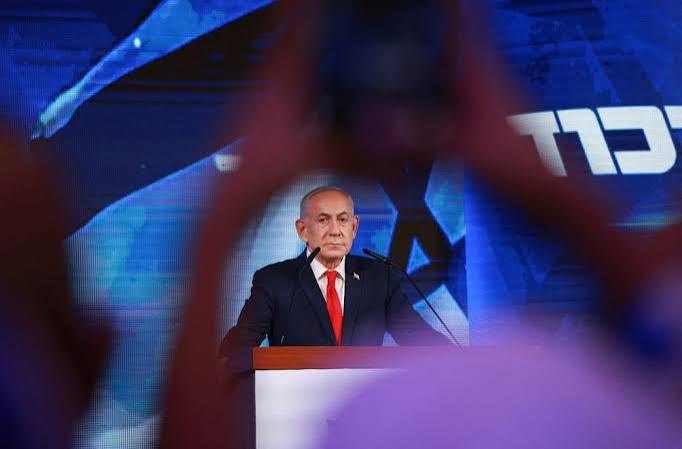
For Benjamin Netanyahu, losing power would mean much more than moving out of the prime minister’s office.
Israel’s longest-serving leader is fighting political and legal battles at the same time.
At home, he remains a defendant in a corruption trial that began more than six years ago.
Abroad, he remains wanted by the International Criminal Court over alleged war crimes and crimes against humanity connected to the war in Gaza.
Netanyahu and Israel strongly reject the ICC allegations and challenge the court’s jurisdiction, while Netanyahu has also denied wrongdoing in his Israeli corruption cases.
That raises an obvious question as Israel enters another period of political uncertainty:
Could Benjamin Netanyahu actually be arrested if he is no longer prime minister?
The short answer is yes, it is possible — but not simply because he loses power.
There is no Israeli law saying that a defeated prime minister is arrested after leaving office.
There are instead two very different legal threats facing Netanyahu, operating in two different legal systems.
Understanding that distinction is the key to understanding what could happen next.
Netanyahu Has Not Actually Lost Power Yet
Israel’s October 27 election did not produce a clear winner.
Final results gave Netanyahu’s bloc 53 seats in the 120-seat Knesset, while the opposition bloc led by former military chief Gadi Eisenkot secured 48.
Arab-led parties won 19 seats.
Neither Netanyahu nor his opponents therefore reached the 61 seats required for a parliamentary majority.
Netanyahu is expected to remain caretaker prime minister while politicians attempt to construct a governing coalition.
The election weakened his previous parliamentary position, but it did not remove him from office.
The real question is what happens if coalition negotiations — now or eventually — produce an Israeli government without Netanyahu.
That is when politics and law could begin to interact in very different ways.
Losing an Election Would Not Automatically Mean Arrest
There is an important misconception surrounding Netanyahu’s legal problems.
Netanyahu does not need to lose power before he can be prosecuted.
He is already being prosecuted.
His criminal trial began in 2020 and concerns three separate cases commonly known as Cases 1000, 2000 and 4000.
Netanyahu faces charges of fraud and breach of trust across the cases, as well as a bribery charge in Case 4000.
He denies wrongdoing.
Netanyahu completed his own testimony in June 2026 after 98 days of hearings spread over roughly 18 months.
The trial has since moved deeper into the defense phase.
There have also been important developments favorable to Netanyahu’s defense.
The judges have repeatedly indicated that they see difficulties with the prosecution’s ability to prove the bribery allegation in Case 4000 and have encouraged prosecutors to reconsider that particular charge.
The prosecution has not withdrawn it.
Even if the bribery charge disappeared, however, Netanyahu would still face fraud and breach-of-trust allegations in Case 4000 as well as the other cases.
So an election defeat would not suddenly begin Netanyahu’s prosecution.
The prosecution is already happening.
Could Netanyahu Go to Prison?
Yes.
But several things would have to happen first.
The court would need to complete the trial.
The judges would then have to convict Netanyahu on at least one charge capable of producing imprisonment.
There would be sentencing proceedings.
Netanyahu would also have appeal rights.
Only after that process could imprisonment become a realistic outcome from the corruption cases.
That means the dramatic scenario sometimes imagined — Netanyahu loses power on Sunday and police arrest him on Monday — is not how the current domestic case would normally work.
Losing office is not itself a crime.
Nor is leaving the premiership a legal trigger for detention.
But losing power could still matter enormously.
Netanyahu Would Face the Same Trial Without the Power of the Prime Minister’s Office
For years, Netanyahu has been simultaneously running Israel and defending himself in court.
That has created an extraordinary overlap between politics and criminal justice.
Court hearings have repeatedly had to accommodate security meetings, wars, diplomatic responsibilities and the schedule of a serving prime minister.
Once Netanyahu is no longer prime minister, many of those complications disappear.
The defendant would remain the same.
The charges would remain the same.
The judges would remain the same.
But Netanyahu would no longer be running the government while standing trial.
That distinction could become politically significant.
A government led by Netanyahu’s opponents would have little incentive to support political or legislative efforts designed to help him escape his legal problems.
And Netanyahu is already seeking another possible route out of the case.
Netanyahu Has Asked for a Presidential Pardon
Netanyahu has sought a presidential pardon even though his trial has not concluded.
That is highly unusual.
Israel’s Justice Ministry Pardons Department concluded in March 2026 that it could not recommend granting the request.
Among the problems identified were that Netanyahu had not yet been convicted and had neither admitted guilt nor expressed remorse.
Discussions about a pardon or negotiated resolution have nevertheless continued.
The issue has become even more politically important following the 2026 election, with reports of possible political arrangements involving Netanyahu’s future and a pardon.
A change of government would not remove the Israeli president’s constitutional pardon powers.
But it could dramatically change the political environment surrounding any attempt to end Netanyahu’s trial without a verdict.
Then There Is the Much Bigger International Problem
Netanyahu’s domestic corruption case is only half of the story.
On November 21, 2024, the International Criminal Court issued an arrest warrant for Benjamin Netanyahu.
The ICC alleges that Netanyahu bears criminal responsibility for alleged war crimes and crimes against humanity connected to Israel’s conduct in Gaza.
The allegations include the war crime of starvation as a method of warfare and crimes against humanity including murder and persecution.
Netanyahu and the Israeli government have rejected the allegations and disputed the ICC’s jurisdiction.
But the warrant has not disappeared.
The ICC currently lists Netanyahu as “at large.”
And this is where losing the premiership could become particularly important.
The ICC Warrant Already Exists
Netanyahu does not need to lose an election for the ICC warrant to become active.
It is already active.
The ICC, however, has no global police force capable of flying into Israel and arresting him.
It depends on governments to execute its warrants.
That creates a strange reality.
Netanyahu can be wanted by one of the world’s most prominent international courts while continuing to serve as prime minister in Jerusalem.
The danger becomes much greater when he travels.
And if he becomes a former prime minister, one of the legal arguments surrounding such travel could become weaker.
The Immunity Question Could Change After Netanyahu Leaves Office
International law traditionally gives certain serving senior officials, including heads of state and heads of government, broad personal immunity from the jurisdiction of foreign national courts.
The legal term is immunity ratione personae.
That has contributed to arguments over whether countries should arrest Netanyahu while he remains Israel’s serving prime minister, particularly because Israel is not a member of the ICC’s Rome Statute.
Some governments and legal experts have taken different positions on how those traditional immunity rules interact with an ICC arrest warrant.
The ICC takes a strong position in the other direction.
Article 27 of the Rome Statute says that official capacity as a head of state or government does not exempt a person from criminal responsibility before the Court.
But the most important point for Netanyahu’s future is simpler.
The special personal immunity associated with being a serving head of government generally does not continue indefinitely after someone leaves office.
That means becoming former Prime Minister Benjamin Netanyahu could remove or weaken one of the most controversial legal arguments surrounding his arrest abroad.
It would not automatically guarantee arrest.
But it could make international travel considerably more dangerous.
Hungary Already Tested the ICC Warrant
We already know this is more than a theoretical debate.
Netanyahu visited Hungary between April 3 and April 6, 2025.
Hungarian authorities did not arrest him.
At the time, Hungary was still legally bound by the Rome Statute despite having announced plans to withdraw from the ICC.
The ICC subsequently found that Hungary had failed to comply with its obligation to cooperate by not provisionally arresting Netanyahu.
The matter was referred to the Assembly of States Parties.
Hungary’s withdrawal from the ICC later took effect in June 2026.
The episode demonstrated both the strength and the weakness of the ICC system.
The Court can issue an arrest warrant.
It can tell member countries that they are required to cooperate.
But it ultimately depends on national governments to physically make the arrest.
Netanyahu Could Face a Very Different World Map
That could leave a former Netanyahu with an unusual problem.
There would effectively be countries he could visit relatively safely and countries where travelling could carry a serious possibility of arrest.
The United States, for example, is not a party to the Rome Statute.
Washington has also strongly opposed the ICC action against Netanyahu.
Israel itself rejects the ICC’s jurisdiction.
Many ICC member countries, however, face a very different legal question.
For Netanyahu, every international trip could therefore require lawyers and diplomats to answer the same question:
Will this country enforce the warrant?
That would be an extraordinary situation for someone who has spent decades meeting presidents and prime ministers around the world.
The former Israeli prime minister could remain a major international political figure while finding parts of the world increasingly difficult to visit.
Would Israel Hand Netanyahu Over to the ICC?
This is much less likely.
Netanyahu’s Israeli political opponents should not automatically be confused with supporters of the ICC case.
Israel is not a member of the Rome Statute and has consistently challenged the ICC’s jurisdiction over Israeli officials.
Those objections extend far beyond Netanyahu’s political coalition.
A future Israeli government could strongly oppose Netanyahu domestically while simultaneously opposing an international court attempting to arrest a former Israeli prime minister.
So even if Netanyahu loses power, the scenario in which Israeli police immediately arrest him and put him on a plane to The Hague remains politically and legally remote.
The more realistic ICC danger comes when Netanyahu leaves Israel.
A Future Israeli Investigation Could Complicate the ICC Case
There is another possibility that receives far less attention.
The ICC is governed by a principle called complementarity.
Put simply, the ICC is supposed to step in when national legal systems are unwilling or genuinely unable to investigate and prosecute crimes falling within its jurisdiction.
A future Israeli government could therefore potentially launch serious domestic investigations into decisions connected to the Gaza war.
If those investigations genuinely covered conduct at the heart of the ICC case, Israel could argue that its own legal system should be allowed to handle the matter.
Netanyahu’s existing corruption trial would not accomplish this.
Cases 1000, 2000 and 4000 concern entirely different allegations.
Any complementarity argument concerning Gaza would require relevant Israeli investigations into the conduct underlying the ICC allegations.
That could create an extraordinary paradox.
An Israeli investigation could potentially strengthen Israel’s argument against ICC intervention while simultaneously exposing Netanyahu to additional scrutiny inside Israel.
October 7 Could Become Another Problem
Then there is the issue that has followed Netanyahu throughout the election campaign: October 7.
The Hamas attack of October 7, 2023 was the worst security failure in Israel’s history.
Netanyahu’s opponents have repeatedly demanded a full independent state commission of inquiry into the failures surrounding the attack.
The question is politically explosive because responsibility could extend across Israel’s military, intelligence services and political leadership.
Netanyahu and his supporters argue that many questions about responsibility should be addressed after the wars and that the security establishment itself bears enormous responsibility.
His opponents argue that Netanyahu cannot oversee a credible investigation into a disaster that happened while he was prime minister.
A government without Netanyahu could establish a commission with broader independence and authority.
That would not mean Netanyahu had committed a crime.
Political responsibility, negligence, strategic failure and criminal liability are very different things.
But such an inquiry could uncover evidence, documents and testimony that have never been publicly examined.
If investigators found evidence suggesting criminal wrongdoing, the consequences could move beyond political accountability.
That makes Netanyahu’s legal future potentially much broader than his current corruption trial.
Israel Has Imprisoned Powerful Leaders Before
There is also an important historical lesson.
Holding Israel’s highest offices does not permanently protect someone from prison.
Former Israeli president Moshe Katsav was convicted of rape and imprisoned.
Former prime minister Ehud Olmert served prison time following corruption convictions.
Netanyahu is therefore not legally untouchable simply because he has dominated Israeli politics for decades.
What makes his situation exceptional is the combination of cases surrounding him.
He is fighting an unfinished domestic corruption trial.
He has sought a presidential pardon.
He faces an outstanding ICC arrest warrant.
He could face greater scrutiny over October 7 under a future government.
And questions surrounding wartime decision-making could continue long after he leaves office.
Few democratic leaders have faced that combination of domestic and international legal exposure while still holding power.
But Netanyahu Would Not Become Powerless Overnight
There is another side to the story.
Losing the premiership would not necessarily mean Netanyahu disappears from Israeli politics.
He could remain a member of the Knesset.
He could remain leader of Likud.
He could become leader of the opposition.
And millions of Israelis could continue to see him as their preferred leader.
Netanyahu could also portray further legal action against him as political persecution by opponents who failed to defeat him decisively at the ballot box.
That narrative has been central to his defense for years.
Losing government power could therefore weaken Netanyahu institutionally while strengthening his ability to present himself politically as a persecuted opposition leader.
His legal problems could become even more intertwined with Israel’s political divisions.
So, Will Netanyahu Be Arrested If He Loses Power?
Not simply because he loses power.
There would be no automatic arrest warrant from an Israeli court waiting for him on his final day as prime minister.
His corruption trial would continue through the normal judicial process.
If he were eventually convicted and sentenced to imprisonment, however, Israel has already demonstrated that even former prime ministers can go to prison.
The international question is different.
The ICC warrant already exists.
Netanyahu is already officially listed by the Court as being at large.
What could change after he leaves office is the legal and diplomatic environment surrounding enforcement of that warrant.
As a former prime minister, arguments connected to the personal immunity of a serving head of government could become considerably weaker.
That could make international travel his most immediate legal vulnerability.
He could remain perfectly free in Jerusalem and yet risk detention after stepping off an aircraft in another capital.
Netanyahu’s Biggest Battle May Come After Politics
Benjamin Netanyahu has built one of the most remarkable political survival stories in modern democratic politics.
He has survived elections, coalition collapses, mass protests, criminal indictments, October 7, the Gaza war, confrontation with Iran and an ICC arrest warrant.
The 2026 election has not ended that story.
His bloc finished with 53 seats — ahead of the opposition bloc but eight short of a governing majority — leaving Israel once again trapped in coalition arithmetic.
Netanyahu may yet find another path to government.
But eventually there will be a day when Benjamin Netanyahu is no longer prime minister.
When that happens, the consequences will extend far beyond Israeli politics.
His corruption trial will still have to reach an ending.
Questions surrounding October 7 may still demand answers.
The debate over accountability for the Gaza war will continue.
And the ICC warrant will still be waiting unless it is withdrawn, cancelled or otherwise legally resolved.
For Netanyahu, therefore, leaving office may not end the most consequential struggle of his career.
It may simply move that struggle from parliament and the battlefield into the courtroom.