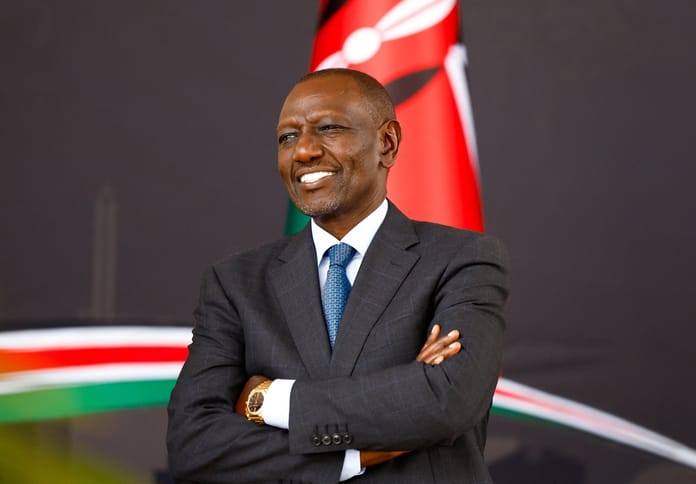
Why Kenyans Keep Rejecting Their Leaders: The Deeper Crisis Behind Kenya's Political Unrest
Kenya’s recurring political discontent is about more than unpopular presidents or election disputes. Persistent economic pressure, corruption concerns, weak public trust and unmet expectations have created a deeper crisis of confidence in political leadership. The protests of recent years reveal a public increasingly demanding that political change produce tangible improvements in everyday life.
A country where political change has not ended public frustration
Kenya has experienced repeated moments of political upheaval, from the struggle for multiparty democracy to the disputed elections and mass demonstrations that have shaped its modern political history. Different leaders have promised reform, economic opportunity and a more accountable government. Yet dissatisfaction has continued to return, sometimes through elections and sometimes through demonstrations that challenge the political system itself.
It is tempting to describe this as a country that is never satisfied with its leaders. But that interpretation misses the central issue. Kenyans are not necessarily rejecting leadership as an idea; many are questioning whether the political system is delivering the results that leaders promise.
The distinction matters. In a democracy, public approval is not supposed to be permanent. Governments are expected to earn trust through performance, accountability and respect for citizens' rights. When people repeatedly feel that their economic circumstances are not improving, or that public institutions are not responding to their concerns, dissatisfaction becomes a recurring feature of political life.
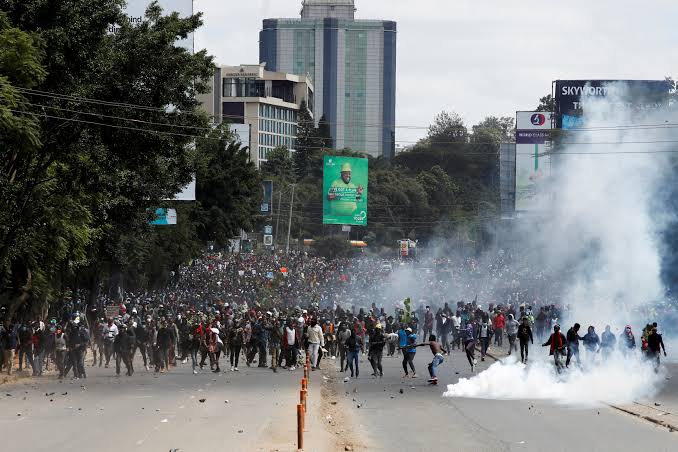
The protests of 2024 and 2025 brought this problem into sharp focus. What began as opposition to proposed tax increases developed into a much wider challenge over public spending, corruption, political accountability and the relationship between citizens and the state.
The economy is where political promises meet everyday reality
Economic pressure is one of the clearest reasons for public frustration. For households, the performance of a government is not measured only by economic growth figures or announcements about investment. It is measured by whether people can afford food, transport, housing, education and healthcare, and whether they can find stable employment.
Afrobarometer's survey findings published in January 2025 illustrate the scale of this dissatisfaction. In its 2024 survey, 62% of respondents said the government was performing fairly or very badly at managing the economy. The figures were even higher for specific concerns: 67% gave the government poor ratings for keeping prices stable, 76% for creating jobs and 75% for improving the living standards of the poor. Some 59% identified poor government economic management as the main reason for the rising cost of living.
These figures do not mean that every economic difficulty is caused by government policy. Kenya, like other economies, faces external pressures, debt obligations and structural challenges that cannot be solved immediately. But they show that many citizens judge the government by the consequences they experience at home, not simply by the explanations offered by officials.
This helps explain why tax policy became such a powerful political flashpoint. The 2024 Finance Bill was presented in the context of the government's need to raise revenue and manage public debt. Supporters of fiscal consolidation could point to the pressure created by borrowing and the cost of servicing debt. But many citizens questioned why households and businesses should carry additional costs while concerns about public waste, corruption and the use of government resources remained unresolved.
The disagreement was therefore about more than taxation. It was also about trust: whether citizens believed the state was managing public money responsibly enough to ask them for more.
The Finance Bill protests exposed a crisis of accountability
The demonstrations against the 2024 Finance Bill became a turning point because they connected economic grievances with a broader demand for political accountability.
Young Kenyans, many organizing through social media and without the traditional structures of political parties, helped turn opposition to the proposed taxes into a nationwide movement. The protests crossed familiar political and ethnic boundaries, bringing together people who did not necessarily share the same political loyalties but had similar concerns about the cost of living, public spending and the country's direction.
On 25 June 2024, protesters entered parliament as lawmakers passed the bill. The scale of the demonstrations forced President William Ruto to announce that he would not sign the Finance Bill into law. He subsequently dismissed his cabinet, although some former ministers later returned to senior government positions.
The immediate reversal demonstrated that public pressure could influence government decisions. But it did not resolve the deeper concerns that had brought people into the streets. For many protesters, withdrawing the bill was only one part of the demand. They also wanted a different approach to public spending, greater transparency, consequences for corruption and a political class more responsive to citizens.
The distinction between a policy concession and institutional reform is important. A government can withdraw a controversial proposal or change its cabinet without changing the systems that shape how public money is spent, how officials are held accountable or how citizens participate in decisions.
That gap helps explain why demonstrations continued in 2025.
Trust in institutions has weakened beyond the presidency
The problem is not limited to the popularity of one president. It extends to the institutions expected to make government accountable.
An Afrobarometer report published in September 2025 found that 45% of Kenyans expressed trust in the president, compared with 72% in 2014. Trust in Parliament stood at 44%, while only 36% expressed trust in the police and the national electoral commission. Confidence in the ruling party had also declined over the decade covered by the survey.
These findings suggest a wider problem of institutional confidence. Elections can change the people holding office, but they cannot by themselves guarantee that institutions will act independently, manage public resources transparently or respond effectively to citizens.
When trust in several institutions declines at the same time, political frustration becomes harder to contain within the normal competition between government and opposition. Citizens may become dissatisfied not only with the people in power but also with the mechanisms through which power is exercised.
This creates a difficult situation for any administration. Even policies that may have a legitimate economic or administrative purpose can face resistance if the public does not trust the institutions implementing them.
Corruption turns economic hardship into a question of fairness
Economic hardship is not only about how much people earn or how much prices rise. It is also about whether citizens believe that the burdens and benefits of the state are distributed fairly.
When people are asked to pay more taxes, they naturally want to know whether public money is being used effectively. If they see reports of extravagant spending, procurement controversies or alleged misuse of public resources, the demand for additional revenue can appear deeply unfair.
This is one reason corruption has remained central to Kenya's political debate. The issue is not simply that corruption costs the government money. It can also weaken the public's willingness to cooperate with government policies, including policies intended to address genuine fiscal problems.
Amnesty International's October 2026 report on protests between 2023 and 2025 describes how economic pressure, public debt, inequality, rising living costs and corruption concerns contributed to demonstrations. The organization also reports that protesters repeatedly raised concerns about public funds being diverted while ordinary people faced higher food and transport costs.
The government's fiscal position and the public's demand for accountability are not mutually exclusive. Kenya needs revenue to finance public services and meet its obligations. But the legitimacy of taxation depends partly on whether citizens can see that public resources are being managed transparently and fairly.
Without that confidence, even necessary economic measures can become politically explosive.
The youth movement changed the language of political opposition
Kenya's Gen Z protests were significant not simply because young people took to the streets, but because they challenged some of the established ways political opposition had traditionally been organized.
For years, political competition in Kenya has often been shaped by party alliances, prominent personalities and ethnic or regional coalitions. The 2024 demonstrations were different in important respects. Many young protesters organized through digital networks, rejected the idea that established political figures should speak for them and focused on specific demands rather than automatically aligning themselves with the government or opposition.
This did not mean that every young Kenyan shared the same views, or that the movement had a single political programme. Nor did it mean that traditional political divisions disappeared. But it showed that a generation could mobilize around common concerns without first being assembled by established party structures.
A 2026 working paper from University College London examining the 2024–2025 protests argues that the movement reflected a deeper frustration with the Kenyan state, rooted not only in immediate economic conditions but also in a longer history of inequality, unemployment, corruption and police brutality. Its research included a survey of 918 young people aged 18 to 28 in Elgeyo-Marakwet and Nandi counties. The authors found that participation in street protests in those rural areas was more limited than the dominant urban narrative might suggest, an important reminder that the movement should not be treated as representative of every young Kenyan.
The research also challenges the assumption that protest necessarily means rejecting electoral democracy. In the surveyed rural communities, young people who had participated in protests were more likely than non-participants to report voting and intending to vote again. That finding suggests that public demonstrations and electoral participation can reinforce each other rather than compete.
The movement's central message was not necessarily that democracy had failed as an idea. It was that citizens wanted the institutions of democracy to work more meaningfully in practice.
The response to protest became part of the crisis
The relationship between citizens and the state is shaped not only by government policy but also by how authorities respond when people object.
The 2024 demonstrations were accompanied by reports of deaths, injuries, arrests and abductions. In 2025, protests continued amid public anger over the death in police custody of blogger Albert Ojwang and wider concerns about police conduct.
Human Rights Watch's World Report 2026 describes continued pressure on protesters, activists and government critics during 2025, including allegations of abductions and excessive force. It also notes the lack of accountability for many abuses associated with the protests.
Amnesty International's October 2026 report similarly documents allegations of arbitrary arrests, unlawful surveillance, abductions and restrictions on civic space during the period it examined.
These are serious allegations and should be assessed through credible investigations and legal processes. But the broader principle is clear: the state's response to public dissent can either help restore confidence or deepen the original grievance.
When citizens believe that peaceful protest may expose them to violence or arbitrary detention, the issue expands beyond the policy they were protesting. It becomes a question about constitutional rights, the rule of law and whether public institutions protect citizens equally.
For a country whose 2010 Constitution places considerable emphasis on public participation and fundamental rights, that question carries particular significance.
Ethnic politics still matters, but it does not explain everything
Kenya's political history cannot be understood without considering the role of ethnicity, regional alliances and patronage. Political parties have frequently been built around influential individuals and electoral coalitions rather than durable ideological programmes. Political appointments and access to state resources have also been recurring sources of political competition.
The Bertelsmann Transformation Index's 2026 Kenya report notes that strong ethnoregional polarization can make consensus-building difficult. It also describes political parties as frequently lacking internal democracy and operating around individual ambitions and ethnic or regional mobilization.
These patterns help explain why political alliances can change quickly and why election campaigns often become contests over who will control the state and its resources.
But the Gen Z protests revealed the limits of explaining every political dispute through ethnic identity. The demonstrations brought together people from different backgrounds around shared economic and governance concerns. Their demands did not erase ethnic politics, but they showed that it is not the only force shaping public opinion.
The challenge for Kenya is therefore twofold: political competition must become less dependent on ethnic bargaining, while public institutions must become more capable of delivering services and accountability regardless of who wins an election.
Why changing leaders has not been enough
Kenya's recurring political dissatisfaction reflects a gap between electoral change and institutional change.
An election can replace a president, bring a new coalition into government or shift the balance of power in Parliament. But many of the problems citizens complain about are not solved simply by changing officeholders. Public debt, unemployment, unequal access to opportunity, corruption, weak accountability and the quality of public services require sustained institutional and economic reforms.
This is also why political promises can lose their force. When citizens hear commitments to create jobs, reduce the cost of living or fight corruption, they eventually judge those commitments against what happens in their own lives. If the gap between promises and experience remains wide, public confidence erodes.
The government also faces real constraints. Kenya must balance debt obligations, revenue collection, public investment and social protection in an economy where resources are limited. There are no easy solutions, and not every policy decision can satisfy every group. But acknowledging those constraints does not remove the government's responsibility to explain its choices, listen to citizens and demonstrate that public resources are being used properly.
The opposition, too, faces a test. Public anger does not automatically translate into a coherent alternative programme. Political movements that mobilize against a government must still explain how they would address the economic and institutional problems they identify.
Kenya's political future depends on rebuilding the relationship between state and citizen
The most important question raised by Kenya's recent unrest is not whether citizens will eventually become satisfied with a particular leader. It is whether the political system can rebuild the trust needed for difficult decisions to be accepted and public institutions to function effectively.
That requires more than public relations campaigns or changes in cabinet personnel. It requires transparent public spending, credible action against corruption, meaningful public participation in fiscal decisions, accountable policing and economic policies that respond to the pressures facing ordinary households.
It also requires political parties to offer more than election alliances. A political system built around personalities and short-term coalitions will struggle to sustain public confidence if citizens do not see clear differences in policy, institutional conduct and accountability.
Kenya's young protesters have made one point difficult to ignore: political legitimacy cannot rest indefinitely on electoral victory alone. Winning an election gives a government the authority to govern, but public confidence must be maintained through performance, transparency and respect for constitutional rights.
Kenyans are not necessarily rejecting their leaders because they expect perfection. They are questioning why political promises so often seem disconnected from everyday experience. Until that gap narrows, dissatisfaction is likely to remain a powerful force in the country's politics.
The deeper crisis is therefore not simply a crisis of leadership popularity. It is a crisis of confidence in whether the state can deliver on the promises of democracy.