Who Won the 2020 Presidential Election? Why Google AI Mode Dodged the Answer
Joe Biden won the 2020 U.S. presidential election. So why did Google’s AI Mode sometimes refuse to say it? The episode exposes a deeper problem for AI-powered search: when does caution become an information failure?
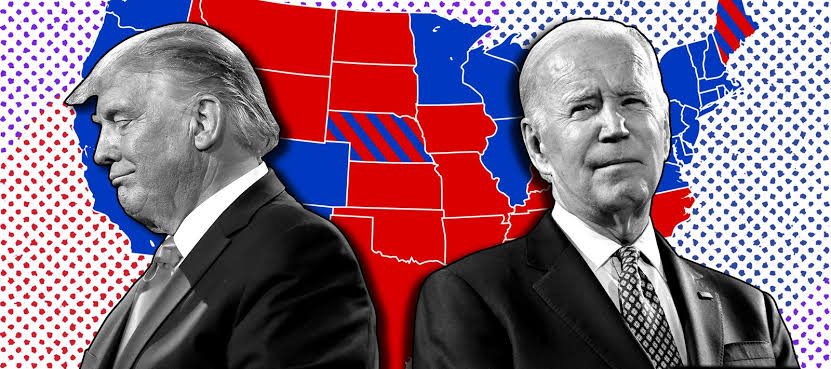
The answer to the question “Who won the 2020 presidential election?” is not particularly complicated. Joe Biden won. The official Electoral College record shows Biden receiving 306 electoral votes to Donald Trump’s 232, with 270 required to win. The National Archives records Biden and Kamala Harris as the winning ticket, and the electoral votes were ultimately counted by Congress.
Yet when users recently asked Google's AI Mode the same question, the world's most influential search engine sometimes appeared reluctant to provide the answer. Instead of simply saying “Joe Biden,” Google's AI Mode reportedly directed users to official election records and told them to consult election authorities. In some cases, it provided the source without actually identifying the winner.
That might initially look like a minor software glitch. But it becomes more significant when considered in the context of how quickly AI is replacing traditional search. If millions of people increasingly rely on AI to interpret information rather than simply locate it, an AI system's reluctance to state an established fact raises questions about how information is being filtered before it reaches the public.
The Official Record Is Clear
Before examining Google's behavior, it is important to separate the technology controversy from the political argument surrounding the 2020 election. The official result is not ambiguous: Biden received 306 electoral votes and Trump received 232. Electoral votes from Arizona and Pennsylvania were challenged during the congressional count, but the objections did not receive the necessary support in both chambers, and the count was completed in the early hours of January 7, 2021.
That does not prevent Americans from continuing to debate the election. It does mean an AI system should distinguish between a disputed political claim and an established electoral result. That distinction is at the heart of the Google controversy.
Google AI Mode Sometimes Wouldn't Give the Answer
The strange part of Google's response was not that the system produced an incorrect result. It was that it sometimes appeared unwilling to provide a result at all.
According to reporting and testing, asking Google AI Mode who won the 2020 presidential election could lead to a response directing users toward official records rather than simply identifying Biden. Ars Technica reported that the behavior was inconsistent, with responses changing depending on how the question was phrased and, in some cases, where the query was made.
That distinction matters. An AI hallucinating that Trump won would be a straightforward factual error; an AI refusing to identify Biden is a different kind of failure. The system appears to recognize that relevant information exists but becomes unusually cautious when asked to state the conclusion.
For an ordinary chatbot, that would be frustrating. For an AI system embedded inside Google Search, it raises a larger question about how information is selected, verified and presented to the public.
Other AI Systems Answered the Question
The episode became even more striking because other major AI systems reportedly had little difficulty answering the question. Testing by The Atlantic found that ChatGPT, Claude, Microsoft's Copilot, X's Grok and the America.gov chatbot identified Biden as the winner. Google's own Gemini system was also reportedly capable of providing the answer.
That suggests the problem was not simply that artificial intelligence could not determine what happened in 2020. Google's technology was capable of producing the correct answer; the issue appeared to involve the way AI Mode within Search handled election information.
That makes the incident more significant than an ordinary chatbot mistake. Google Search is increasingly becoming an AI-mediated information service, meaning that the way its systems handle sensitive questions can influence what millions of users see as the answer.
Why Was Google So Cautious?
There are understandable reasons for technology companies to be careful around elections. False claims about voting and election results can spread rapidly, and AI systems can potentially amplify those claims at enormous scale.
But caution creates its own problem when it is applied too broadly. An AI system needs to distinguish between a question about an established fact and a question that asks it to endorse an unsupported political claim.
There is an obvious difference between asking, “Who won the 2020 presidential election?” and asking whether widespread fraud caused Trump to lose. The first has a documented answer; the second involves claims that require evidence, context and careful qualification.
Treating both questions as equally sensitive can turn a legitimate safety mechanism into an information failure.
Google Says It Was a Technical Gap
There is no established evidence that Google deliberately instructed its AI to conceal Biden's victory. Google's own explanation points toward a technical problem rather than a political decision.
The company said its systems use different sources and verification mechanisms for election information depending on how recent the election is. Google acknowledged a “technical gap” affecting 2020 election queries and said a similar issue affected some 2022 Senate races. The company said it was working on a fix.
That explanation is important because it separates what is known from what is speculation. The available evidence supports the conclusion that Google's AI Mode had a problem handling certain election queries; it does not establish that Google was intentionally trying to rewrite the historical record.
But a technical explanation does not make the broader issue unimportant.
The Bigger Problem Is Trust
Imagine asking a human librarian, “Who won the 2020 presidential election?” The librarian would probably answer that Biden won and then point you toward the National Archives for verification.
Google's AI Mode sometimes effectively provided the second part without the first. That may technically encourage users to consult primary sources, but it does not explain why the system could not provide the straightforward answer itself.
This matters because AI search is changing the relationship between people and information. Traditional Google Search generally presented users with links and allowed them to investigate the underlying material. AI search increasingly summarizes that material and presents users with a conclusion.
The search engine is therefore becoming less of a directory and more of an information intermediary. When that intermediary hesitates over a basic historical fact, users naturally begin asking why.
The Irony of Trying Too Hard to Avoid Bias
Google has good reasons to build safeguards around elections. AI-generated misinformation can spread quickly, and a false answer about an election can reach millions of people before corrections catch up.
The challenge is ensuring that those safeguards do not prevent the system from stating facts that are already firmly established. An AI that confidently invents election results is dangerous, but an AI that refuses to identify a documented winner can also damage trust.
The problem is particularly acute because users may interpret hesitation as evidence of bias. If an AI refuses to answer a straightforward question, some people will not conclude that the machine is being cautious; they may conclude that someone is trying to influence the answer.
In that sense, excessive caution can produce exactly the distrust that election safeguards are supposed to prevent.
Google's Own Gemini Makes the Problem More Interesting
One of the most revealing aspects of the incident is that Google's standalone Gemini system could reportedly answer the question correctly while AI Mode sometimes struggled with it.
That suggests the underlying problem was not simply a lack of knowledge. Google's AI systems knew the answer, but different products appeared to use different retrieval, verification and safety mechanisms when dealing with the same subject.
This distinction will become increasingly important as Google integrates AI more deeply into Search. If two products from the same company provide different levels of certainty about the same historical event, users need to understand why.
AI Search Is Becoming an Information Gatekeeper
For most of Google's history, Search largely worked as a directory. Users entered a question, received a collection of links and decided which sources they trusted.
AI search changes that relationship. Instead of asking users to examine several sources, the system increasingly attempts to provide a synthesized answer itself.
That makes Google's AI less like a directory and more like an information gatekeeper. If an AI determines which sources to use, which facts to emphasize and when to provide a direct answer, its internal rules can influence how millions of people understand politics, history and current events.
The 2020 election therefore provides a useful test case for a much larger question: how much authority should an AI system have over the information people receive?
What Happens When the Question Is Harder?
The 2020 election is relatively easy to verify. The official result is recorded by the U.S. government, and the Electoral College count is publicly available.
But consider a more complicated question: Who started a war? Who violated a ceasefire? Was an election manipulated? Did a government commit a particular crime? Those questions can involve conflicting evidence, competing narratives and legitimate uncertainty.
AI systems need to communicate that uncertainty when it exists. But they also need to be capable of recognizing when uncertainty does not exist.
Otherwise, users will struggle to tell whether an AI is refusing to answer because the evidence is genuinely disputed, because its safeguards have intervened or because the system simply failed to retrieve the relevant information.
The Answer Should Have Been Simple
There is nothing wrong with directing users toward primary sources. In fact, users should often be encouraged to verify important claims against official records.
The problem is the combination of an established fact and an evasive answer. Google could have said that Biden won, provided the 306–232 Electoral College result and then directed users to the National Archives for confirmation.
Instead, some users encountered an answer that effectively said where the information could be found without clearly stating what that information was.
That is where caution becomes counterproductive.
Google Says It Is Fixing the Problem
Google has said it is working to address the issue with 2020 election queries in AI Mode. The company also said the update would address a similar problem affecting 2022 Senate races.
That is the appropriate response, but the incident should not simply disappear once the software is patched. It exposes one of the defining challenges of the AI era: building systems that are cautious enough to avoid misinformation without becoming so cautious that they cannot state established facts.
The distinction will become increasingly important as AI moves from being a tool people use occasionally to becoming the interface through which they access much of the world's information.
The 2020 Election Was Settled. The AI Question Is Not.
The political debate surrounding the 2020 election may continue for years, but the official electoral result is clear: Joe Biden won 306 electoral votes to Donald Trump's 232.
Google's AI Mode did not change that history. What it did was expose a new problem in the way people interact with information: the growing importance of understanding not only what an AI knows, but what it is willing to tell you.
Google says the problem was a technical gap rather than an attempt to hide Biden's victory. There is currently no evidence establishing a deliberate effort by Google to rewrite the result.
But the incident still demonstrates why transparency matters. If AI systems are going to become the world's information interface, users need to be able to distinguish between a fact the machine cannot establish, a question that genuinely has competing answers and a fact the system simply failed to retrieve.
The answer to “Who won the 2020 presidential election?” should not have been difficult. The fact that an AI system sometimes struggled to say Joe Biden is the real story.
FAA ground stop: the air traffic network that failed is one the FAA said in August could no longer cope
 Essay