Will Trump be impeached? What the 2026 midterms do—and do not—change
Democrats are projected to control both chambers of Congress, creating a clearer numerical path to impeaching Donald Trump but not to removing him. Their leadership is prioritising investigations and a separate push against Pete Hegseth, rather than announcing a third presidential impeachment.
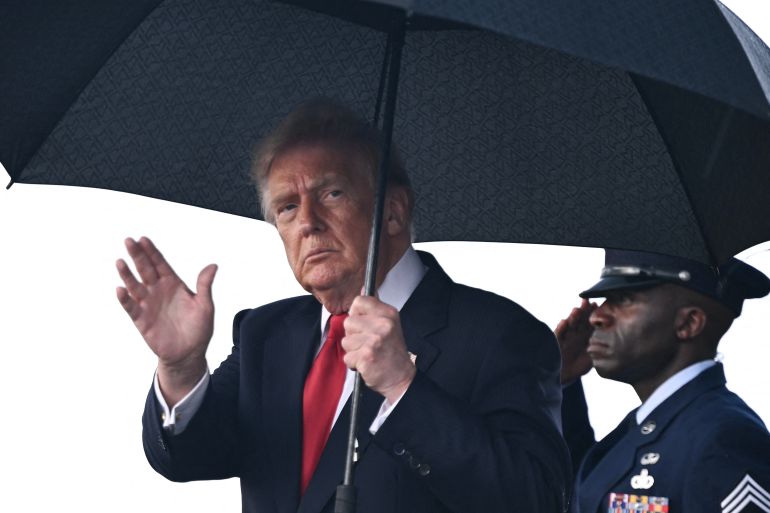
Donald Trump’s impeachment is more feasible after the 3 November midterms, but it is not the announced organising project of the incoming Democratic Congress. As of Sunday, 8 November, the evidence points towards an expanded campaign of oversight—and a specific impeachment fight over Defense Secretary Pete Hegseth—not an agreed timetable for charging the president.
The distinction matters. Winning the House changes the practical ability to advance articles of impeachment. Winning the Senate does not eliminate its much higher conviction threshold. Neither election projections nor an investigation automatically produce a vote to remove a president.
What the midterm numbers allow
CNBC’s Sunday tally put Democrats at at least 254 House seats and 54 Senate seats, with counting continuing. ABC also projected Democratic control of both chambers. These are reported election outcomes and projections, not a claim that every state has certified its results or that the final seat totals are settled.
Republicans still control the outgoing Congress. The new majorities take office in January, when Democrats gain committee gavels and the ability to direct investigations. An election win does not immediately hand incoming chairs control over the current House’s proceedings.
The House can impeach by approving articles through a majority vote. A cohesive Democratic majority would therefore have a numerical route without Republican support. Whether all those members would back particular charges is a separate political question.
The Senate tries the charges. Conviction requires two-thirds of senators present—67 if all 100 attend. On a 54-seat tally, even unanimous Democratic support would require 13 additional votes. The final count can change that arithmetic, but the projected majority is nowhere near a party-line removal threshold.
Articles have been introduced—but not adopted
It would be wrong to say presidential impeachment exists only as speculation. Representative Al Green, a Texas Democrat, introduced H.Res.1486 on 24 August. Congress.gov’s summary describes one article alleging abuse of presidential power through immigration agencies operating in violation of constitutional rights and undermining judicial oversight.
Those are allegations in Green’s resolution, not findings this article establishes. His published appeal to colleagues argues that impeachment is warranted over the administration’s conduct and rejects waiting for a more favourable political moment.
The resolution did not pass. The House clerk’s record shows that on 15 September the chamber voted 232–147, with 47 voting present, to table it. That was a successful motion to set aside the proposal, not a successful impeachment. Nor can the 147 votes against tabling be automatically described as votes to adopt its charges.
The record also shows Democratic disagreement: 18 Democrats backed tabling and 46 voted present. The incoming membership will differ, but those choices warn against treating a Democratic seat total as a ready-made impeachment coalition.
What Democratic leaders are actually saying
After the election, House Democratic leader Hakeem Jeffries said no member of his caucus had approached him about impeachment, according to USA Today’s account of his 4 November remarks. He emphasised affordability and accountability. The Guardian’s Sunday reporting similarly described an agenda centred on legislation and investigations rather than a third Trump impeachment.
That statement about leadership discussions should not be mistaken for a denial that Green and others have pursued presidential impeachment. The legislative record is clear. The relevant distinction is between individual members’ initiatives and a leadership-backed campaign capable of commanding a majority.
Jeffries’s Sunday ABC interview did identify an impeachment he supports: Hegseth’s. He called himself a “hard yes” and said Democrats would discuss the matter when they reconvened on Tuesday. ABC reported that outgoing Republican Representative Thomas Massie intended to reintroduce a privileged resolution against Hegseth as early as Monday.
ABC said that proposal contains eight articles, including an allegation that Hegseth violated the War Powers Resolution. Those are proposed charges against a cabinet official, not adopted articles against Trump. Massie’s participation does not establish a Republican coalition for impeaching the president.
Oversight is not an impeachment inquiry
Democrats’ planned investigations include contracting, business relationships and alleged corruption. The Guardian reported prospective oversight chair Robert Garcia outlining inquiries into Homeland Security contracting and other subjects; CNBC described scrutiny of companies with administration and Trump-family ties.
Plans to demand documents and hear testimony do not themselves constitute a formal presidential impeachment inquiry. They could produce evidence relevant to one, but findings, legal arguments and votes would still be required. The post-election reporting reviewed here contains no announced leadership-backed timetable for a new Trump impeachment inquiry.
The administration is resisting. ABC reported Trump defending Hegseth and saying he intended to keep him. Hegseth called the impeachment effort a political attack. Attorney General Todd Blanche accused Democrats of discussing investigations and impeachments without a factual basis, while warning of possible investigations of lawmakers, according to ABC and CNBC.
Those responses establish a political confrontation, not the merits of either side’s allegations. The constitutional power to investigate is distinct from proving an impeachable offence.
Why impeachment would not settle the presidency
Trump’s earlier cases demonstrate the separation between the two chambers’ decisions. The House impeached him in December 2019 and January 2021; the Senate acquitted him in February 2020 and February 2021. Official Senate records confirm both acquittals. The second trial ended after he had left office.
That history neither guarantees another acquittal nor makes a third impeachment inevitable. It shows why charging an official and securing conviction are different achievements. An impeachment resolution, an inquiry, adopted articles and a Senate trial are stages that should never be collapsed into one headline.
The consequences extend beyond congressional manoeuvring. Investigations can expose how public money and executive authority are used, affect companies dealing with government and reshape policy disputes even without removal. Their legitimacy depends on evidence rather than treating electoral defeat as proof of misconduct.
The developments to watch are therefore concrete: whether leaders back a presidential inquiry, what evidence committees establish, whether a majority supports specific articles and whether senators outside Trump’s opposition accept a case for conviction. The midterms have opened an institutional path. They have not determined whether Congress will take it.
FAA ground stop: the air traffic network that failed is one the FAA said in August could no longer cope
 Essay