The Side of Iran Few Headlines Show: Thousands of Jews Still Live in Its Ancient Jewish Community
When Iran appears in international headlines, the vocabulary is remarkably predictable: Israel, nuclear weapons, missiles, sanctions, the Revolutionary Guards and the possibility of another regional war.
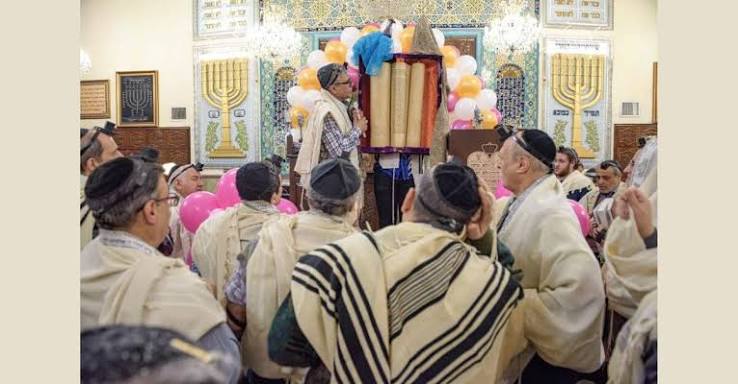
One fact rarely fits comfortably into that picture.
Thousands of Jews still live in Iran.
They worship in synagogues, maintain communal institutions and trace their presence in Persia back more than two millennia. Iran's constitution formally recognizes Judaism, and the country's political system even reserves a seat in parliament for a Jewish representative.
This does not mean that Iran is a model of religious freedom. It certainly does not erase the discrimination and political restrictions faced by minorities under the Islamic Republic. Nor does the continued existence of Iranian Jewry prove that antisemitism is absent from Iranian politics.
But it does expose something that the politics of the Middle East frequently obscures: Iran's conflict with Israel cannot simply be reduced to a conflict between Muslims and Jews.
And that distinction matters.
A Jewish Community Older Than the Modern Conflict
Iranian Jewish history did not begin with the Islamic Republic in 1979, the establishment of Israel in 1948 or even the emergence of modern Zionism.
Jewish communities have lived in Persia for roughly 2,500 years.
Their history stretches back to the ancient Persian empires and the period following the Babylonian exile. Over centuries, Iranian Jews developed their own religious institutions, Persian-language traditions and cultural identity.
Encyclopaedia Iranica describes Persian Jewry as a community that has maintained a continuous presence on Iranian soil for approximately 25 centuries.
That makes the community older than Islam itself, let alone the geopolitical rivalry between Tehran and Jerusalem.
Yet contemporary politics has become so dominant that this much longer history is easily forgotten.
To understand Iran only through its confrontation with Israel is therefore to view a civilization thousands of years old through the narrow window of a conflict that, historically speaking, is very recent.
Iran Opposes Israel. Jews Still Live in Iran.
This is where the story becomes politically uncomfortable.
The Islamic Republic is one of Israel's most determined adversaries. Iranian leaders have spent decades opposing Zionism and supporting armed groups fighting Israel.
At the same time, Judaism is one of the religions formally recognized by the Iranian constitution alongside Christianity and Zoroastrianism. Iran's Jewish community has representation in the Majlis, the country's parliament.
Estimates of the community's current size vary considerably, but contemporary estimates commonly place it somewhere around 8,000 to 15,000 people. Tehran contains the largest concentration, with smaller communities in cities including Shiraz and Isfahan.
Synagogues and other Jewish communal institutions continue to operate.
This creates a reality considerably more complicated than the slogans surrounding the Iran-Israel confrontation.
An Iranian citizen can be Jewish without being Israeli.
An Iranian Jew can identify deeply with Iran while practicing Judaism.
And opposition to the Israeli government or to Zionism is not automatically the same thing as opposition to Judaism — even though political anti-Zionism can, and sometimes does, cross into antisemitism.
Those distinctions disappear surprisingly quickly once geopolitical conflict becomes the dominant narrative.
Why Politics Prefers Simpler Identities
Modern political conflicts work best with easily understood categories.
Iran versus Israel.
Islam versus Judaism.
The Islamic Republic versus the Jewish state.
Those descriptions are powerful because they transform extraordinarily complicated societies into recognizable political camps.
But people rarely fit so neatly inside them.
Iranian Jews demonstrate the problem.
Their existence complicates the idea that Iran and Judaism are natural enemies. At the same time, the restrictions they face complicate any attempt by Tehran to present their existence as proof of complete religious tolerance.
Both realities can be true.
Iran can maintain an ancient Jewish community while operating a political system that privileges Islam and restricts minorities.
Iranian Jews can consider themselves patriotic Iranians while disagreeing among themselves about the Islamic Republic.
Iran can distinguish officially between Judaism and Zionism while government rhetoric and political propaganda sometimes create legitimate concerns about antisemitism.
Reality does not have to choose one narrative.
Politics usually does.
The Revolution Changed Everything
There is another fact that prevents Iran's Jewish population from becoming a simple story of coexistence.
The community used to be dramatically larger.
Before the 1979 Islamic Revolution, Iran had roughly 80,000 to 100,000 Jews according to commonly cited historical estimates.
Most eventually left.
Some migrated to Israel. Others established large Persian Jewish communities in the United States, particularly around Los Angeles and New York.
The departure accelerated amid uncertainty and fear surrounding the revolution. One particularly consequential moment came shortly after the revolution when prominent Jewish businessman Habib Elghanian was executed by the new government.
For many Iranian Jews, it was an unmistakable warning about the direction of the new political order.
So the fact that thousands of Jews remain in Iran should not be romanticized.
The decline from a community numbering around 100,000 to a fraction of that size is itself an important part of the story.
But something equally interesting happened: the community did not disappear.
Some Iranian Jews chose to remain.
Decades later, Jewish religious and communal life continues inside one of Israel's most hostile geopolitical adversaries.
That contradiction deserves more attention than it receives.
Iranian Does Not Automatically Mean Muslim
Part of the misunderstanding comes from another simplification: treating nationality and religion as interchangeable.
Iran is overwhelmingly Muslim, but Iranian civilization has never been exclusively Muslim.
Iran is also home to Christians, Jews and Zoroastrians, as well as other communities whose legal status and treatment differ significantly.
Jewish Iranians are not foreigners temporarily living inside Iran. They are part of Iranian history.
Persian Jewish cuisine, music, language and traditions developed within the same broader civilization as those of their Muslim neighbors.
That historical reality becomes especially important during periods of confrontation between Iran and Israel.
A missile traveling between the two countries cannot distinguish between the neat identities imagined by political rhetoric.
Iranian Jews live in some of the same cities affected by the confrontation.
During recent fighting, a Tehran synagogue was even damaged in an Israeli strike aimed at a nearby Iranian military target — an extraordinary illustration of how complicated the identities on the ground can become.
But Iran's Jewish Community Is Not Completely Free
There is also a danger in taking the argument too far.
The continued presence of Jews in Iran should not be used as evidence that religious minorities experience complete equality under the Islamic Republic.
They do not.
Iranian Jews face legal and political limitations, including restrictions on occupying certain senior state positions. Contact with Israel is particularly dangerous because Iran regards Israel as an enemy state.
The political environment also makes it difficult to determine how freely community representatives can publicly criticize the government.
That means statements of loyalty from Jewish leaders inside Iran have to be interpreted carefully. Some may reflect genuine Iranian patriotism. Others may reflect the realities of living as a small minority inside an authoritarian political system.
Both possibilities have to remain open.
This is precisely why the Iranian Jewish story should not become propaganda for either side.
A Community Caught Between Two Political Narratives
Tehran has an incentive to showcase Iranian Jews.
Their presence allows the Islamic Republic to argue that its confrontation with Israel concerns Zionism rather than Judaism.
Israel and opponents of the Islamic Republic, meanwhile, emphasize the discrimination minorities face and the enormous reduction in Iran's Jewish population since the revolution.
Each side highlights the facts most useful to its political argument.
Neither perspective alone captures the people living between them.
Iranian Jews are not simply evidence in somebody else's geopolitical case.
They are a community.
Some are religious. Some are secular. Some support the Iranian state. Others almost certainly do not. Some have relatives abroad. Some have families whose connection to particular Iranian cities stretches back centuries.
Like every community, they cannot be reduced to one political position.
The Fact on the Ground
Perhaps the most revealing thing about Iran's Jewish community is not what it tells us about Iran.
It is what it tells us about the Middle East.
The region is considerably more complicated than the political identities imposed upon it.
Governments fight governments while communities cross the boundaries those governments create. Religion, nationality, ethnicity and political allegiance overlap without necessarily becoming the same thing.
An Iranian can be Jewish.
A Jew can be Persian.
A critic of Israel can be Jewish.
A critic of the Islamic Republic can still be deeply Iranian.
And a person can oppose the policies of either government without opposing the people living under it.
These distinctions may seem obvious.
During war, they are often the first distinctions to disappear.
Beyond the Headlines
The existence of Iran's ancient Jewish community does not cancel the Islamic Republic's record on minority rights. It does not resolve accusations of antisemitic rhetoric. It does not make the Iran-Israel confrontation less dangerous.
What it does is challenge the temptation to turn an extraordinarily complicated political conflict into a civilizational one.
Governments have enemies.
Civilizations are more complicated.
Long before today's governments existed, Jews lived in Persia. Empires rose and disappeared. Islam arrived. Dynasties changed. Modern states emerged. Revolutions came. Israel was founded. Iran became an Islamic Republic.
Yet a Jewish community remained.
Today, thousands of Iranian Jews continue living inside a country routinely portrayed as the center of an existential struggle between Iran and the Jewish state.
Their existence does not provide an easy political conclusion.
Perhaps that is exactly why it deserves more attention.
Because sometimes the facts that receive the least attention are the ones that make the simple stories hardest to maintain.