Sisi Warns Egypt Cannot Survive Another 2011 as Multiple Crises Converge
Addressing an exhausted domestic public, Egyptian President Abdel Fattah el-Sisi has warned that the state could collapse permanently under a fresh upheaval, framing regional encirclement and economic distress as existential threats.
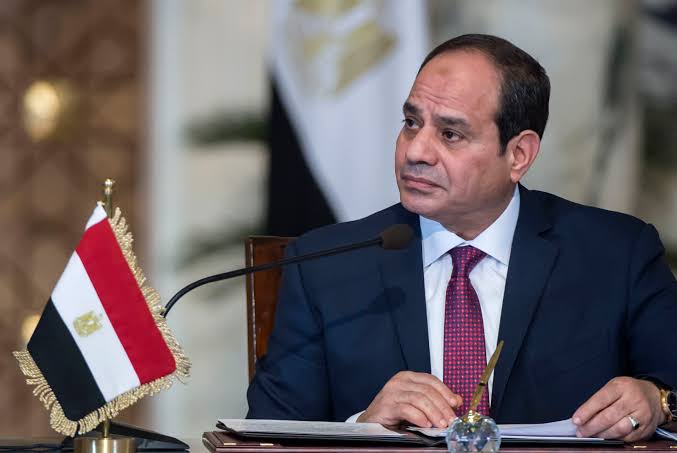
When President Abdel Fattah el-Sisi took the podium in Cairo this October to warn that Egypt could not withstand a repeat of the 2011 revolution, he was not delivering a routine defense of civil order. Speaking against the backdrop of compounding domestic distress and active conflicts on three borders, Sisi presented a stark thesis: Egypt's institutional fabric, worn thin by years of debt and external shocks, lacks the structural reserves that allowed it to survive the fall of Hosni Mubarak fifteen years ago.
The comparison with 2011 is deliberate and revealing. In January 2011, Egypt carried modest external debt, held comfortable foreign reserves, and operated within a relatively quiet regional neighborhood. Today, the arithmetic of the Egyptian state is upside down. Cairo faces soaring external debt obligations, an aggressive currency devaluation cycle, and inflation that has eroded the purchasing power of the middle and working classes. For a state that spends an enormous portion of its budget on debt service and food import subsidies, the margin for absorbing popular upheaval has disappeared.
The geography of encirclement
What makes Sisi's warning striking from an African vantage point is the simultaneous breakdown of security along every strategic corridor leading into Egypt. Historically, Cairo managed its security by projecting influence into its periphery. In late 2026, the periphery has collapsed inward.
To the northeast, the protracted conflict in Gaza has brought Israeli military operations directly to the Rafah corridor and the Philadelphi route. Cairo has resisted Israeli pressure to accommodate displaced Palestinians into the Sinai Peninsula, recognizing that mass displacement would destabilize the treaty framework with Israel and invite armed groups onto Egyptian soil. The crisis has turned Egypt's eastern frontier from a managed security boundary into an active diplomatic and logistical flashpoint.
To the south, Sudan's civil war has dragged on with devastating consequences for the Nile Valley. The disintegration of the Sudanese state has pushed hundreds of thousands of refugees north across the border into southern Egypt, stretching local social services and water infrastructure in Aswan and Cairo. Beyond humanitarian pressures, the collapse of a coherent central authority in Khartoum deprives Egypt of its traditional strategic partner in coordinating Nile basin policy and border interdiction.
At sea, the security architecture has cracked open. Ongoing disruptions to maritime transit through the southern Red Sea and the Bab el-Mandeb strait have forced global shipping companies to divert vessels around the Cape of Good Hope. The casualty has been Egypt's balance of payments. Transit fees from the Suez Canal, once a reliable conduit of hard foreign currency, have dropped precipitously, denying the central bank the liquidity needed to defend the pound and clear import backlogs at Alexandria and Port Said.
Upstream on the Blue Nile, the Grand Ethiopian Renaissance Dam (GERD) presents an unresolved reality. Addis Ababa has completed successive reservoir fillings without a legally binding agreement with Cairo. While catastrophic drought scenarios have not materialized, Egyptian planners remain acutely conscious that upstream control over Nile waters leaves Egypt vulnerable should a prolonged drought cycle hit East Africa. Diplomatic negotiations have yielded no enforceable mechanism, leaving Cairo diplomatically sidelined across the wider Horn of Africa.
Austerity and the eroded social contract
These external shocks intersect with an internal economy that provides little insulation. Under agreements with international financial institutions and Gulf partners, Cairo has implemented sweeping subsidy rollbacks, cutting deep into bread, fuel, and utility allowances. While state-directed infrastructure megaprojects—from the New Administrative Capital to desert reclamation schemes—were intended to project sovereign power and spur domestic employment, they absorbed billions in borrowed capital without generating the export-oriented manufacturing base required to service foreign obligations.
For everyday citizens, the consequences are felt in household budgets. Real wages have plummeted, informal employment has expanded, and access to basic goods depends increasingly on state-rationed channels. In 2011, public anger was fueled by political stagnation and police brutality, but economic survival was not as precarious for as broad a segment of the population as it is now. Sisi's explicit invocation of 2011 reflects an awareness that economic grievance is reaching a critical threshold.
Security warning or regime survival messaging?
The central analytical question is whether Sisi's speech represents an authentic intelligence assessment of state frailty or a calibrated political instrument. The evidence suggests it is both.
As political messaging, invoking the ghost of 2011 serves an established purpose. Since taking power in 2013, Sisi has framed the armed forces as the sole barrier preventing Egypt from following the trajectory of Syria, Libya, or Yemen. Reminding Egyptians of the street violence, economic dislocation, and power vacuums of the post-2011 transition is a potent domestic deterrent. It signals to potential dissenters that any street mobilization will be met with uncompromising force, because the regime regards public mobilization as an existential threat to the state itself.
Abroad, the rhetoric operates as a financial appeal. Cairo's strategic pitch to the European Union, the United States, and Gulf monarchies has long rested on its status as an entity "too big to fail." By projecting an image of a state teetering near the precipice, Cairo reminds international creditors that the alternative to funding Egypt is a sovereign collapse of 110 million people on the Mediterranean basin. The warning reinforces Egypt's bid for emergency loan packages, debt rescheduling, and bilateral aid.
Yet dismissing the speech as mere propaganda ignores the genuine fragility of Egypt's position. The compounding of crises—the loss of Suez receipts, the refugee influx from Sudan, border friction at Gaza, and the loss of leverage over the Blue Nile—has constrained Egypt's policy options. Previous Egyptian administrations managed crises sequentially; the current leadership must confront them concurrently, with exhausted foreign currency reserves and an overstretched domestic security apparatus.
Egypt remains an indispensable actor in African and Middle Eastern diplomacy. But as Sisi's October address acknowledged, that strategic status cannot compensate indefinitely for an exhausted domestic treasury and an unstable periphery. The regime's central project is no longer regional ambition, but the basic preservation of internal solvency.