Missiles Over Riyadh Put Saudi Arabia’s Exit From Yemen to the Test
Renewed Houthi missile and drone strikes against Saudi energy assets and airports threaten to draw Riyadh back into the Yemeni conflict it spent years trying to leave.
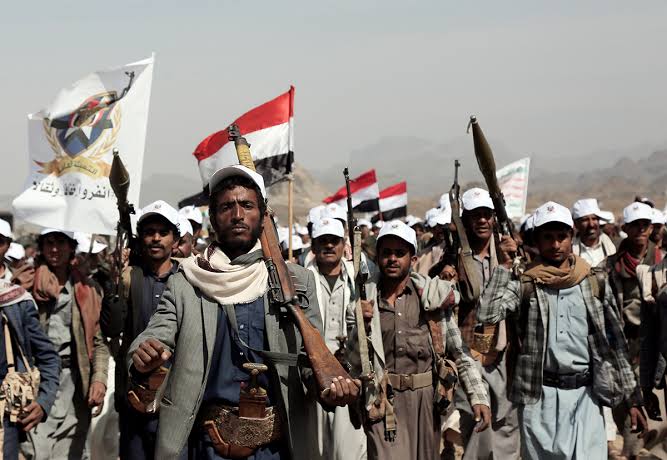
A sharp military escalation between Saudi Arabia and Yemen’s Houthi movement has upended years of fragile de-escalation, after a wave of cross-border missile and drone barrages struck deep inside the kingdom. Official statements and regional wire dispatches from Reuters, the Associated Press, and Agence France-Presse confirm that Houthi projectiles targeted Riyadh alongside civilian airports and strategic energy installations across southern and central provinces. Saudi air defense systems intercepted multiple warheads, while local authorities confirmed fragments damaged ground facilities. In immediate retaliation, Saudi military forces launched targeted airstrikes against launch pads, weapons depots, and military command posts across Houthi-held northern Yemen.
The renewed exchange shatters the prolonged lull that followed direct bilateral talks between Saudi officials and the Houthi movement. That detente had held even as regional hostilities mounted elsewhere across the Middle East. The current escalation unfolds against a wider regional confrontation pulling in Iran, the United States, Israel, Yemen, and the shipping corridors of the Red Sea. For months, the Houthis have leveraged their arsenal to project power outward, framing their strikes as part of an active contest against Israeli and Western assets in regional waters. Bringing Saudi Arabia back into the crosshairs represents a deliberate widening of the battlefield.
Asymmetric Leverage and the Bab el-Mandeb
Houthi military doctrine relies on asymmetric warfare to balance the vast technological and financial advantages of the Saudi state. By deploying low-cost, domestically assembled drones and ballistic missiles against high-value targets, the group inflicts political and financial costs far out of proportion to the expenditure of the strikes. Attacks targeting international airports and oil infrastructure disrupt civilian life, rattle foreign investors, and expose the vulnerabilities of fixed defense systems.
Simultaneously, the movement’s ability to harass maritime traffic near the Bab el-Mandeb strait grants it international leverage. The narrow waterway links the Indian Ocean to the Mediterranean through the Suez Canal, handling a vital share of global trade and petroleum shipments. By demonstrating that they can simultaneously menace maritime traffic in the southern Red Sea and strike industrial hubs in the Saudi heartland, Houthi commanders seek to dictate terms to both regional adversaries and international powers.
Western intelligence reports and Saudi military briefings continue to document Iranian weapons transfers, components, and technical assistance reaching the Houthi movement. Yet describing the group merely as an arm of Tehran obscures its domestic political foundations. The Houthis maintain their own distinct internal priorities, rooted in the political and religious geography of northern Yemen. While Iranian supplies enhance their ballistic and drone arsenals, Houthi leadership retains decision-making autonomy, frequently selecting targets and timing operations to maximize local political consolidation rather than following directives from Tehran.
The Friction Inside Yemen
The border escalation is paired with renewed friction across internal Yemeni front lines. Ground skirmishes have intensified around the contested city of Taiz, where Houthi units face forces loyal to the Saudi-backed, internationally recognized government of Yemen. Taiz remains divided, serving as a primary barometer for whether localized ceasefires can survive cross-border military shocks.
For the internationally recognized government, the renewed Houthi aggression against Saudi territory offers an opening to press Riyadh for renewed military and financial backing. Yemeni government officials have repeatedly warned that leaving the Houthis in control of key ports and northern population centers guarantees permanent instability. If the clashes surrounding Taiz expand into full-scale assaults on neighboring provinces, the domestic fighting could destroy what remains of the political process, forcing external patrons to re-engage on the ground.
Riyadh’s Strategic Calculus
The sudden barrage leaves policymakers in Riyadh facing a difficult dilemma. Under the guidance of Crown Prince Mohammed bin Salman, Saudi Arabia has oriented its domestic and foreign policy around the Vision 2030 modernization program. The multi-trillion-dollar economic transformation depends on attracting foreign direct investment, expanding international tourism, and building vast logistics and industrial infrastructure. Incoming missiles over the capital and air raid sirens at commercial airports directly undermine the perception of Saudi Arabia as a safe, predictable hub for global business.
Yet a large-scale military intervention carries equally severe risks. The Saudi military campaign launched in 2015 produced years of grinding attrition, widespread international condemnation over civilian casualties, and heavy budgetary drains without dislodging the Houthis from Sanaa. Saudi officials spent years pursuing a quiet exit strategy through direct talks, aiming to secure northern border security guarantees in exchange for economic concessions and port access.
Returning to sustained, intensive air operations over Yemen risks locking the kingdom into the exact quagmire it worked to abandon. At the same time, absorbing strikes without a deterrent response invites further attacks against critical energy terminals and urban centers. Riyadh's defense planners must now calculate how to craft a proportionate military response that deters future barrages without scuttling the quiet diplomatic architecture that kept the border relatively calm.
The standoff now turns on whether Saudi Arabia can establish effective deterrence against Houthi missile and drone launches without getting dragged back into the destructive Yemen war it spent years trying to escape.