The Billionaire Who Helped Netanyahu Rise Is Now Turning Against Him
Ronald Lauder, a lifelong patron of Benjamin Netanyahu, has issued a sharp public warning over Israel's direction ahead of the Knesset election.
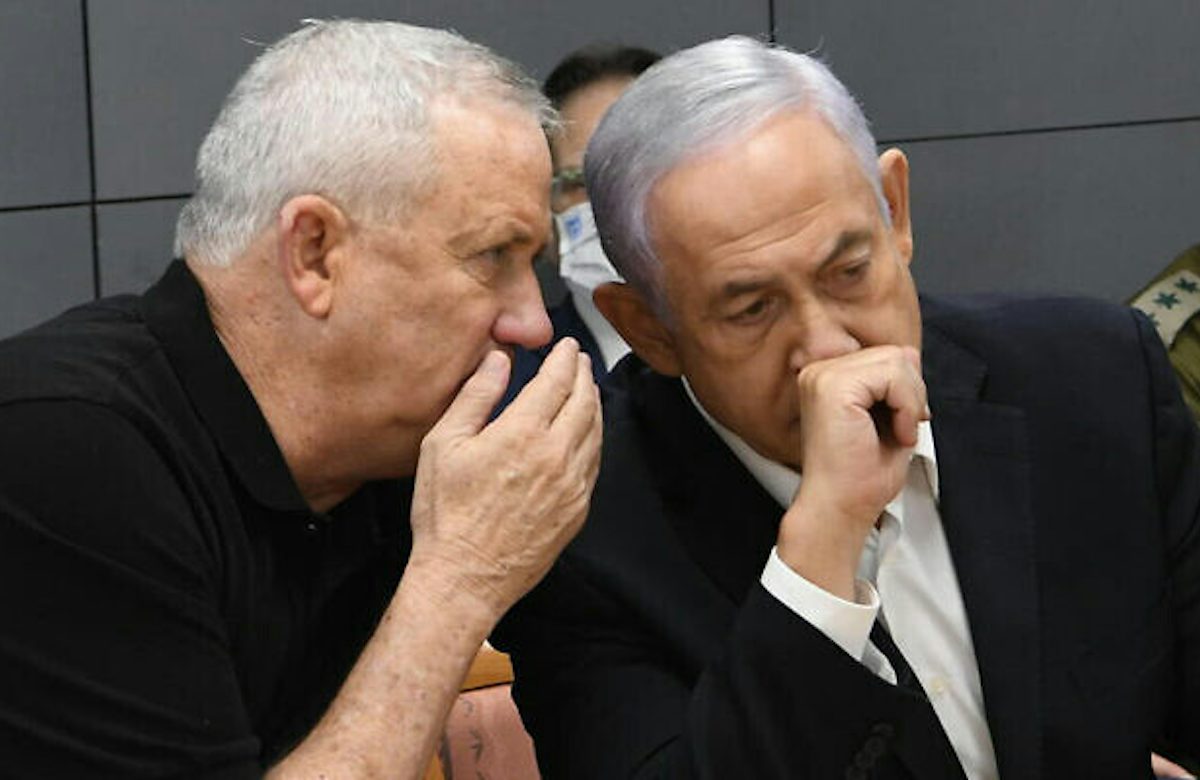
Ronald S. Lauder, the billionaire heir to the Estée Lauder cosmetics fortune, philanthropist, art collector, and a former United States ambassador to Austria, has spent decades as an influential figure in international Jewish affairs. As president of the World Jewish Congress since his election on June 10, 2007, after Edgar Bronfman stepped down, Lauder has regularly met heads of state on behalf of Jewish communities. That institutional office, rather than his immense wealth alone, is why an attack on an Israeli prime minister from him carries significant political weight. Yet it was in a candid interview published by Haaretz on October 22, 2026, that Lauder chose to voice his stark concerns, speaking in a personal capacity rather than through a formal World Jewish Congress resolution.
Lauder's political alignment with Benjamin Netanyahu dates back decades. The two men first met when Netanyahu served as Israel's ambassador to the United Nations in New York between 1984 and 1988. Over the years, a narrative took hold that Lauder had a hand in making Netanyahu prime minister. The Jewish Telegraphic Agency used that exact formulation in an August 14, 2018, headline, and the Tel Aviv Review of Books has detailed how Lauder financed the 1996 campaign and brought in American political consultant Arthur Finkelstein. A New York Times report from May 26, 1996, documented how Finkelstein crafted Netanyahu's advertising strategy, including the memorable line that his opponent, Shimon Peres, would divide Jerusalem. History records that Lauder did not cast the ballots. Netanyahu defeated Peres in the direct election of May 29, 1996, by about one percentage point. That race began with Peres holding a massive lead following the assassination of Yitzhak Rabin, but a wave of suicide bombings in the weeks before the vote damaged Peres, and Finkelstein's messaging campaign proved potent. Lauder's financial patronage and importation of the strategist certainly aided the effort, even if he did not single-handedly produce the victory.
In the October 2026 Haaretz interview conducted by Michael Hauser Tov, Lauder described how close he and Netanyahu once were, talking weekly or daily. He recounted helping Netanyahu with public speaking, introducing him to useful figures including Finkelstein, and hosting a New York farewell event. However, Lauder claimed that the relationship began to cool after Netanyahu married Sara, his third wife. According to Lauder's account to Haaretz, gift requests contributed to the strain, including an instance where he was asked to give twenty-five thousand dollars for Yair Netanyahu's bar mitzvah. Lauder also alleged that he was once left waiting for three hours in a New York hotel lobby while Benjamin and Sara Netanyahu departed through another door. These grievances remain Lauder's own allegations rather than established independent facts.
The deepest political accusations go back even further, predating the current governing coalition. Lauder recounted that in the late 1990s, he shuttled for ten to fifteen months between Israel and Syria with Netanyahu's approval, working directly with Hafez al-Assad on a diplomatic document that the Syrian leader was reportedly ready to sign. According to Lauder, Netanyahu refused to sign unless Ariel Sharon, then a senior minister, signed first. The Times of Israel reported verbatim lines from the Haaretz interview where Lauder stated: "He chose politics over peace. He put his political future before the deal. That's where he lost me. I saw him afterward, but it was never the same. He betrayed me. That's Bibi." Lauder added, "What he did was so outrageous," and "I spent months and months getting this thing together, and he says 'only if you convince Sharon.'" While the secret Lauder channel to Assad in 1998 has been historically reported by outlets like the Jewish Telegraphic Agency, the claim that Netanyahu personally betrayed a finished deal solely for political survival remains Lauder's personal account of motive.
This public break is not unprecedented. In August 2018, Lauder published a column attacking the nation-state law and the nationalist trajectory under Netanyahu. The Jewish Telegraphic Agency covered that intervention at the time, noting that Sheldon Adelson had by then emerged as Netanyahu's more influential patron, operating through the free newspaper Israel Hayom. That historical precedent highlights that elite friction is not entirely new, and Netanyahu has previously outlasted such criticism.
In the October 2026 remarks, Lauder offered scathing assessments of Israel's current political reality. As summarized by The Times of Israel liveblog on October 23, 2026, and echoed by the German daily Jüdische Allgemeine, Lauder declared, "I've been silent for 20 years, 30 years," and warned, "One of the things that made Israel so special compared to other countries is that they had a real democracy. What we're seeing now feels more like a banana republic." He added the blunt prediction: "If Bibi is elected, Israel stands to lose badly." While stating that he is too disgusted with the system to vote—and noting he has no vote in Israel anyway—he suggested that if forced to choose, he would pick Gadi Eisenkot, leader of Yashar. Jüdische Allgemeine quoted Lauder describing Eisenkot as a man who "doesn't know how to tell bullshit. But he is a real person." Lauder also took direct aim at the far-right elements in the current administration, stating: "If Ben Gvir and Smotrich's parties play any role in government in the future, Israel is doomed." Itamar Ben-Gvir serves as national security minister and Bezalel Smotrich as finance minister. Jüdische Allgemeine reported Lauder calling the prime minister "a dictator, a one-man show," blaming him for keeping those figures in the cabinet and asserting that the prime minister must never again seat extremists in government.
On the specific phrasing of his warning to the Israeli public, secondary translations have circulated a paraphrase about fathers fighting and stupidity. However, the precise English line recorded in the Haaretz interview and its photo caption is: "Your fathers and your grandfathers fought for this place, and you lost it because of foolishness." Lauder noted he last spoke to Netanyahu two or three years ago, warning that Israel has lost the confidence of Europe and the diaspora, with the United States relationship causing him particular concern.
These remarks arrive just days before Israel's Knesset election on Tuesday, October 27, 2026, where parties are contesting one hundred and twenty seats. A Times of Israel poll item published on October 22 described Netanyahu and Eisenkot in a dead heat five days out. A Times of Israel headline in the same news cycle, "No one like Bibi," describes supporters whose confidence has not broken. Their argument is that a confrontational coalition is the price of a Knesset majority, and that a New York philanthropist who has sold his Israeli homes does not speak for the electorate. Haaretz reported that Lauder gave his house in Be'er Sheva to the Jewish National Fund and said, "I have no intention of going back to Israel. Zero."
Lauder's practical leverage is limited. He commands no Knesset faction and does not cast a ballot. His influence is purely reputational, rooted in World Jewish Congress access to foreign leaders, donor networks, and the symbolic impact of a former key patron declaring that the political project has curdled. That signal may resonate in Washington and across international Jewish organizational life, but it does not dictate the outcome for Israeli voters heading to the polls.
The office has weight, and it also has a ceiling. Lauder was not speaking through a World Jewish Congress resolution, and nothing in the interview amounts to the Congress expelling or censuring the prime minister. What travels is the name on the door. A man who still sits with foreign leaders as president of that organization, and who can say he helped pay for the 1996 effort, now says the democracy looks damaged and that the far-right partners are fatal to the country. Donor conversations, and Washington's reading of Israeli politics, can move on a signal like that. Knesset arithmetic does not. He is not running Gadi Eisenkot's campaign. He said he is disgusted enough that, even if he held a ballot, he would rather not cast it. The 2018 column is the caution against overreading this one. Elite criticism of Netanyahu has been loud before, Sheldon Adelson had by then become the more important patron, and the prime minister stayed.
There is no reported connection between Lauder and Peter Thiel, and this piece does not invent one. They are worth setting side by side only as two kinds of dissent in the same month. Politico reported on October 21, 2026, that audio from a private lecture Thiel gave in Nashville on October 12 captured him saying of the Iran war, "I'm skeptical of [the war], I think we should not have done it," and "There were a lot of mistakes that were made." He added, "Maybe we don't have the hard power. Maybe we're going to lose the soft power war." The same reporting said he remained supportive of Donald Trump. Thiel was withdrawing confidence from a war and keeping the leader. Lauder is doing the reverse. He is withdrawing confidence from the leader. That is a narrower point than a theory of billionaires in revolt. It asks whether rising foreign-policy risk is now costly enough that old allies will say, in public, that the venture has gone wrong, and whether they are willing to break with the person or only with the policy.
When historical patrons turn against the architects of their past political victories, it signals deep fractures among traditional elites. However, elite quarreling does not automatically translate to a shifting electorate. Lauder engaged in a similar public rupture in 2018, and Netanyahu persevered. The election on October 27, 2026, will test whether Lauder's severe warning connects with a public ready for change, or whether it amounts to another powerful voice discovering he no longer holds sway over the prime minister.