Over 100,000 Protesters Rally in Tel Aviv Days Before Israeli Election, Demanding October 7 Inquiry
Days before Israel’s election, a massive Tel Aviv protest demanded accountability for the October 7 failures, as hostage families called for an independent inquiry and Gadi Eisenkot was hailed as a potential successor to Benjamin Netanyahu.
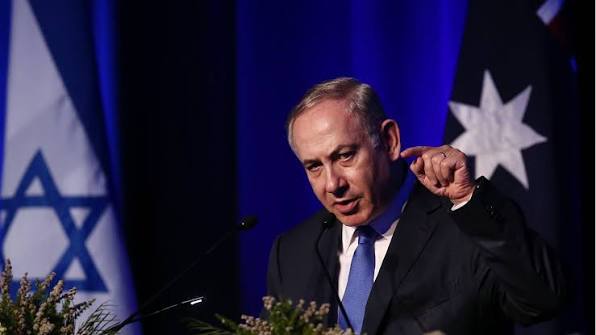
A massive anti-government demonstration filled central Tel Aviv on Saturday night, just three days before Israelis head to the polls in a closely contested election that could determine whether Benjamin Netanyahu remains prime minister.
Organizers said more than 100,000 people attended the demonstration at Tel Aviv's Hostages Square and surrounding streets, although police did not issue an independent estimate of the crowd size.
The rally brought together former hostages, survivors of the October 7, 2023 Hamas attack, bereaved families, opposition politicians and Israelis demanding an independent investigation into the failures that preceded the deadliest attack in Israel's history.
“Whoever evades forming a state commission of inquiry probably has a reason.”
— Elhanan Danino, whose son Ori was kidnapped on October 7 and later killed in captivity
With the election scheduled for October 27, the demonstration also became a powerful display of opposition to Netanyahu's government.
Key Takeaways
Organizers claimed more than 100,000 people attended the Tel Aviv demonstration, though there was no official police estimate confirming that figure.
Families of hostages and October 7 victims demanded a state commission of inquiry into the security and political failures surrounding the attack.
The protest took place just three days before Israel's October 27 election, dramatically raising its political significance.
Netanyahu rival Gadi Eisenkot received an enthusiastic reception, with some protesters chanting that he would be the country's “next prime minister.”
Opposition figures including Yair Lapid, Naftali Bennett, Avigdor Liberman and Yair Golan were also present.
The election is increasingly becoming a judgment not only on Netanyahu's government, but on October 7, accountability and Israel's political direction after years of war.
Families Demand Answers Over October 7
At the heart of the demonstration was one demand: the establishment of an independent state commission of inquiry into the events surrounding October 7.
The rally was organized by the October Council, a group representing survivors, former hostages and families who lost relatives in the attack.
More than three years after Hamas-led militants crossed from Gaza into southern Israel, families continue to demand answers about how Israel's military and intelligence establishment failed to anticipate or stop the assault.
Speakers at Saturday's rally argued that responsibility should extend beyond the military and intelligence services to Israel's political leadership.
Elhanan Danino, whose son Ori Danino was kidnapped on October 7 and later killed in Hamas captivity, accused the government of avoiding a comprehensive investigation.
Other bereaved parents delivered similar messages, arguing that Israelis still do not have a complete accounting of the decisions and failures that led to the disaster.
Eyal Eshel, whose daughter Roni was among the Israeli surveillance soldiers killed at the Nahal Oz military base, told demonstrators that no one had fully accepted responsibility.
For the families, the commission has become about more than establishing a historical record. They argue that understanding what went wrong is necessary to prevent another catastrophic security failure.
Why This Protest Matters
Israel has experienced enormous demonstrations before, including protests over Netanyahu's judicial overhaul and rallies demanding agreements to return hostages from Gaza.
But the timing of this demonstration makes it particularly important.
It came only three days before Israelis vote.
That means anger over October 7 is no longer unfolding separately from electoral politics. Questions surrounding responsibility for the attack are now directly connected to the question of who should govern Israel.
For Netanyahu's opponents, the election offers voters an opportunity to hold the government politically accountable.
For Netanyahu's supporters, the prime minister's record must instead be judged in the wider context of the wars and regional security threats Israel has faced since October 7.
Netanyahu Under Pressure
Netanyahu has resisted demands for the type of independent state commission sought by the protesters.
That dispute has consequently become part of the wider political battle surrounding Tuesday's election.
Netanyahu and his supporters argue that Israel's security failures cannot simply be reduced to decisions made by the government before October 7. His political survival has repeatedly defied predictions during years of war, domestic protests and international pressure.
His opponents, however, say accountability for October 7 should be one of the central questions facing Israeli voters.
The election is therefore becoming about considerably more than traditional party politics.
Israelis are being asked to judge Netanyahu's handling of October 7 and its aftermath, years of war, disputes over the country's judiciary and the broader direction of Israeli democracy.
Gadi Eisenkot Receives a Hero's Welcome
One of the most politically significant moments of Saturday night's demonstration came with the arrival of Gadi Eisenkot, the former chief of staff of the Israel Defense Forces and leader of the centrist Yashar party.
Eisenkot was met with enthusiastic applause.
Some protesters began chanting:
“Who's coming? The next prime minister.”
The reception illustrated Eisenkot's emergence as one of Netanyahu's most prominent challengers ahead of the election.
Unlike many of Netanyahu's previous political opponents, Eisenkot comes to the contest with extensive military credentials. He served as IDF chief of staff from 2015 to 2019 before entering politics.
His personal story has also been shaped by the war that followed October 7. Eisenkot's son, Gal, was killed while serving in Gaza in December 2023.
Eisenkot has made accountability and political leadership central themes of his campaign, presenting himself as an alternative to Netanyahu after years in which Israeli politics has largely revolved around the longtime prime minister.
His appearance at Hostages Square therefore carried considerable symbolism.
A demonstration centered on accountability for October 7 was taking place only days before voters decide whether Netanyahu should remain in power — and part of the crowd openly celebrated a politician seeking to replace him.
Opposition Leaders Unite at the Rally
Eisenkot was not the only opposition figure present.
Other anti-Netanyahu leaders, including Yair Golan, Avigdor Liberman, Naftali Bennett and Yair Lapid, also attended.
Their presence highlighted both the strength and the difficulty facing Netanyahu's opponents.
There is a substantial anti-Netanyahu electorate, but translating that opposition into a governing coalition remains complicated by ideological divisions among Netanyahu's rivals.
Israel's parliamentary system requires a coalition capable of commanding at least 61 seats in the 120-member Knesset.
That means Tuesday's result will not necessarily produce an immediate winner. Even if opposition parties collectively perform strongly, coalition negotiations could ultimately determine who forms the next government.
From Hostage Campaign to Political Reckoning
Hostages Square became one of the defining public spaces in Israel following October 7.
For years, families and supporters gathered there demanding the return of Israelis held captive in Gaza.
Saturday night's gathering demonstrated how that movement has evolved.
The question is no longer solely what happened to the hostages.
It is increasingly about who should be held responsible for October 7, who should investigate the failures and who should govern Israel afterward.
Former hostage Danielle Aloni, who was abducted with her daughter and released after 49 days in captivity, told the crowd that she could not restore what had been taken from her child but could fight for her future.
Bereaved families similarly urged Israelis to use their votes to demand accountability.
For many demonstrators, Tuesday's election represents an opportunity for voters themselves to pass judgment on Israel's leadership.
A Referendum on Netanyahu's Era
Netanyahu has dominated Israeli politics for much of the past three decades and is seeking another term despite one of the most turbulent periods in the country's history.
His supporters continue to view him as an experienced leader capable of navigating Israel through extraordinary security threats.
His opponents see something very different: a political system increasingly centered around one man and a government unwilling to accept sufficient responsibility for the country's worst security failure.
That divide was visible across Tel Aviv on Saturday.
Israeli flags filled Hostages Square. Families carried photographs of relatives killed or kidnapped on October 7. Protesters demanded an investigation. Opposition politicians moved through the crowd.
And when Eisenkot appeared, chants declaring him the country's next prime minister transformed part of the demonstration into something resembling an election rally.
The Bigger Picture
The significance of Saturday's protest goes beyond its crowd size.
More than three years after October 7, Israel is still wrestling with three fundamental questions:
How did October 7 happen?
Who should be held accountable?
And who should lead Israel after it?
The protesters in Tel Aviv offered their answer to the first two questions: they want an independent investigation and political accountability.
On October 27, Israeli voters will answer the third.