UAE’s Nusseibeh trails in UN race as Sudan mercenary findings intensify scrutiny
A New York Times account of a confidential UN report alleging Emirati-linked Colombian mercenaries fought with Sudan’s Rapid Support Forces landed as Lana Nusseibeh finished fourth in a Security Council straw poll. Her candidacy is turning the secretary-general contest into a test of how far Gulf power projection in African wars can be diplomatically insulated.
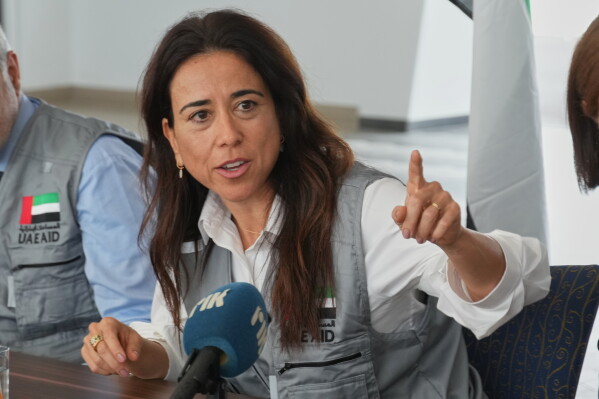
Lana Nusseibeh’s late entry into the race for United Nations secretary-general was meant to break a deadlock. Instead, it has collided with the fiercest international scrutiny yet of alleged Emirati military support for Sudan’s Rapid Support Forces — scrutiny sharpened this week by a New York Times investigation into what United Nations monitors describe as Colombian mercenaries moved into Sudan through networks linked to Abu Dhabi.
In a Security Council straw poll on 5 November 2026, Nusseibeh, the United Arab Emirates’ minister of state and former longtime UN ambassador, received seven “encourage” votes, six “discourage” and two “no opinion,” according to results leaked to PassBlue and confirmed by multiple diplomats speaking to The National. That left her fourth, behind Costa Rica’s Rebeca Grynspan (12-3-0), Argentina’s Rafael Grossi (9-4-2) and Guyana’s Carolyn Rodrigues-Birkett (8-5-2). The same day, Declan Walsh of The New York Times reported that a confidential UN report submitted to the Council the previous week alleged an Abu Dhabi security firm with ties to senior Emirati officials had hired and routed Colombian fighters — nicknamed the “Desert Wolves” in recent coverage — to fight alongside the RSF.
Neither the straw-poll numbers nor the confidential panel findings are officially published. Both, however, are now shaping a contest that was already contested over regional rotation and gender, and that increasingly turns on whether a Gulf power accused — and denying — of fueling one of Africa’s deadliest wars can install one of its top diplomats at the head of the UN system.
What the Times reported — and what remains contested
According to the Times account of the confidential report to the Security Council, UN investigators said Colombian mercenaries were hired by Global Security Services Group (GSSG), an Abu Dhabi-based private security company described as having political, business and familial ties to senior figures in the Emirati ruling family. The report, as summarized by the Times, said the fighters were moved into Sudan via territory controlled by Emirati-aligned actors in Libya and Somalia. A July panel report monitoring the Darfur arms embargo had already asserted, in language quoted by the Times, that “the UAE supported the RSF by providing mercenaries,” and that Colombians had been trained at military bases in Abu Dhabi before deployment — a finding Emirati diplomacy worked to keep from public release, the Times reported, after Bahrain objected at the Council.
Those claims sit atop earlier reporting and rights documentation that should be kept analytically distinct. Human Rights Watch’s May 2026 investigation, “From Bogotá to El Fasher,” concluded that GSSG appeared to have hired Colombian private military contractors who transited UAE military facilities before supporting RSF operations, including around the siege and capture of El Fasher. A UN Human Rights Council fact-finding mission has separately said individuals and entities linked to the UAE played a significant role in networks recruiting, financing, transporting and deploying foreign contractors and military-related support benefiting the RSF, according to summaries cited by PassBlue and Human Rights Watch. The UAE continues to deny providing weapons or other support to either warring party.
What has not been established in open, uncontested form is a public Emirati admission, a Security Council-endorsed finding naming state responsibility in a formal resolution, or a criminal judgment. The latest Times piece rests on a confidential expert report obtained by the newspaper; the UAE told the UN that GSSG had not deployed mercenaries to Sudan or broken Emirati law, the Times reported, and a UAE spokesperson denied supporting any side in the war or seeking to undermine UN investigations.
Nusseibeh’s record and her answer
Nusseibeh, 48, Cambridge-educated and of Palestinian heritage, served as the UAE’s permanent representative in New York from 2013 to 2024 — the first woman in the post — before becoming minister of state for foreign affairs. Abu Dhabi nominated her for secretary-general on 21 October 2026, making her the principal Middle Eastern contender in a field weighted toward Latin America and the Caribbean under an informal rotation expectation.
For critics, the issue is not only Emirati policy but Nusseibeh’s years of categorical denial. In 2024 she told CNN the allegations of arming the RSF were “categorically untrue” and that the UAE delivered humanitarian aid. Human Rights Watch has catalogued similar public statements, including a September 2024 letter to The Economist, and argues she dismissed UN panel “credible allegations” of Emirati military support routed through Chad. Bruno Stagno Ugarte of Human Rights Watch said her candidacy raised questions about whether she would defend the independence of UN investigative mechanisms that expose UAE abuses — a charge she and Abu Dhabi reject.
Campaigning, Nusseibeh has tried to reframe the Sudan file as a test of the next secretary-general’s resolve rather than of Emirati culpability. She has said she took a leave of absence from her ministerial post mindful of independence obligations; that Sudan would be a priority; that RSF atrocities require accountability; and, in an email quoted by the Times, that if UN investigators identified a foreign power fueling the conflict she would “act on it and engage that State.” Sudan’s army-backed authorities oppose her candidacy over alleged Emirati backing for the RSF, Politico reported, a stance covered by The National — while the UAE denies the underlying accusation.
A straw poll that exposes the ceiling
The 5 November ballot was the Council’s eighth informal straw poll in the succession to António Guterres, whose term ends on 31 December. Ballots were undifferentiated, so it is not public whether any of Nusseibeh’s six discourage votes came from a permanent member with a veto. She remains short of the nine encourage votes typically treated as the practical threshold before a formal recommendation, and far behind Grynspan’s widening lead.
That ranking does not by itself prove Sudan decided the outcome. CELAC states have publicly insisted on Latin American–Caribbean rotation; Russia has said it still respects that tradition but could look beyond the region if no nominee commands enough support. Nusseibeh’s seven encourage votes on her first two ballots show she is not a non-factor. They also show she has not converted Gulf diplomatic weight into Council momentum — and that civil-society and media pressure over Sudan arrived before she had time to redefine herself as an independent UN executive rather than Abu Dhabi’s most fluent defender.
Proxy politics, carefully stated
Is the secretary-general race becoming a proxy fight over Gulf roles in African wars? Only partly, and the evidence should not be overstated. The dominant structural contest remains regional rotation and the search for the first woman to lead the UN. What Sudan adds is a legitimacy trap: UN expert panels, a Human Rights Council mission, US Treasury sanctions on Colombian recruitment networks, and now a Times account of a further confidential Council report have made categorical Emirati denial harder to sustain as a campaign posture — even as Abu Dhabi maintains that posture.
For African and European Council members weighing investigate-and-sanction options on Darfur supply lines, elevating a diplomat associated with years of denial would look like institutional self-sabotage. For Gulf partners who see the UAE as a security and investment interlocutor, the same candidacy looks like overdue recognition of Arab diplomatic capacity. Those are competing political readings of the same disputed factual record. They are not, yet, a single organized proxy campaign with published vote instructions — and undifferentiated ballots make such claims impossible to verify.
What the race still has to decide
The material questions ahead are procedural as much as moral. Will the Council return to color-coded ballots that reveal whether permanent members are blocking Grynspan, Grossi or Nusseibeh? Will the confidential mercenary findings be released, diluted or again bottled up? And can any secretary-general — Emirati or otherwise — police external sponsorship of Sudan’s war while the Council itself remains divided over naming sponsors?
Nusseibeh’s bid has already achieved one clarifying effect. It has forced the UN’s leadership contest to confront, in public, the gap between Abu Dhabi’s humanitarian diplomacy and the accumulating investigative record on RSF supply networks. Whether that record is ultimately judged sufficient to disqualify her, or insufficient to overcome Emirati denials, will say as much about the Security Council’s appetite for accountability in Sudan as about one candidate’s résumé.