Netanyahu Says Coalition With Arab Parties Would Be ‘Shameful’
Israel’s inconclusive election has left Arab parties in a potentially decisive position, turning the battle to form the next government into a wider argument over political legitimacy and who gets to determine the country’s leadership.
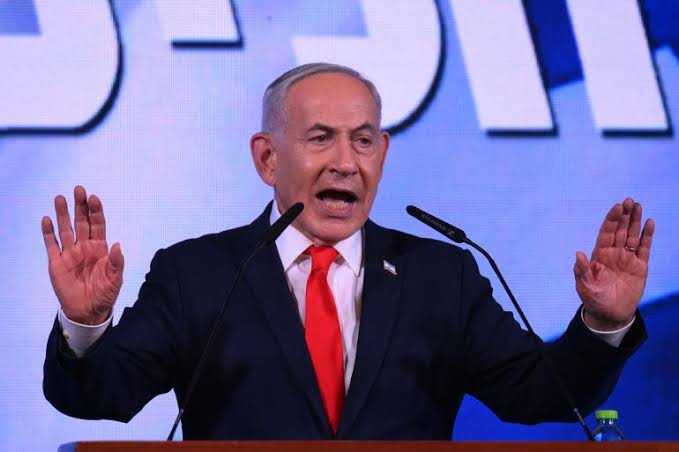
Benjamin Netanyahu has strongly rejected the possibility of forming an Israeli government that depends on Arab parties, calling such an arrangement a “disgrace and a shame” as Israel enters what could become a difficult period of coalition negotiations.
The Israeli prime minister made the remarks after exit polls indicated that neither his right-wing bloc nor the opposition had secured the 61 seats needed for a majority in the 120-seat Knesset. Netanyahu’s Likud remained the largest individual party, but his existing coalition appeared to have fallen short of the numbers required to govern on its own.
That has suddenly made the performance of Israel’s Arab parties particularly important. Palestinian-led parties were projected to make significant gains compared with their representation in the outgoing parliament. If the final results broadly resemble the exit polls, their seats could help determine whether Netanyahu remains prime minister or whether his opponents can construct an alternative government.
“A government dependent on Arab parties would be a disgrace and a shame.”
— Benjamin Netanyahu
Netanyahu Draws a Red Line
Netanyahu is trying to make one possible route to an alternative government politically unacceptable.
In his post-election remarks, he called on Israel’s Jewish and Zionist parties to unite rather than allow the country to be governed with the support of Arab factions he considers hostile to Israel’s identity as a Jewish state.
The issue had already become a major theme during the final hours of campaigning. As Israelis voted, Netanyahu warned supporters about high turnout in Arab communities and encouraged right-wing voters to head to polling stations.
Arab politicians accused him of attempting to frighten Jewish voters by portraying Arab participation in the election as a threat. Netanyahu and his allies argue that their objection is not to Arab citizens voting, but to relying on parties they regard as anti-Zionist to determine the government.
That distinction is likely to become one of the central arguments of the coalition negotiations.
Arab Parties Hold Unexpected Power
The argument is particularly sensitive because Arab citizens make up roughly one-fifth of Israel’s population. They vote in national elections and elect representatives to the same Knesset, but Arab parties have historically remained largely outside the coalitions that govern the country.
That barrier was partially broken in 2021 when Mansour Abbas’s Islamist Ra’am party joined the coalition that removed Netanyahu from power. It was the first time an independent Arab party formally participated in an Israeli governing coalition.
Abbas pursued a deliberately pragmatic strategy. Rather than making the Israeli-Palestinian conflict the sole focus of his political programme, he emphasized problems directly affecting Arab communities, including violent crime, housing, infrastructure and public services.
His decision demonstrated that cooperation between an Arab party and Jewish parties across the political spectrum was possible, even if the coalition itself ultimately proved fragile.
Netanyahu Has Been Here Before
There is also an awkward historical detail for Netanyahu.
Before the 2021 government was created, Netanyahu himself explored cooperation with Abbas while searching for enough parliamentary support to remain in office. Those efforts ultimately failed, and Abbas instead joined Netanyahu’s opponents.
That history gives Netanyahu’s critics an obvious response to his current position: cooperation with an Arab party was not always considered politically unacceptable when Netanyahu himself was searching for a majority.
The circumstances are not identical, however. Israel’s Arab parties differ significantly from one another, and Netanyahu has focused much of his criticism on factions he describes as fundamentally opposed to Zionism and Israel’s character as a Jewish state.
Still, the history makes his declaration that reliance on Arab parties would be “shameful” politically significant.
The Opposition Faces Its Own Dilemma
For Netanyahu’s opponents, the problem is more complicated than simply pointing to his previous dealings with Abbas.
Building an alternative government with Arab support would require overcoming political divisions that extend well beyond Netanyahu. Many Jewish opposition politicians have also been reluctant to depend on Arab parties.
Differences over the Israeli-Palestinian conflict, national security and the definition of Israel as a Jewish state have historically made such alliances extremely difficult.
Ra’am would probably be the easiest Arab faction for mainstream Jewish parties to work with because Abbas has already demonstrated a willingness to compromise with parties from very different ideological backgrounds.
Other Arab factions would present a considerably greater challenge.
Formal coalition membership is not the only possibility. Arab lawmakers could potentially support a minority government from outside the coalition, providing enough parliamentary votes to prevent Netanyahu from returning to power without taking cabinet positions themselves.
Such an arrangement would solve one problem while creating another: Netanyahu could still argue that the government survived only because of Arab political support.
More Than Coalition Mathematics
That is why Netanyahu’s choice of words matters beyond the immediate battle for 61 seats.
The election is raising a larger question about the place of Arab citizens within Israeli politics.
If Arab citizens participate in an election and elect enough lawmakers to determine who commands a parliamentary majority, should Jewish political parties be willing to rely on those representatives to form a government?
Netanyahu and his allies say the issue is ideological rather than ethnic. Their argument is that certain Arab parties reject fundamental elements of the Zionist project and therefore should not hold decisive influence over a government committed to maintaining Israel as a Jewish state.
His critics see the issue differently. They argue that repeatedly portraying Arab turnout or Arab parliamentary influence as dangerous effectively creates two categories of voters: those whose political power is considered legitimate and those whose influence becomes controversial when it determines who governs.
For Israel’s Arab citizens, the distinction is consequential. Their votes count toward the composition of parliament, but their representatives have historically had far less influence over the governments produced by those elections.
The Real Battle Starts After Election Day
The final results could still change the calculations. A movement of only a few seats can significantly alter the possible coalitions, and Israeli governments are rarely assembled immediately after election night.
Negotiations could continue for weeks as party leaders attempt to construct a majority.
But the election has already produced an uncomfortable political reality.
Netanyahu’s bloc may not have enough seats to govern alone. His opponents may not have enough seats to replace him without some form of Arab support. And the stronger the Arab parties become, the harder it becomes for the rest of Israel’s political system to avoid the question of what role they should play.
Netanyahu has offered his answer clearly: a government dependent on those parties would be unacceptable.
His opponents must now decide whether they agree.
The struggle to form Israel’s next government may therefore become about something larger than Netanyahu’s political survival. Arab citizens have participated in the election and may have elected enough representatives to influence who becomes prime minister.
The coming coalition negotiations will determine whether that electoral power translates into political power — or whether one of the deepest dividing lines in Israeli politics remains firmly in place.