Melat Kiros: The Ethiopian-Born Immigrant Who Defeated Washington's Political Establishment
Melat Kiros has gone from political newcomer to a seat in the US House of Representatives. Her victory marks a generational milestone, but the more consequential part of her journey came when she defeated a congresswoman who had held office for nearly three decades. Her rise reflects a changing Democratic Party and a growing challenge to the political establishment from its progressive wing.
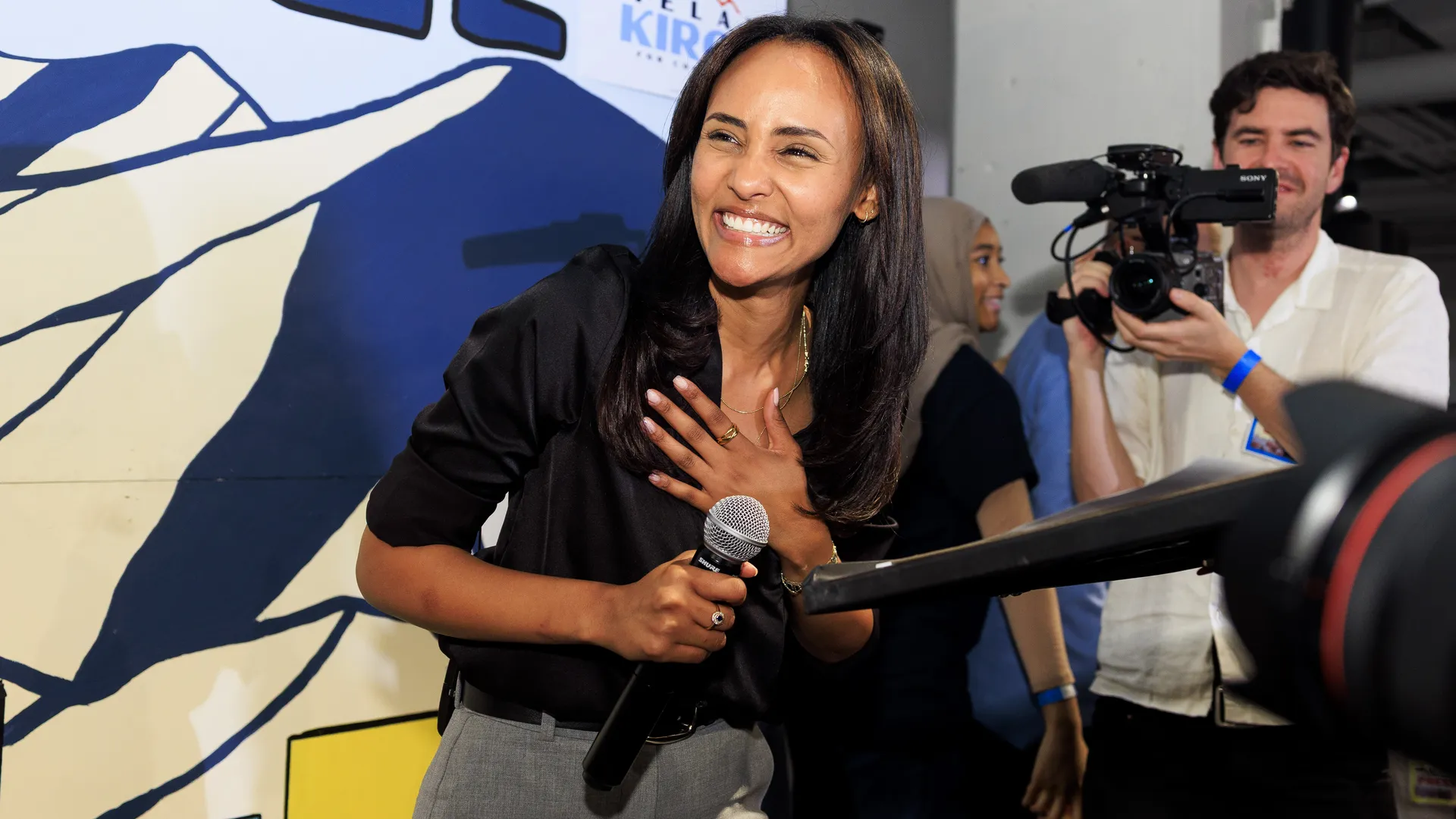
For nearly three decades, voters in Denver sent the same representative to Washington. Diana DeGette had become a fixture of Colorado's congressional politics, representing the state's 1st Congressional District since 1997. Her seniority brought influence, experience and a degree of political security that few challengers could seriously threaten.
Then came Melat Kiros.
At 29, with no previous experience holding elected office, Kiros challenged DeGette in the Democratic primary and defeated her. On November 3, she completed her political ascent by winning the general election, securing a seat in the US House of Representatives.
Her victory makes her the first Gen Z woman elected to Congress and, according to her campaign, the first Black woman from Colorado elected to the US House.
It is an extraordinary personal achievement. But the significance of Kiros's election extends beyond her age or Ethiopian background. Her rise offers a revealing look at the political tensions reshaping the Democratic Party, particularly the growing impatience among some voters with established politicians, corporate influence and a political system they believe has become increasingly disconnected from ordinary people.
From Ethiopia to the American political system
Kiros's story begins with an immigration journey familiar to thousands of Ethiopian families.
Born in Ethiopia, she moved to the United States with her family as an infant in 1998 after her father was selected through the US Diversity Visa Lottery. They eventually settled in Colorado, where her parents worked to establish themselves in a country that offered opportunity but demanded considerable sacrifice.
Her upbringing in an immigrant household would become part of the background to her political identity. Her family experienced the challenges of starting over, building financial security and navigating American society as newcomers.
Kiros pursued an education that eventually took her into the legal profession. She graduated from Washington College in 2018 with degrees in political science and economics before earning her law degree from the University of Notre Dame in 2022.
She subsequently worked as an attorney in New York, including at the prominent law firm Sidley Austin.
On paper, her professional trajectory was a familiar route into the American establishment: elite education, corporate law and the prospect of a successful career in a highly competitive profession.
But her experience in the legal world would take an unexpected turn.
The controversy that changed her trajectory
Kiros became increasingly involved in political debates surrounding Israel's war in Gaza and the treatment of university students protesting against it.
In 2023, she wrote an open letter defending student protesters and criticising the response of major American law firms to their activism. Her position placed her at odds with powerful professional interests. She subsequently lost her position at a law firm.
The episode became an important part of her public story. Rather than retreating from political engagement, she moved further towards activism and public policy.
Her experience also helped shape the issues that would later define her campaign: corporate power, political accountability, civil liberties, immigration and American foreign policy.
Kiros eventually pursued doctoral studies in public policy and became involved in progressive organising. She increasingly argued that many of America's most persistent social problems were not caused by a lack of available solutions but by a political system unwilling to implement them.
That argument would become the foundation of her congressional campaign.
How a political newcomer defeated a 30-year incumbent
Kiros's most significant electoral achievement came on June 30, when she defeated Diana DeGette in the Democratic primary.
DeGette was not an ordinary incumbent. She had represented the district since 1997, building a long congressional career and establishing herself as an influential figure in the Democratic Party.
Her experience was also central to her argument for re-election. She presented herself as a seasoned legislator capable of navigating Washington and advancing Democratic priorities.
Kiros offered a different proposition.
Her campaign challenged the influence of corporate money in politics and argued that seniority had become an inadequate measure of political effectiveness. She accused established politicians of becoming too comfortable with a system that rewarded access to wealthy donors while leaving working families struggling with housing costs, healthcare expenses and stagnant economic opportunities.
The contrast was deliberate. DeGette represented institutional experience; Kiros presented herself as an alternative to the political arrangements that had sustained it.
The result was decisive. Kiros received approximately 53.2 percent of the vote, compared with DeGette's 39.8 percent. The third candidate, Wanda James, received approximately 7 percent.
The defeat was significant not simply because a young candidate had unseated an experienced politician. It demonstrated that a long record in Congress could not guarantee continued support from voters when a challenger successfully turned dissatisfaction with the political establishment into an organised electoral campaign.
The race also attracted outside spending and considerable attention from progressive organisations. Kiros's campaign argued that its grassroots organising could overcome the financial and institutional advantages enjoyed by established political figures.
Her victory became another example of the growing influence of the Democratic Party's progressive wing, which has increasingly sought to replace long-serving incumbents with candidates advocating more ambitious economic and social policies.
What does Melat Kiros actually believe?
Kiros identifies with democratic socialism, a political tradition that advocates a stronger public role in addressing economic inequality and providing essential services.
Her programme challenges the assumption that healthcare, housing and childcare should be left primarily to market forces.
Among her central proposals is Medicare for All, a single-payer healthcare system that would expand public responsibility for healthcare financing. She also supports universal childcare, housing policies designed to address homelessness and unaffordability, and stronger measures against corporate monopolies.
Her criticism of corporate influence extends into the electoral system itself. She has argued that campaign financing and lobbying allow wealthy interests to exercise disproportionate influence over public policy.
Immigration is another central issue. Kiros has called for abolishing Immigration and Customs Enforcement, or ICE, reflecting her broader opposition to the current US immigration enforcement system.
These positions place her to the left of many established Democratic lawmakers. They also raise practical questions about the cost, political feasibility and legislative support required to implement them.
Medicare for All, for example, would require a major restructuring of American healthcare financing. Abolishing ICE would involve difficult legislative and institutional questions about the future of immigration enforcement.
Her election gives her a national platform, but it does not automatically provide the congressional support needed to turn these proposals into law.
Gaza and the divisions within the Democratic Party
Kiros's position on Israel and Palestine has been among the most contentious aspects of her political identity.
She has strongly criticised Israel's military campaign in Gaza, described its actions as genocide and called for an end to American military support. She has also defended Palestinian rights and opposed Zionism.
Her position has attracted support from progressive activists and voters who believe Washington has been unwilling to hold Israel accountable for its actions.
It has also generated serious criticism. Some Jewish community leaders have described her opposition to Israel as a Jewish state as antisemitic. Kiros rejects that characterisation and identifies herself as an anti-Zionist.
The distinction is politically significant. Opposition to the policies of an Israeli government, opposition to Zionism and antisemitism are related in public debate but are not interchangeable concepts. Their boundaries are fiercely contested, particularly within American politics.
The disagreement also exposes a growing divide within the Democratic Party. Its traditional leadership has generally maintained strong support for the US-Israel relationship, while a younger progressive constituency has increasingly demanded a fundamental change in American policy.
Kiros's position places her firmly within that debate. Her election suggests that voters in her district were willing to send a representative to Washington whose foreign policy views differ sharply from those of much of the party's traditional leadership.
An Ethiopian-born politician in a changing America
For Ethiopians, Kiros's election carries an additional significance.
Her family arrived in the United States through a programme designed to diversify American immigration. Nearly three decades later, their daughter has secured a place in the institution responsible for making the country's laws.
It is a striking illustration of how immigration can reshape the political composition of a country over generations.
The United States has long been influenced by successive waves of immigrants, many of whom initially arrived with limited financial resources and little political influence. Their children and grandchildren have gradually entered professions, public institutions and elected office.
Kiros's achievement belongs to that broader history.
But her Ethiopian background should not obscure the political character of her victory. She did not win simply because she was an immigrant or because her story was inspirational. She won through a campaign built around a particular set of political arguments, an organised coalition of supporters and a direct challenge to an established Democratic politician.
Nor should her election be interpreted as evidence that Ethiopian Americans share a common political outlook. Her positions represent her own political convictions and the electorate that chose her.
Nevertheless, her presence in Congress will give an Ethiopian-born American a voice in debates that extend far beyond Colorado, from immigration and economic inequality to America's role in international conflicts.
The difficult part begins in Washington
Kiros's election has established her as one of the most prominent new faces of the Democratic Party's progressive movement. But defeating an incumbent and governing within Congress are very different challenges.
The American legislative system is built around competing interests, committee structures, party negotiations and the need to secure votes from lawmakers with different priorities.
Even proposals supported by a majority of voters can struggle to become law when they encounter institutional resistance, budgetary constraints or opposition from powerful interest groups.
Kiros will also have to navigate the divisions within her own party. Democrats who share her concerns about inequality may disagree with her positions on healthcare financing, immigration enforcement or foreign policy.
Her effectiveness will ultimately depend on whether she can build relationships, negotiate legislation and turn the political energy behind her campaign into tangible results.
There is also a question of what happens when the appeal of challenging the establishment meets the responsibilities of becoming part of it. Kiros campaigned against political arrangements that she believes have failed ordinary Americans. Once in Congress, she will have to demonstrate that she can do more than identify those failures.
That is the challenge facing a new generation of progressive politicians entering Washington.
More than an immigrant success story
Melat Kiros's journey from Ethiopia to the US Congress is an important story of immigration and political representation. But its significance lies in more than the distance between Addis Ababa and Washington.
Her rise exposes a deeper tension in American democracy: the growing disagreement over who political institutions serve and whether established politicians remain capable of representing a changing electorate.
Diana DeGette's defeat showed that experience and seniority can become political liabilities when voters believe their representatives have lost touch with the concerns that brought them into office. Kiros's subsequent general-election victory has now carried that challenge into Congress.
For the Democratic Party, her arrival presents both an opportunity and a complication. The progressive movement has demonstrated that it can defeat established figures in Democratic primaries. Whether it can translate that electoral strength into lasting influence over national policy remains an open question.
For Ethiopians and the wider African diaspora, her election offers a reminder that the children of immigrants can become participants in the political institutions of the countries their families chose to call home.
But the real test of Kiros's political legacy will not be where she was born, how old she is or whom she defeated.
It will be what she does with the power she has been given.
FAA ground stop: the air traffic network that failed is one the FAA said in August could no longer cope
 Essay