Martin Luther King Jr.: Why America Rejected Him Alive but Celebrated Him After His Death
Martin Luther King Jr. was celebrated for fighting racial segregation, but his opposition to the Vietnam War and growing focus on economic inequality made him increasingly unpopular. His assassination transformed his public image, turning a controversial activist into one of America's most revered historical figures.
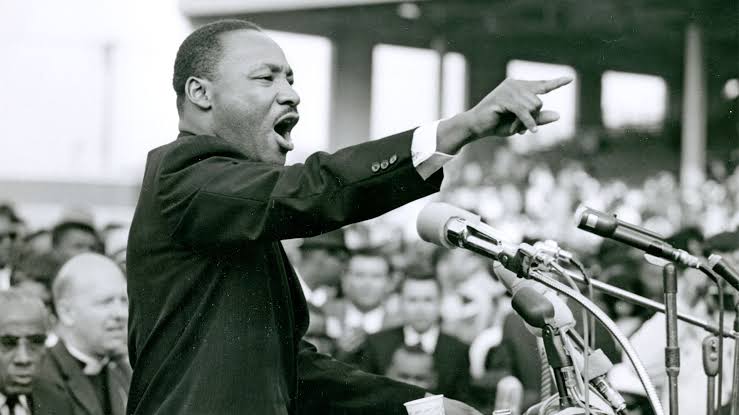
Martin Luther King Jr. is remembered today as one of America's greatest civil rights leaders. His speeches are taught in schools, his birthday is a national holiday, and his image has become synonymous with racial equality, nonviolence and the American promise of freedom. Yet the country that celebrates him today was far less welcoming when he was alive. In the final years of his life, King had become a deeply controversial figure, with his criticism of the Vietnam War, American foreign policy and economic inequality alienating significant sections of the public.
His assassination on April 4, 1968, transformed his place in American history. A leader whose political influence was facing serious challenges became a national symbol whose reputation would grow dramatically over the following decades. That transformation raises a difficult question: did America come to embrace Martin Luther King Jr. only after his death made it easier to celebrate his message?
The uncomfortable numbers behind King's popularity
The modern image of King can make it difficult to understand how unpopular he had become among significant sections of the American public during his lifetime. His historic 1963 "I Have a Dream" speech made him internationally recognizable, and he received the Nobel Peace Prize in 1964. Nevertheless, his popularity never translated into universal public support.
According to Gallup polling, approximately 41% of Americans viewed King favorably in May 1963. By August 1966, that figure had fallen to 33%, while 63% viewed him unfavorably.
A separate Harris poll in early 1968 found that nearly 75% of Americans disapproved of King. Although the surveys used different methodologies, both illustrate how controversial he had become.
The numbers also conceal important racial differences. Black Americans were substantially more supportive of King than white Americans. In May 1963, 92% of Black respondents in a Gallup survey viewed him favorably, compared with 35% of white respondents.
King was therefore not simply losing popularity across the country. His support was divided along racial and political lines, reflecting the resistance he faced as he challenged the existing racial order.
When King became more than a civil rights leader
One reason King's popularity declined was that his political ambitions expanded beyond the traditional boundaries of the civil rights movement.
During the early 1960s, his central objective was to dismantle legally enforced racial segregation and secure voting rights for Black Americans. The Civil Rights Act of 1964 and the Voting Rights Act of 1965 represented major victories for that struggle.
But King increasingly argued that ending segregation was not enough. Legal equality meant little to Americans who remained trapped in poverty, unemployment, inadequate housing and unequal economic opportunities.
He began directing more attention toward the economic structures that kept millions of Americans poor, regardless of their race. This brought him into conflict with political interests that had previously been willing to support parts of the civil rights agenda.
His 1966 Chicago campaign demonstrated the difficulty of taking the movement beyond the American South. King confronted housing discrimination, segregated neighborhoods and employment inequalities in a northern city where racial segregation was maintained through different mechanisms.
The campaign exposed a reality that challenged the comfortable national narrative: racial inequality was not exclusively a Southern problem.
The Vietnam War cost him political support
Perhaps the most consequential change in King's political position was his increasingly public opposition to the Vietnam War.
On April 4, 1967, at New York's Riverside Church, King delivered his famous "Beyond Vietnam" speech. He condemned American military involvement and argued that the resources being spent on war were desperately needed to address poverty and social deprivation at home.
His argument connected foreign policy with domestic inequality. He questioned how a government could claim to defend freedom abroad while millions of its own citizens lacked basic economic opportunities.
This position created a serious political problem.
President Lyndon B. Johnson had played an important role in advancing civil rights legislation, and King had previously maintained a complicated working relationship with his administration. His public criticism of the war threatened that relationship.
Some civil rights leaders also worried that opposing the war would weaken the movement by alienating political allies and diverting attention from racial equality.
The criticism was not limited to politicians. Major newspapers questioned his decision to combine civil rights activism with opposition to American foreign policy.
King nevertheless continued to argue that racism, poverty and militarism were interconnected problems rather than separate political issues.
His position was particularly uncomfortable for Americans who supported the war or believed that civil rights leaders should concentrate exclusively on domestic racial discrimination.
The Poor People's Campaign: King's unfinished political project
In the final months of his life, King was preparing an ambitious campaign that could have fundamentally changed the direction of American political activism.
The Poor People's Campaign sought to unite impoverished Americans across racial and ethnic lines. Black, white, Latino and Native American communities were expected to participate in a national mobilization demanding employment, adequate housing, better wages and economic security.
King wanted to move the national conversation beyond formal civil rights and toward the material conditions determining whether Americans could enjoy meaningful freedom.
This was a more difficult political project than fighting segregation alone. It challenged economic inequality and demanded government intervention on behalf of people who had little political influence.
Before he could fully launch the campaign, King travelled to Memphis, Tennessee, to support striking sanitation workers demanding better working conditions and union recognition.
On April 3, 1968, he delivered his final major speech, later known as "I've Been to the Mountaintop." The following evening, he was assassinated outside his room at the Lorraine Motel.
His death left the Poor People's Campaign without its most prominent leader. The campaign continued under other organizers, but it struggled to achieve the political momentum King had hoped to generate.
His assassination changed America's relationship with his legacy
King's assassination produced an immediate national crisis. His murder triggered grief, anger and unrest across American cities. It also placed enormous pressure on political leaders to respond to the racial inequalities he had spent his life confronting.
One significant legislative consequence came just seven days after his assassination. On April 11, 1968, President Johnson signed the Fair Housing Act, prohibiting discrimination in housing based on race, color, religion and national origin.
The legislation had faced considerable resistance before King's death. His assassination helped create the political urgency that contributed to its passage.
But the transformation of King's reputation would take much longer.
His death changed the way Americans encountered his ideas. While alive, he could be challenged, criticized and politically opposed. After his assassination, his speeches and writings increasingly became part of a national historical legacy.
The man who had been criticized for confronting American institutions became a symbol of the country's capacity to overcome its own injustices.
Over time, his public image moved from that of a controversial activist to a widely celebrated national figure.
How America gradually embraced the man it once opposed
The change in public attitudes is remarkable.
By 1987, approximately three-quarters of Americans expressed a favorable opinion of King, according to Gallup polling. In 2011, that figure had reached 94%.
A 2023 Pew Research Center survey found that 81% of American adults believed King had a positive impact on the United States.
His birthday had also become a federal holiday, first observed in 1986. His memorial in Washington, D.C., and his presence in American school curricula further established him as a central figure in the country's national identity.
However, this growing admiration raises another historical question: which version of Martin Luther King Jr. was America celebrating?
The King most frequently remembered today is the young preacher delivering his dream of racial harmony in Washington in 1963. His message of nonviolence and the possibility of a society where people are judged by their character rather than their skin color has become a broadly accepted part of American political culture.
But the King of 1967 and 1968 was also criticizing military spending, economic inequality, institutional racism and the political priorities of the American government.
Those arguments were considerably more controversial during his lifetime.
Historian Eric Arnesen of George Washington University has examined how King evolved from a controversial civil rights figure into an American icon, describing the transformation of his public image as the making of a kind of national secular saint.
That transformation does not mean modern admiration for King is insincere. Rather, it illustrates how societies reinterpret historical figures over time, often emphasizing the parts of their message that are easiest to incorporate into a national narrative.
Did America celebrate King more comfortably after his death?
There is an important distinction between celebrating King's historical achievements and accepting the political demands he made during his final years.
America eventually embraced his opposition to racial segregation as a defining national achievement. Yet his broader arguments about economic inequality, poverty and militarism remain subjects of political disagreement.
The contradiction is difficult to ignore. A country can celebrate a leader's famous speeches while paying less attention to the economic and political challenges he spent his final years trying to address.
King's assassination also deprived the movement of a leader who could continue developing those arguments, organizing supporters and challenging political institutions.
His symbolic influence expanded, but the specific political project he was building faced a much more uncertain future.
Perhaps the most revealing part of King's legacy is not simply that America eventually celebrated him. It is that the country gradually became more comfortable with a historical version of him that was easier to celebrate than the living activist who challenged its political priorities.
Martin Luther King Jr. once warned that the moral arc of the universe bends toward justice, but only through persistent struggle. His life demonstrated how unpopular that struggle could become, even when its objectives were eventually recognized as central to American democracy.
His death made him a national symbol. His life, however, remains a reminder that meaningful change often begins with ideas that the society being challenged is not yet prepared to accept.
FAA ground stop: the air traffic network that failed is one the FAA said in August could no longer cope
 Essay